

Throughout this year I’ve been thinking more and more about what discovery looks like in a post-search era. One of the most interesting things, for me, about the rise of newsletters is that we’re back to an era reminiscent of Justin’s Links from the Underground.
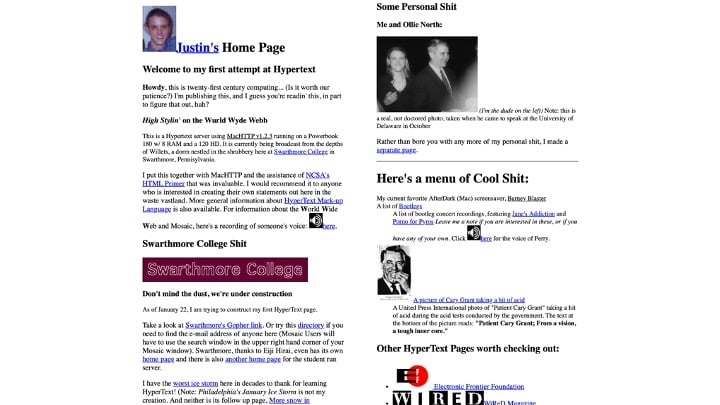
We’re relying on human curators again, who do the active work of exploration and sharing what they find. So, I’ve decided to talk to a bunch of my favourite newsletter writers and wranglers about their journeys, the work of curation, and what it means for the future of the web. I’ll send these out on Tuesdays, so you can expect your usual LEGO update on Fridays.
I’m really excited that Cates agreed to go first!
Cates Holderness — Garbage Day
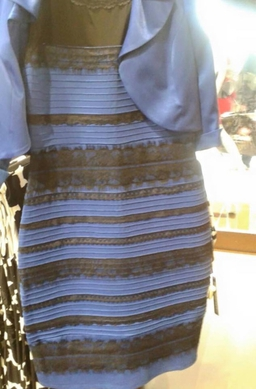
Cates has specialised in community management, audience development, editorial, and marketing for platforms like BuzzFeed and Tumblr since 2011. Now managing editor at Garbage Media, which produces the award-winning Garbage Day newsletter and Panic World podcast, she lives in Brooklyn, NY and recently celebrated the 10-year anniversary of her breaking the internet — The Dress is blue and black!
To start, can you tell me how you got involved with Garbage Day?
Ryan Broderick, who founded and writes Garbage Day, and I worked together back in the early BuzzFeed days around 2012. We bonded over the weird and wonderful corners of the internet and stayed friends.
More recently, I spent about six years at Tumblr. Then earlier this year Tumblr’s parent company, Automattic, did a big reduction in force and Tumblr was hit hard. I lost my job, my team lost their jobs.
Ryan had already floated the idea of working together, and after the layoffs I reached back out and said, “I don’t want to go back to big tech and I don’t want to pivot to agency life. Are you still interested?” He immediately said yes.
It’s been such a joy to work with someone I respect and to have fun in my job again – and to get back to the parts of my career that feel most meaningful: working directly with community and having a direct impact. As my role at Tumblr evolved, I’d ended up further away from that day-to-day community interaction, which is where I get the most satisfaction.
You’ve kind of done the full arc of the attention economy – from early-days BuzzFeed through Tumblr and now to Garbage Day. What do you think we’ve gained and lost along the way, from early virality to now?
It’s a fundamentally different landscape. In the early 2010s it really did feel like the Wild West: blogs, platforms, RSS feeds – lots of different ways to find and consume things. Then there was this moment where it felt like you had to be on a couple of major platforms. You had to be on Twitter because that’s where news was breaking in real time. You had to be on Instagram. At peak Tumblr, you kind of had to be there too – it felt like where the cool kids were. If you weren’t on those platforms, you were missing out.
In the last five years or so, things have splintered again. A lot of platform decisions have alienated their core users. I don’t use Twitter anymore. And the algorithmic shift really changed things – Instagram used to be where, on a Sunday at brunch, I’d scroll and see what my friends did last night. Now, if I don’t look at Stories, I don’t see my friends’ posts at all. It’s just Reels and people I don’t follow.
That’s pushed a lot of people away. The joy and curse of the internet is connection – and a lot of platform changes have made it harder to find meaningful connection and harder to find your community, whether that’s a sports fandom or a TV show you love.
I’ve noticed that too – fandom has gone mainstream, and so many people now “do fandom on main.” Because we’re inside this small number of corporate platforms, people don’t necessarily go hunting for weird niche spaces anymore. They just talk about their show on their main feeds instead of going to find the other people who are into it.
Yeah, fandom culture really is mainstream culture now. The “traditional” idea of fandom is: here’s a niche thing I’m hyper-fixated on; I need to find the twenty weirdos who care as much as I do. Now, for certain IP, that level of obsession is just normal. Younger folks have also come of age in an era of social media, so they don’t have the same history that we do. Those of us who remember getting Facebook or Instagram for the first time also remember that feeling of having to be very performative and careful – managing our identities.
A lot of younger users don’t have that same hesitancy. For them, their online identity is just as real and important as their offline identity. They don’t draw that distinction.
We had to go build spaces where it felt safe to be hyper-fixated. They’re happy to do that attached to their government name and their real face.
Exactly. So much of social media now is tied directly to your offline identity. One of the beautiful things about Tumblr is that it can be as anonymous as you want it to be.
TikTok is literally your face, all day. Instagram is selfies. We’ve lost a lot of the anonymity or pseudo-anonymity that can actually be a blessing – it can create safe spaces to explore obsessions. Maybe you want an alt account that’s just edits of your favourite K-pop band. Tumblr still lets you do that.
I have a hockey tumblr for exactly that reason – I don’t need hockey boys in any other part of my life! Tumblr did discovery in a way I don’t think any other platform has ever matched. There are so many shows, books, movies I’ve only consumed because they crossed my dash. How do you think about discovery now? Do you still find things “in the wild”?
I do, but I’ve been intentional about curating my internet experience for about twenty years.
I’m intentional about who I follow on different platforms, what newsletters I subscribe to, what journalists I read, who I follow on Tumblr. Honestly, a lot of my discovery still comes from Tumblr. Despite how we parted, it’s still the only social platform that consistently makes me feel better after I use it.
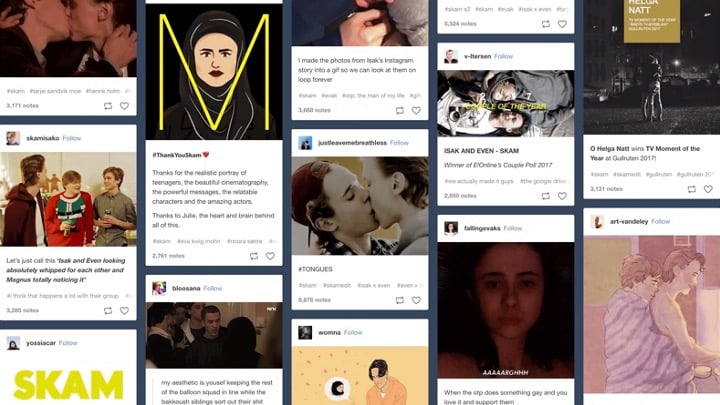
It’s the last good place on the internet! Even as it sort of crawls towards its death, it’s still good.
It’s still good! I’ve got mutuals there I’ve had for fifteen years. Every now and then someone changes their URL and icon and I’m like, “Who are you and why are you suddenly so into ski jumping? Or F1?” and I love that.
I do find discovery hard in some contexts. TikTok serves you a ton of content and then tailors it extremely aggressively. But I don’t think that’s true discovery.
For me, a lot of real discovery comes from my feeds and from Discord. Garbage Day’s subscriber Discord, for example, is chaotic and wonderful. I get so much news there, plus book and TV recommendations, from people I might not have much else in common with besides liking the newsletter or the podcast.
Human curation is so much more valuable to me than algorithmic curation.
My conference talk this year is about how we build healthy neighborhoods online and give people maps to those neighborhoods. People often say, “Isn’t that just an echo chamber?” But to me it’s more like a physical neighborhood: you’ve chosen to live in Williamsburg or you’ve chosen this particular bar. You’re not going to agree with everyone there, but you’ve intentionally placed yourself in that environment.
Totally. Being mindful about the spaces you choose to occupy online is really important. I’ll still occasionally look at Twitter if someone sends me a specific link, but I don’t go on Twitter. I don’t scroll my feed. When I moved to Bluesky early on, I was very intentional about who I followed. I brought over people from Twitter who I already trusted – like, “I still want to see what Taylor Lorenz has to say” – and built from there.
I also use lists that other people have made. There’s one that just surfaces posts with at least 500 likes, and it gives this interesting view of what’s popular on the platform: sometimes it’s news, sometimes it’s Hollow Knight fanart that’s borderline NSFW. That mix, paired with the fact that I’ve chosen to look at that feed, feels more like exploring a neighborhood than having an algorithm drag me around a city against my will.
I talk a lot about being able to control your scroll. Someone in the Graze Discord once asked me, “Isn’t that you opting out? What about genocide and everything else going on?” I realised my answer is: I can keep on top of the horrors however I like. What I want from social networks, as opposed to news, is joy, discovery, learning from experts – not a constant stream of everything wrong in the world.
I really feel for anyone outside the US having to deal with US news dominating their feeds!
When big news events happen, you do have to be careful about how you engage online. When Charlie Kirk was assassinated, for example, I had to be on Twitter for work, but I disabled all media. No autoplay, no images.
I still haven’t seen the footage. People say, “Everyone’s seen it,” but if you’re intentional, you really don’t have to. And that wasn’t about logging off – it was about using the same platforms differently and setting boundaries.
News has been breaking online for over a decade now; Twitter really accelerated that. I think back to the Boston Marathon bombing and how live police scanners were being shared on Twitter. Then Reddit tried to “solve” it, misidentified someone, and essentially ruined their life.
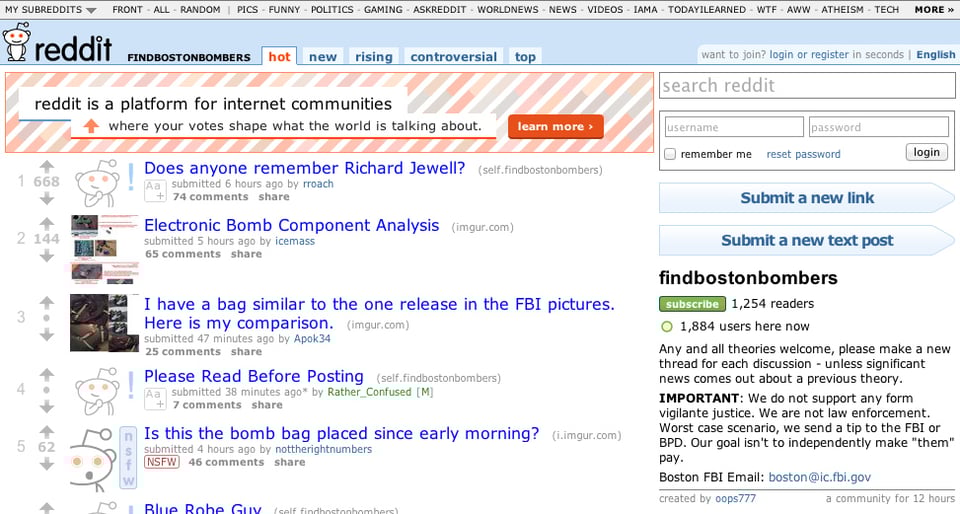
That was a moment where I realised the internet as a collective has a kind of power I hadn’t fully grasped before. Unfortunately, we’ve seen versions of that play out again and again. It changed how I think about “consuming the news as content.”
As someone who has to be online for your job, how do you protect your curiosity and joy? Is it touch-grass time, or is it staying on Tumblr and mainlining whimsy?
I have a wonderful therapist! I do try to touch grass – I log off at the end of the day, go for a walk or work out. I’m a plant mum; I have so many plants. Spending time offline with friends and family is important.
But I also make sure that when I am online, I’m not only seeing the horrors. It’s finishing a book and immediately jumping into the Tumblr tag to look at fanart. It’s watching some dumb TV show and then seeing the discourse.
Right now my shame-free guilty pleasure is Love Is Blind. I don’t really watch other reality TV, but I’ll watch every season of that show because I find it fascinating.
I’m a UK Love Island girlie for exactly the same reasons.
Exactly. It’s important to deliberately build spaces of joy and whimsy into your online life. I get a lot of that from specific Discord channels, from Tumblr – I’m still a daily active user there – and some from Bluesky.
My internet is at its best when I see something unexpected. There’s this guy, Seamus Blackley, who was one of the people behind the Xbox. A few years ago he worked with an Egyptologist to culture ancient Egyptian yeast and bake bread with it.
I’ve been baking sourdough since 2016, so seeing a thread that intersected ancient history, science, and my hobby was just… perfect. That’s the magic. That ability to go, “I don’t know anything about this, let me learn,” and then fall down a well-curated rabbit hole – I love that.
My version of that recently was falling down a rabbit hole about KATSEYE, the global girl group. I needed to know everything immediately.
Tumblr is excellent for that. A couple of weeks ago, Tumblr collectively lost its mind over this fantasy book series about a girl in a plastic/pleather dress who gets transported to a magical world where there’s a dangerous crowboy whose job is to destroy plastic. It’s a real book series, but the premise is so out there that Tumblr did what Tumblr does best and fully committed to the bit – very Goncharov behaviour.
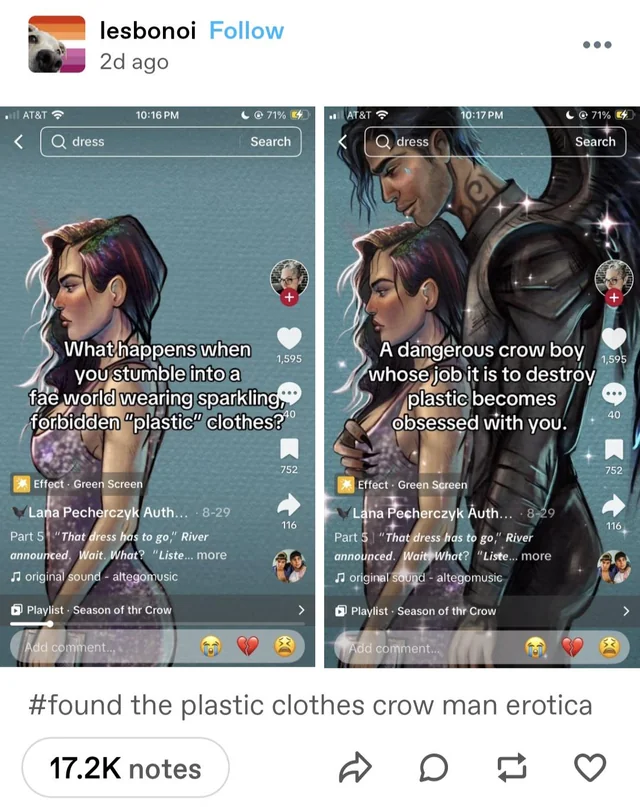
I saw a couple of posts on my dash and thought, “Okay, this is a thing now. I need to know everything about this.” One of my only regrets about no longer being at Tumblr is that I don’t have access to the backend data anymore. Watching something like Goncharov, the Ever Given, or a big election unfold in real time through the data was one of the most fascinating parts of that job. I’d love to see the graphs for “dangerous crowboy who eats plastic.”
Who are your curators now – beyond the Garbage Day Discord? What newsletters or people do you rely on?
Rusty Foster’s Today in Tabs is phenomenal. I’ve been a huge fan for years. He curates in a way where I often get things that are unexpected or totally new to me. Taylor Lorenz’s newsletter is great. Oliver Darcy’s is also excellent. Matt Navarra is wonderful.
Beyond newsletters, my friends and mutuals are huge. If something makes it through two levels of trusted people – a friend posting about a show they heard about from their friend – that’s a strong signal to me. On Tumblr or Bluesky, if a mutual I’ve followed for eight years gets obsessed with some K-drama, I’ll at least give it a look, because I’ve liked other things they’ve shared.
I’m not anti-algorithm, either. Algorithms can be great for certain things. On Instagram and YouTube, I’ve found a ton of vegan creators through recommendations. I’ve been vegan for seven years, and the number of creators of colour I’ve discovered that way has been a godsend. Finding the Korean Vegan, or a woman in Ghana who makes traditional West African food but veganised – I now have a jollof rice recipe I’m excited to make. That’s the magic of the internet too: I never would have discovered them without an algorithm that noticed I was engaging with vegan content and with a Black woman who reviews books I love, and decided to show me this other creator.
To finish, what gives you hope about the next phase of internet culture?
People are using the internet in some really interesting and important ways. Yes, there are a lot of negative uses. But there are also people making apps to track ICE sightings in US cities, so vulnerable communities can stay safe. People using Discord to help overthrow corrupt governments. That’s incredible.
Younger generations have never known a world without the internet – for my nieces and nephews, it’s just been there since birth. I think we’re going to see them approach the internet in ways that are unpredictable and, hopefully, wonderful. They’ll use platforms differently, create new ones, and build communities that look very different from my early experiences and even my current experiences.
Across the world, there’s so much passion for doing what’s right, for correcting wrongs, for speaking out against injustice and corruption. The fact that we have huge platforms where people can do that – and that I can donate directly to organisations and individuals in places like Gaza – is, strangely, a source of hope.
Global connection, even in times of crisis, is a hopeful thing.
___
Next week, I’m talking to Sari Azout, the founder of Sublime. Forward this email to someone who’s still curious.
You just read issue #50 of what you love matters. You can also browse the full archives of this newsletter.


Add a comment: