

This year I'm still wrestling with what it means to find new and interesting ideas online when we have to wade through so much slop. Curating the Curators is a series of interviews with my favourite online wranglers and sharers.
Lucy Blakiston has been running her gen z media empire Shit You Should Care About for six years now, and still manages to wow me every day with her ability to collect, distil and share complex ideas. We chat all the time, but I wanted to talk to her specifically about curation, trust, platform incentives, and how to give people the news without giving them the blues.

How would you define something that we should care about in 2027? What makes the cut?
I feel like, at the end of the day, it's always just something that affects people. Like I don't really care about something that affects the stock market. But the environment? That affects people. War affects people. Anything the tech bros are into usually doesn't really affect people. So I think that's the bar.
When there are just so many horrors, do you find yourself picking and choosing? How do you think about the total onslaught of not-great stories we might still need to care about?
The nature of my platform means I don't really have to pick and choose. Like this year I haven't even got to do any curating yet because all I've been doing is explaining. It's the 22nd of January, and all I've been doing this year so far is explaining what's going on in the world, which is my job but I don't really pick and choose what I'm covering. If someone messages me something that's happening somewhere I'll look into it, and if it's not an explainer it will appear as a link somewhere on my instagram. It's driven by how much time I have.
What’s your daily routine? Where do the stories come from, how do you filter them, and what’s the final decision each day before you hit publish?
Okay, daily routine: Wake up. I have notifications on for BBC and The Guardian. So usually if something massive's happened, I see it right away. I'm still a desktop girl, so I get on my computer and I like have my little news tab and so I start at the BBC. That's like the final boss curator. But then newsletters give me the pop culture stuff, like After School by Casey Lewis, which covers Gen Z. Taylor Lorenz does some good like link roundups. I don't get my news from social media, which is so hypocritical because it's my job. I check the DMs on SYSCA if there's big things happening in America, because most of our followers are American and they'll send me stuff. But honestly I'm boring. Usually, I just actually am reading the news websites. And then I can just tell what's important. If it affects people, it's important. If I see something about the stock market, whoosh over my head.
What does fact-checking look like for you when the news is moving so fast?
I get asked this question all the time. And I was thinking about this the other day, what's my new answer to this question in this era. Because it used to be I studied this shit. I know how to corroborate. I know what cross-checking is. But that's not really enough anymore. Now I just assume everything is false until proven correct. So honestly, that is now my 2026 answer going forward and it didn't used to be.
That's a really interesting shift for you. What do you do to make sure something is correct — especially now that “assume it’s false” is the default?
Usually the first port of call is the comment section of anything. You'll see people crying "fake". I won't report on something if it's like, say it's a video of Donald Trump talking at a conference, and that could easily have been a deep fake. If none of the comments are telling me where it came from, I'll look it up and see if it's been reported widely on news sources that I trust. And if not, I won't post. I'm not here to be posting shit first. I don't care about speed anymore. When it first started I did, but now I've grown up. If I can't tell that it's true I do not post it. Erring on the side that everything's fake is such a weird shift and it's only just happened. Well, in my brain, that answer has only just changed
What’s the emotional cost of doomscrolling professionally? What boundaries have you put in place so you don’t go insane? Or more insane.
More insane. I think I have the opposite answer to this question than a lot of people might have. Yes, I doomscroll professionally, but I also get to do something about every single thing I see. So I don't have to feel bad about my algorithm, because if I see something bad, I go and write about it and help it make sense for people, or make it seem less depressing for people, or make it easier to consume. In whichever way that means. So honestly, the news does not get me down. I'm also medicated, so I'm on antidepressants. That must help. Don't you reckon that must help?
I think it helps me. I think it must.
I know, it's hard to tell. Whether it's medication or that we're in jobs that we love and we've chosen how our career works, which a lot of people don't get to do, but it's true the edges feel less drastic. But yeah, I can’t tell if it's medication, if it's lifestyle. Nature or nurture
Your work lives on platforms with incentives you don’t control. What’s your strategy for not getting played by the machine?
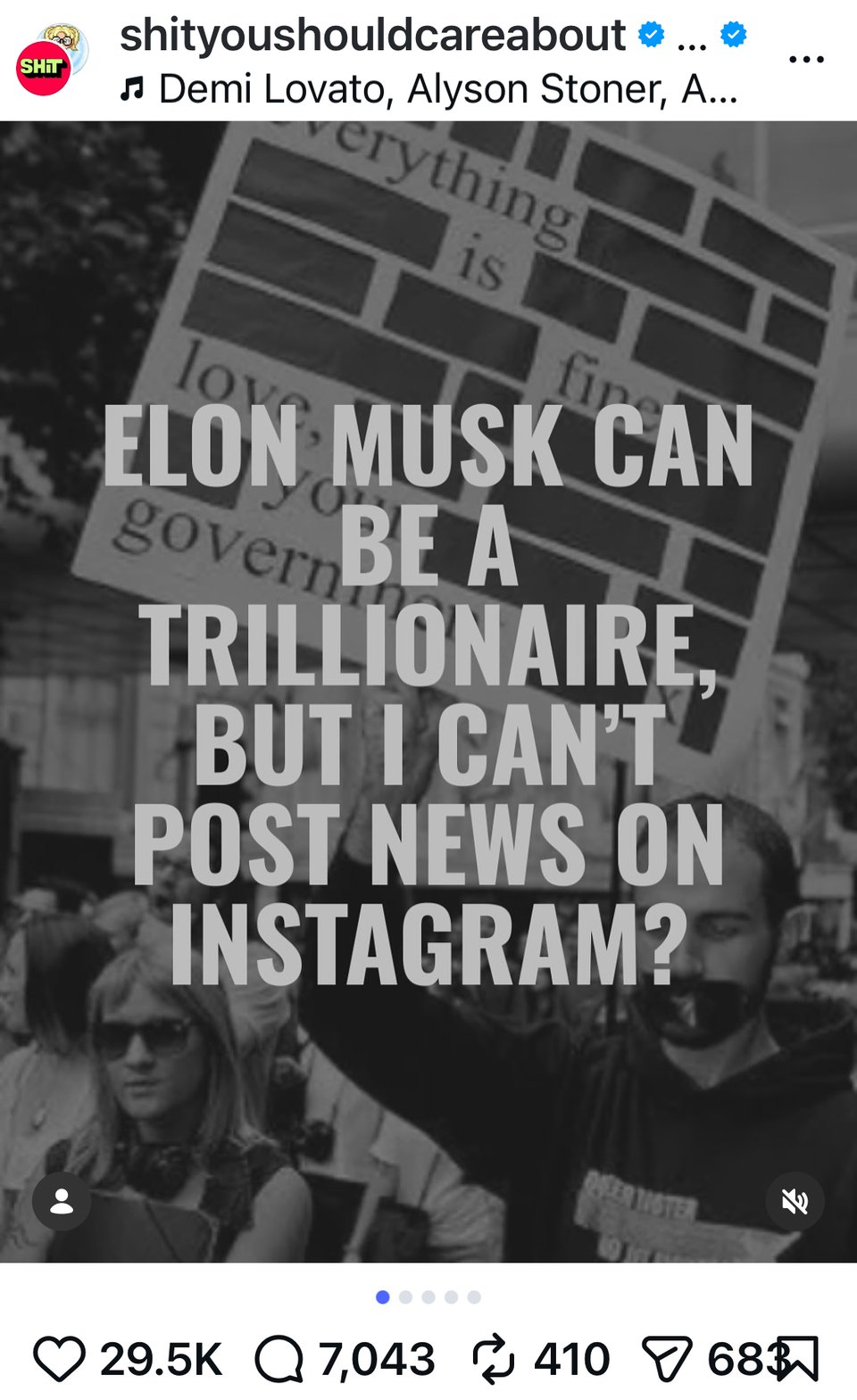
Try and be everywhere, which is annoying, but so that you're not dependent on any one platform. And luckily I started doing it in 2020, so I had six years of instagram to build an audience, but I'm not scared of them because the newsletter is my favourite. And at the end of the day, whatever platform the newsletter's on, as long as I can always uplift that list. That's what's important to me. And as soon as a platform even remotely would talk about us not having access to our own audience anymore, then I'd be inclined to build my own solution.
You’ve built a rare thing: a big audience that still feels like a community. How do you protect that vibe as you scale?
I just don't scale. Or just like, the core of the thing is me. So as long as I'm still me. That's probably where my boundaries are. Like you know this, that I try my hardest not to fly too close to the sun. I don't like being around founders and entrepreneurs all the time. I still live with six other people and I go camping by myself and I just try and stay really normal because like the core of the thing is me, being a normal person. When influencers or youtubers suddenly get all this money, and they used to be really relatable, and then now they're no longer relatable.
You're still posting about falling off a cliff and breaking your finger.
Yeah, look at it!
How do you handle correction, critique, and accountability in public — especially with the tendency toward bad-faith pile-ons?
Just honestly. Just correct it in public. I have no qualms deleting shit and reposting something. And then people call me out, "oh my god, you deleted my comments," and I'm like, no, I redid the whole post based on your comment, because you were right. I am not precious about anything I make or write, unless it's something personal and then if you're asking me to take it down, I will be mad, which doesn't happen. But I'm just not precious. You cannot be precious on the internet in 2026 if you want to have a business. But if the comments are just stupid and not helping anything or anyone, I'll just turn off comments. I have no qualms about doing that, I'm not tracking my engagement or anything. I'm not here to get my engagement rate up by angering people.
SYSCA's not about ragebait.
I feel like in 2020, enragement for everyone was engagement and like to be fair SYSCA definitely grew based on people being angry about things like Trump, COVID, Black Lives Matter. But now that it's grown, I haven't cared about growth except for the newsletter. Now I just turn the comments off because they can go somewhere else to fight, not on my platform.
And that's why you love a mundane poll.
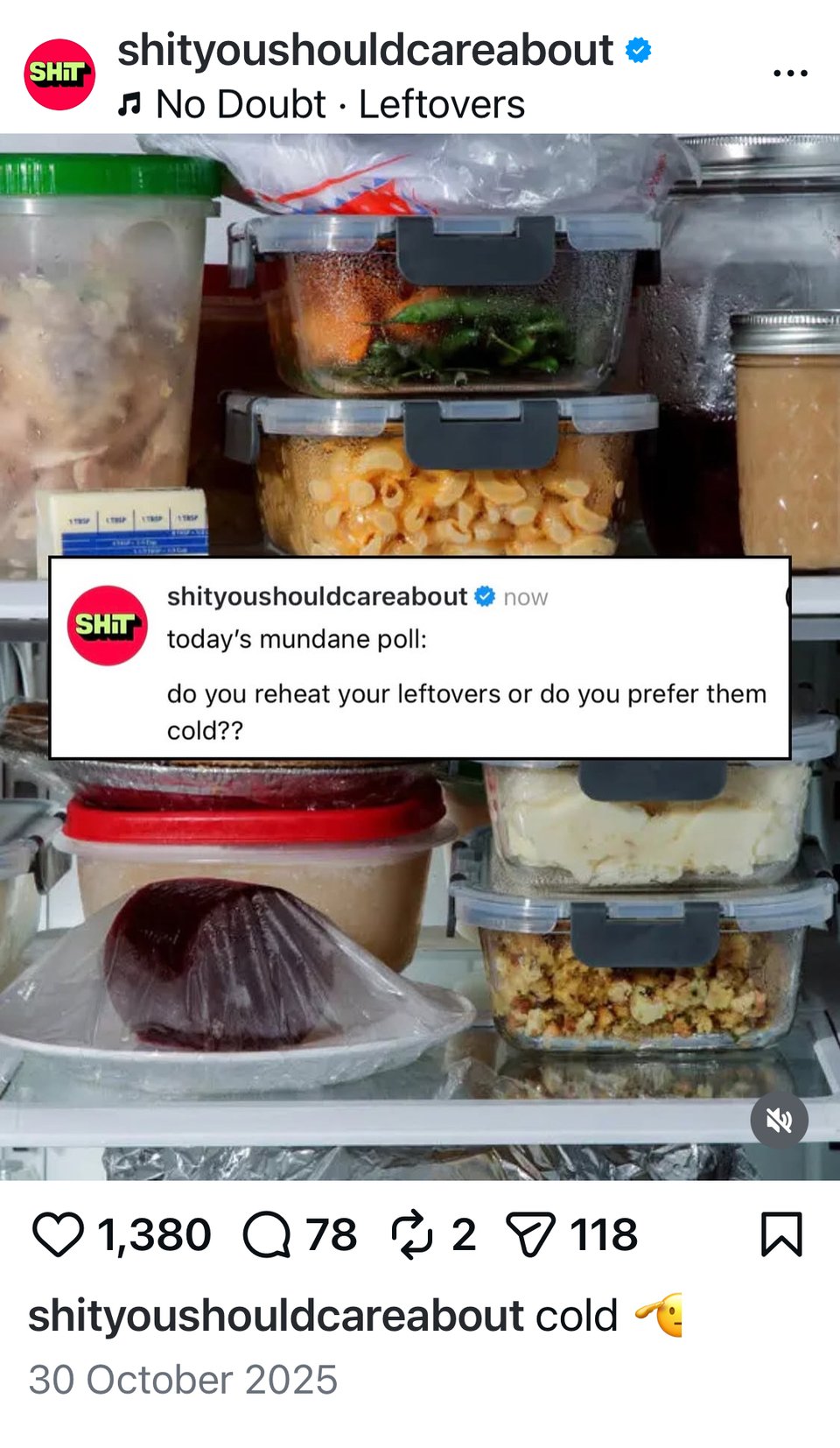
Yeah, let them argue about something that won't hurt anyone's feelings.
If you described SYSCA as a physical place, what would it be?
It'd be a stationery and magazine shop that's also a cafe.
This series is about how discovery is so hard now, and how we’re turning to human curators. When you are doing curation, what’s at the heart of it?
Give people the news without giving them the blues. I just want people to be able to read the news without it being scary or too depressing. That's why there's colours, that's why there's gifs, so that even if it's really shit news, weirdly you'll be subconsciously like, yeah, but it's shit you should care about. So that is at the heart.
Last one: what gives you hope for the future of the internet?
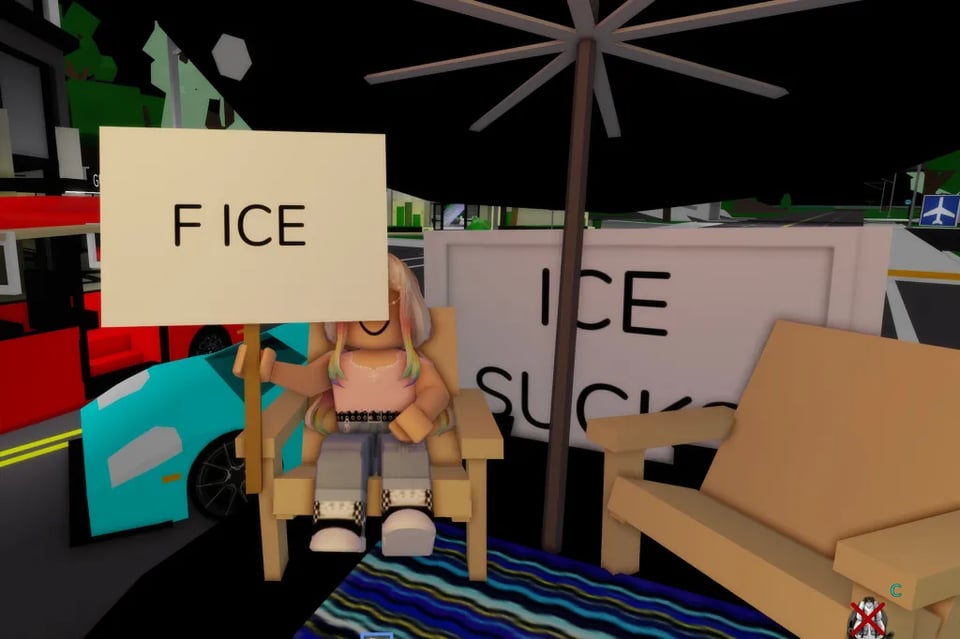
Young people. It's so interesting reading think pieces from old people that obviously don't hang out with young people, or sometimes I get interviewed and they say things like "young people are really turned away from the news." I'm like have you met a young person?! They're protesting on Roblox, motherfucker.
___
Previous interviews in this series: Cates Holderness, Sari Azout, Matt Muir.
You just read issue #59 of what you love matters. You can also browse the full archives of this newsletter.


Add a comment: