

One of the cutest Christmas presents I got last year was this pin my sister gave me:
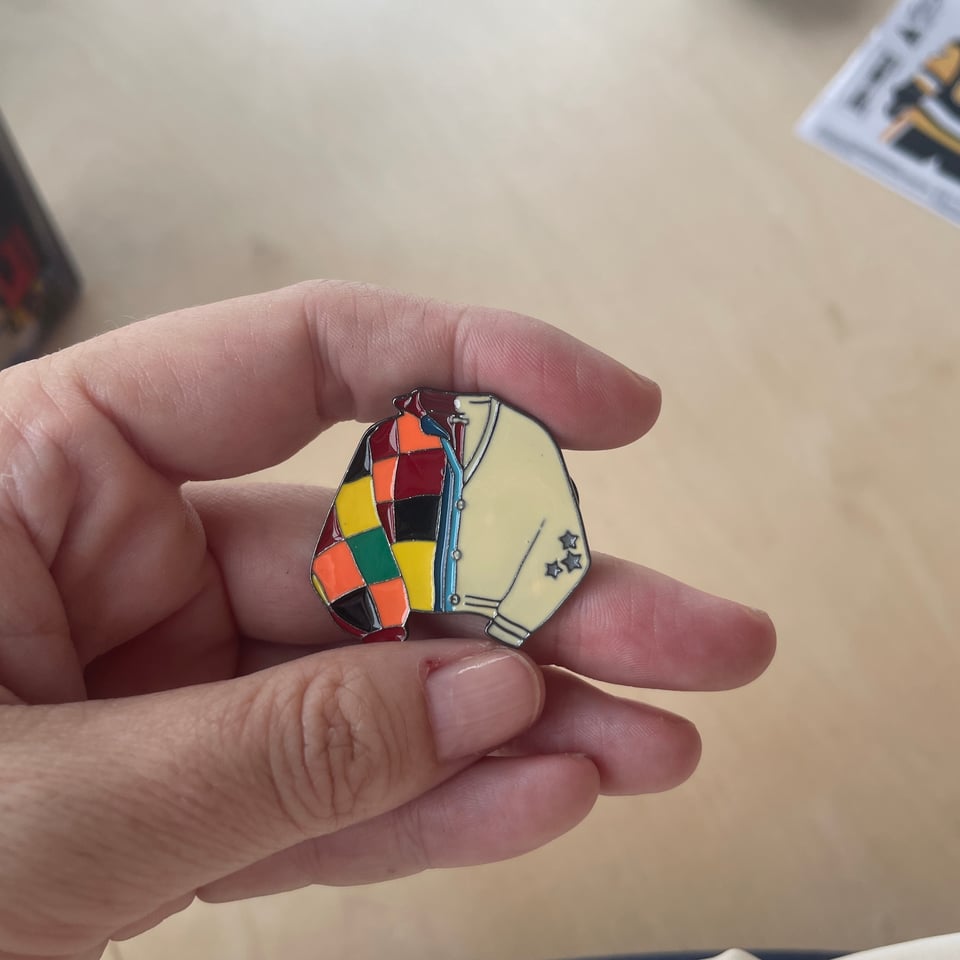
Everyone else in the family drew a blank looking at it. But if you know, you know. It’s an enamel pin of a cardigan that’s half Taylor Swift’s distinctive folklore cardigan, and half the JWA cardigan made famous by Harry Styles.

In short, it’s niche AF, and I loved it. An aside, I own both of these cardigans because I bought the official Taylor one, and bestie meriko KNITTED me the Harry one.
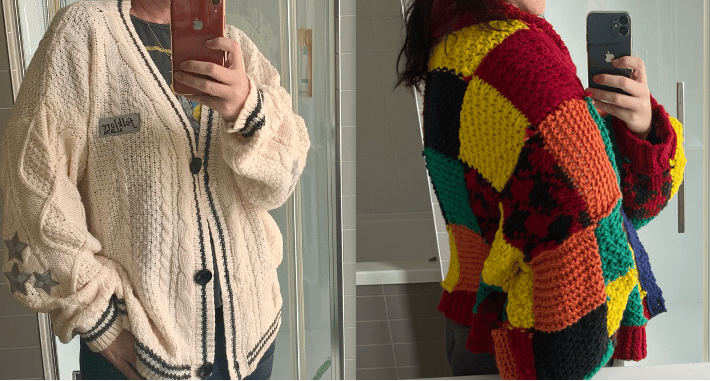
She could do that because JW Anderson was so inspired by fans attempting to recreate his £1275 knitwear that he released the pattern, instead of bleating about copyright infringement.
So, anyway, the pin is an example of what we call “subtle merch”. As described in this mashable piece from a few years ago, “Far from the mass-produced concert tee or branded figurine, "subtle merch" or your fave "coded" items are deeply personal to fans, often homemade, and signal a fan's knowledge or insider status within a given fandom.”
It's not a new phenomenon, but it found a natural home on sites like etsy and redbubble, where it’s relatively easy to set up an online store and sell reasonably-priced goods that evoke subtle clues to fandom rather than traditional concert tees or giant posters. Shops like Lexy Styles, which makes prints and stickers and keychains built around Harry Styles lyrics and imagery, have built real audiences — thousands of followers — around what amounts to a shared private language. As Lexy told Good Good Good: "there is a special level of intentionality that small business owners have — to be able to take imagery from a song and turn it into a sticker that only the biggest of fans will understand".
I think I love subtle merch because as an old person, it’s nice to be able to demonstrate my fandom in a way that doesn’t feel made for kids. Before jkr ruined the harry potter fandom, I used to wander around the official stores looking for anything that was subtle and designed for adults because I was too old to bust out a witch’s robe or a quidditch sweater. Probably this won’t stop me buying a Rozanov 81 tee at some point (look, we didn’t talk about HR at all last week, so).
But that brings me to the next problem. Print on demand has made all this cheap as shit. And also shit as quality.
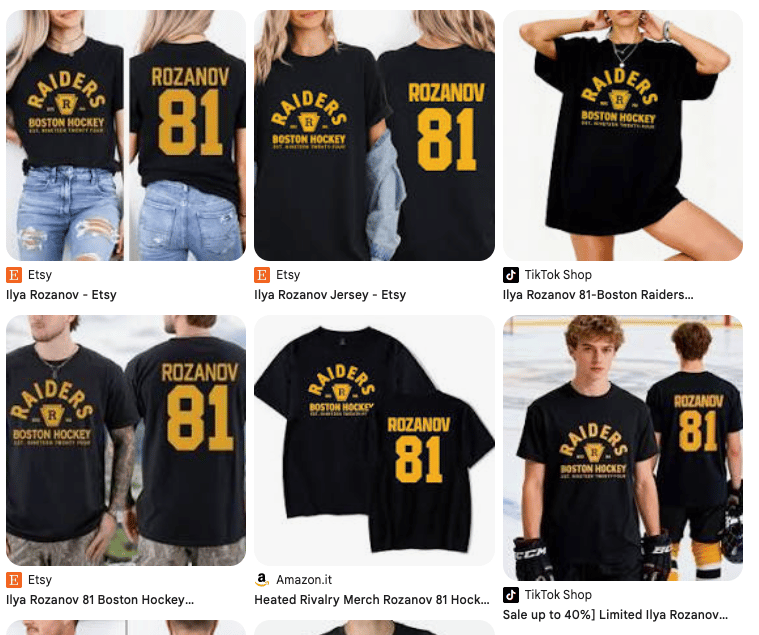
Order any of these “high quality” “limited edition” tees and I guarantee you’ll get a a temu synthetic that makes your skin itch before you even get it out of it’s plastic wrapper. And no, you might remember etsy as a site for handmade work by real people, but not anymore. It’s flooded with dropshippers, bots and scams. When you search for merchandise around almost any popular artist or tv show this is what you get: a sea of print-on-demand junk, algorithmically optimised for discoverability and priced to make you feel like you're getting a deal, which you’re not.
But it’s in part a response to official merch being so wildly expensive. And while there are real structural reasons for this — venues taking increasingly significant merch cuts, sometimes 20 to 35 percent despite not having contributed in any way to the costs of making merch — the effect on the fan is the same: the official stuff is financially punishing.
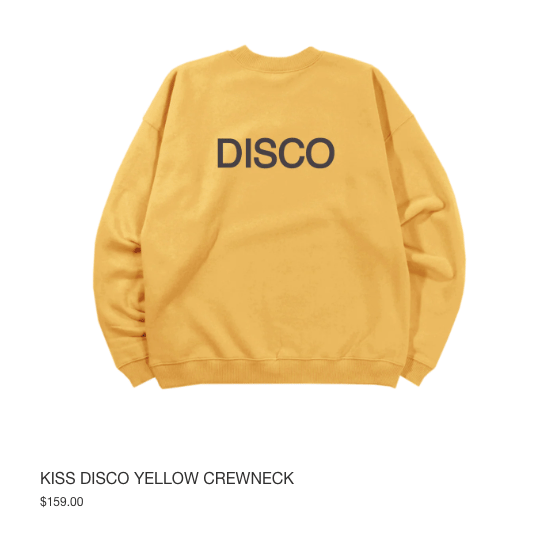
The subtle merch movement is, in part, a rejection of both of these things. It refuses the $100 official hoodie and it refuses the $12 polyester blur.
There’s an intellectual property angle here that also complicates everything. Someone’s artistic rendering of Taylor’s cardigan is one thing, but her actual cardigan is presumably copyrighted to hell and back. Like all transformative work, fan-made merch dances around in a grey area. One of the best takes on it I’ve seen was Rainbow Rowell, author of the Carry On novels about a magical school. Rowell is an enthusiastic supporter of fan art and fan-made merch. When she worked with a design firm to come up with official logos and merch for her fictional school, she was quick to draw the distinction. She was happy for fans to continue making their own merch, but they weren’t to rip off the official merch that the designers deserved to be remunerated for.

The reason I was thinking about subtle merch this week was this newsletter from Fangirl Forward (substack, sorry) about Softside.
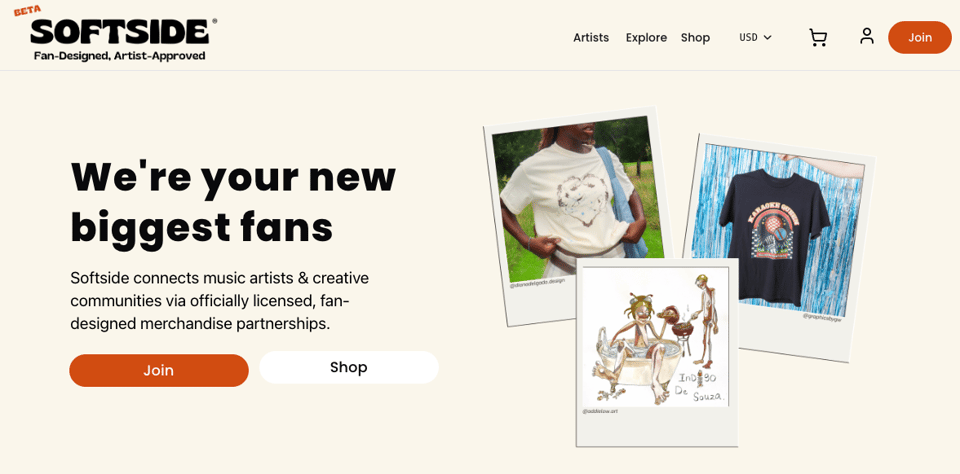
Founded by former touring professional Erin Singleton, Softside enables fans to collaborate directly with artists on officially licensed merchandise — with royalties flowing back to the fan-designers rather than a flat buyout. Not every fan wants to participate in a design contest, starting from scratch and then maybe not getting picked. Some fans have already made beautiful work. The idea that this creative output could feed back into an official process — with proper compensation — would be a meaningful structural change. Singleton observes that the standard industry practice has historically been to pay a fan a flat fee for a design, put it on the road, sell thousands of units, and pay them nothing further. The royalty model she's describing isn't radical in any other creative industry.
Fans aren't just consumers. They notice things the official machinery of an artist or a label or tv studio or movie producer doesn't. They understand the emotional vocabulary of a fandom better than any marketing team. A designer who is also a fan brings something that a generic merch contractor just can’t — specificity and intentionality and the precise kind of insider knowledge that makes a tote bag feel like a secret handshake rather than a souvenir. In the same way we talked about fan editors being hired, fan merch creators deserve the same sorts of opportunities.
Subtle merch doesn't require an expensive concert tee or a festival wristband to signal that you belong. It exists outside the extractive economy of race-to-the-top of ticket prices. It's the thing fans made for each other in the gap and the gap shouldn't be permanent. The fans who have been doing this work — out of love, in their spare time — deserve to be properly compensated for it with a seat at the table they've been decorating for years.
more good stuff
I liked this take on the mess surrounding Mia Ballard’s Shy Girl, and why it’s still so important for us to leave room to be optimistic, let down, or surprised by things.
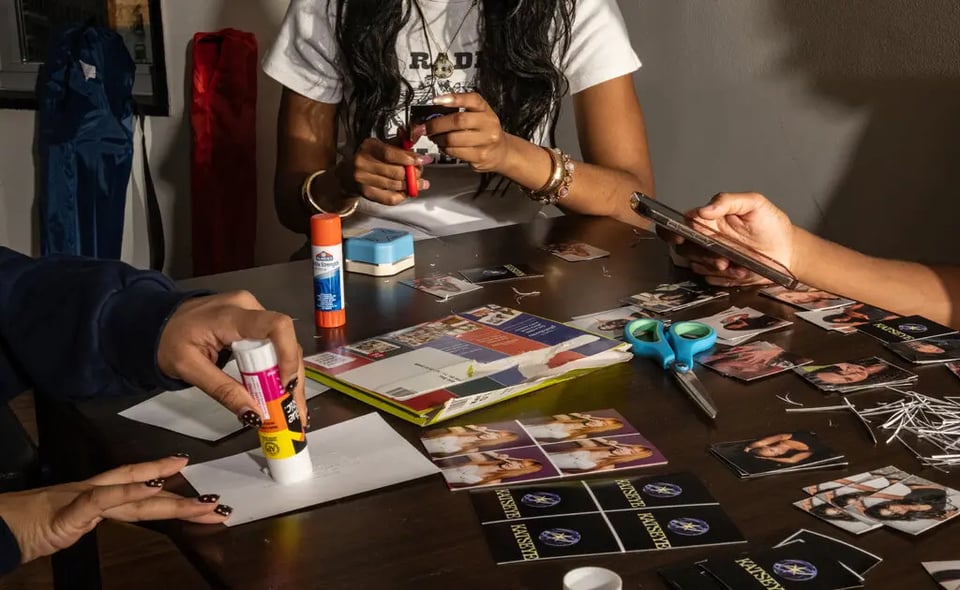
If you remember us talking about KATSEYE last year, you’ll be interested in this (slightly weirdly written) interview with a bunch of Eyekons (stans) in the wake of Manon announcing her hiatus.
I also loved this piece on the tipping point in women’s sports: "It’s often felt like the women’s sports boom is happening around me in ways that I believed but couldn’t really see. This week felt different."
finally, in my lego city

Forward this email to someone who needs a new cardigan.
You just read issue #67 of what you love matters. You can also browse the full archives of this newsletter.


Add a comment: