

One of the coolest things I’ve seen on tiktok lately is the rise of the “cyberdeck”. The first person I saw posting about it is actually credited with kicking this trend off, a 22-year-old named Annika Tan (@ubeboobey) who built a computer and put it in a mermaid clutch.
The case is vintage pearlescent and the hardware fittings are gold. Inside is a Raspberry Pi, a small screen, a battery pack. Over a million people watched the first video. Her two-part tutorial series hit ten million views.
Cyberdecks aren’t new in any way. The name comes from William Gibson’s Neuromancer, where it described the portable computers hackers used to “jack into cyberspace”. The modern DIY version has been evolving for years in maker spaces and reddit communities and discord servers, mostly among the kind of people who enjoy soldering and reading documentation (I am neither). Then Tan posted her mermaid clutch and a whole new bunch of people started paying attention, who'd never thought about building their own computer, and now desperately wanted to.
Raspberry Pi’s are perfect for these projects. The tiny computers are cheap and powerful. They’re relatively easy to work with and you can connect them to whatever kind of screen or keyboard you want. I have one powering the departure board in my lego train station.
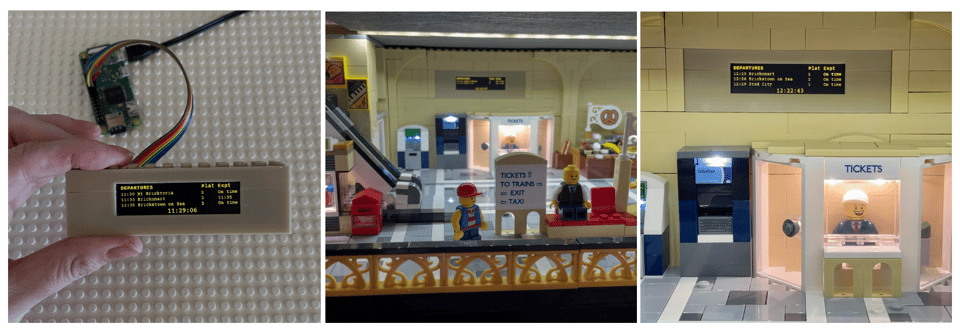
But it never occurred to me that they could be used in this powerfully personal form of personal computing. Since technology is taking over more and more of our lives, why not make it look cute? Why not make our own, instead of being stuck with what the corporations want us to have. It reminded me of the early days of cellphones, when everyone had different kinds. I had a red nokia flip phone that I loved with my whole heart. Now we all clutch the same identical black mirrors, and if you want whimsy, you’re reduced to buying a different case.
The cyberdeck isn't a better computer. Your phone has more computing power, so the appeal isn't performance. But with a cyberdeck you built it, like the slightly lumpy first sweater I knitted. I knew it was sort of objectively terrible, but I’d made CLOTHES out of STRING so I didn’t care.
And as Tan notes, there is also a political element to this, even if you’re not hanging out in the neckbeard forums. A cyberdeck does what you designed it to do and nothing else. It doesn't update itself overnight or report home or show you ads for things you talked about near it.
Since I started paying attention to these videos, I’ve noticed people making tiny kindles, working on their own mp3 players, and even building a photobooth:
Again, those of you around for the beginnings of the maker movement or who’ve spent any time on adafruit will be like, “this isn’t new”. I know. I just think this video tutorial, peer-to-peer teaching, focussed-on-whimsy, queue over feed moment is a really interesting response from a generation who, as we just talked about, haven’t really been allowed under the hood of their tech.
Anyway, stand by for the co-option, because boys can’t let girls (gender neutral) have anything for themselves. Some of you might be aware of Rabbit, an AI device company that launched in 2024.
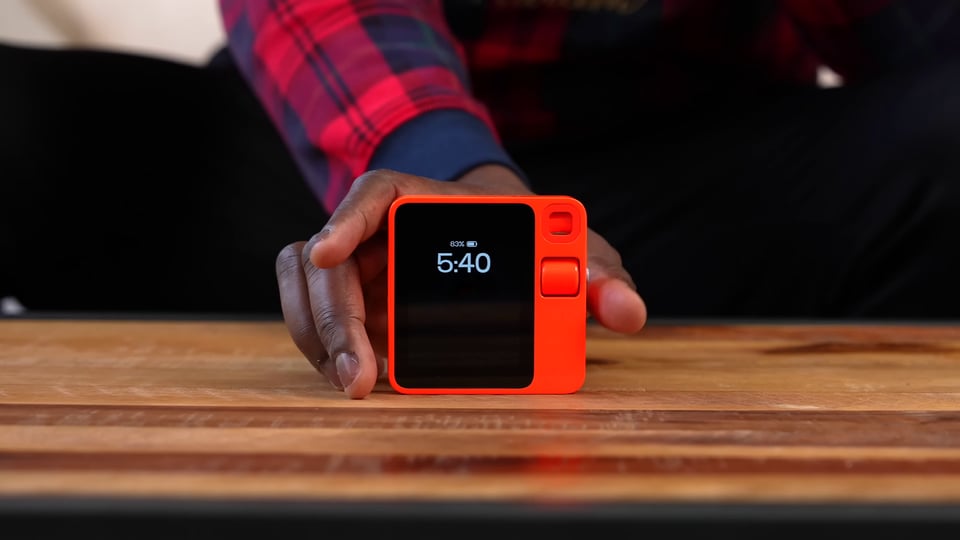
Rabbit’s r1 device was supposed to be the future. You could, idk talk to it and it would access … look, tech critic Marques Brownlee called it "barely reviewable". It was $20m of venture funding poured into something noone needed. Quelle surprise.
But, because these kinds of founders just continue to fail forward, the Rabbit guy has announced his next product and he's calling it a cyberdeck. It will be built for vibe coding (sigh). The new device will feature a partially mechanical keyboard so that, as Lyu put it, users can swap out keys and customise their experience — "table stakes in the tech-DIY community."
I eye-rolled so hard. Lyu seems to have spotted that “cyberdeck” had slid to the top of the trending topics — that it carried connotations of authenticity, maker credibility, and a specific kind of anti-corporate cool that his previous product conspicuously lacked — and he decided to borrow it. If it ever actually appears, his new device will be manufactured, marketed, and sold at scale by a VC-backed company. The customisation on offer will apparently be which keycaps you swap in. Amazing. Absolutely nothing to do with cyberdecks of any kind.
You can’t sell the experience of finding a $5 wooden box at a thrift store and deciding it would be perfect to hide a computer inside. Or the three hours spent figuring out why the display won't initialise and the wild satisfaction when it finally does. You also can’t sell the moment of posting the video and watching someone comment I need one and knowing that they're going to go make their own thing, probably not like yours, definitely not like Rabbit's.
That’s what I love about it.
more good stuff
loved this cute story about fans renting out their couches in New York to other fans for Harry’s MSG residency

this is a great post about our recent moon joy from reader Richard (hi Richard!):
"Copy, Moon joy" is "one small step for man, one giant leap for mankind" for the Instagram age. What the phrase may lack in gravitas it gains in pure meme-ability, and was immediately all over NASA's socials. It summed up the week for me and a surprisingly large slice of the public.
All week, I chatted from people with interests far from physics, who told me they were seeing the Moon differently in the knowledge that human beings were on their way for a visit.
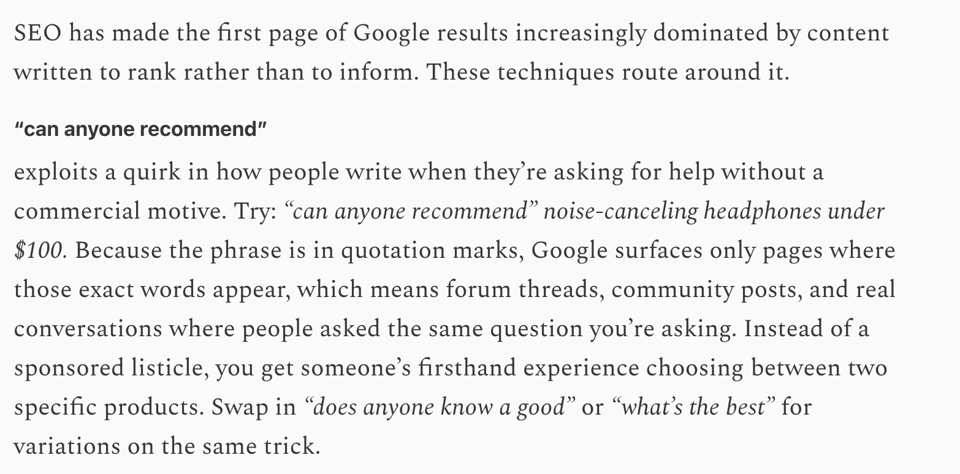
I’m still digging into this incredible resource on how to google better (via kottke). I’m always talking about how we’re now in a post-search era, as google drowns in AI slop and summaries, but these tactics are excellent and the perfect antidote for asking an LLM to make things up for you.
finally, in my lego city

Forward this email to someone who hates the word whimsy.
You just read issue #70 of what you love matters. You can also browse the full archives of this newsletter.


Add a comment: