

It’s now been almost a full year since I started writing this email to you regularly (wild that I’ve kept it up tbh). But rather than boring everyone with some bs year-in-review listicle, I thought I’d catalogue my current obsessions: the topics and questions that kept resurfacing all year in conversations, drafts, and DMs, long after I thought I was done with them. These are the ideas I kept circling and the questions I’m dragging with me into 2026.
#001 Neighbourhoods online
What would being online look like if we could hang out in small, intentional groups?
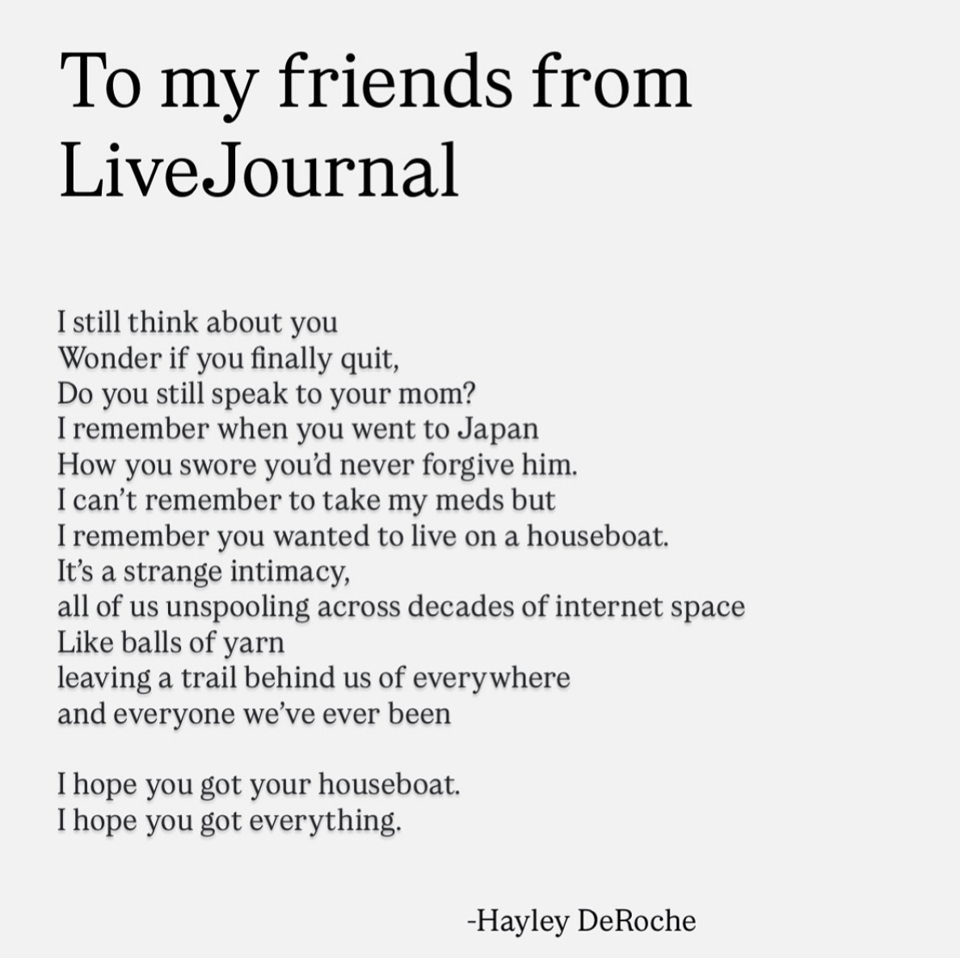
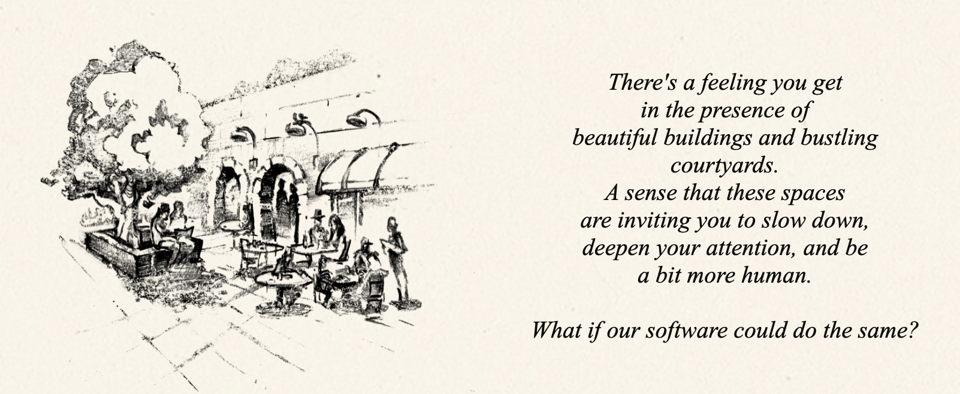
I started this year by saying that I wanted to focus on the good internet, and that permeated pretty much everything I read, thought about and shared. Out of that came this strong conviction that (if we’re using place-based metaphors) the first phase of the internet had us living in kooky little villages, the second phase of the internet has forced us to coexist in gross, unliveable mega-cities, and the next phase of the internet needs to be about neighbourhoods.
We crave community. But most of our tools are optimised for reach and audience, not for the feeling of being in a good room with people you trust. This year convinced me that neighbourhoods (whether they’re fan communities, or industry spaces, or founder meetups, or sports clubs, or home owners associations) are the real unit of the internet: small, overlapping, sometimes messy, but grounded in community. And we don’t really have infrastructure for them. The work now isn’t invent the next Twitter, I think it’s build better parks (or farmers markets, or winebars, or whatever your neighbourbood barometer of choice is).
#002 Fans as forerunners
Fans aren’t the stupid demographic cohorts marketers keep telling you they are. What if we paid attention to what’s actually going on?
Obviously fans remain my first love. This year we’ve talked about Mandalorian cosplayers, the hot firefighter show, larpers, tv soundtracks, Conclave, fanvids and the fourth wall, Disney adults, fuel rats, fan edits (confusingly now a term being used on social for fanvids), theatre accessibility, F1, publishing fanfic as novels, reality tv, poptimism, KATSEYE, women and sport, camping culture, Taylor Swift, and more.
And yet if you believe the Linkedin Slopfluencers, the most important thing you can learn about fans is their spending patterns. If you look at fans as a marketing segment, you miss everything interesting about them. If you look at them as forerunners, suddenly the whole internet makes more sense. Fans are the ones who stress-test platforms at scale and invent new social norms (spoiler etiquette, tagging, content warnings) and who build infrastructure when the official tools don’t exist, or don’t care.
This year sharpened for me the idea that “fan behaviour” is usually just future user behaviour with the volume turned up. More than that though, fan communities really highlighted for me the sharp distinction between spaces for broadcast and healthy spaces for actually hanging out with people, and why we need so many more of the latter.
#003 Abandoning the algo
If social media in the way we experienced it for the last decade is dead, what’s next?
We keep talking about “the algorithm” like its a monster in the basement, and theres a sort of collective unease with being served ads for things we were just talking to our friends about. We know twitter is over, and we’re ground down by the Everything Apps stealing our time and attention. And yet, what’s the alternative? Increasingly people just say to me that they’ve quit social media altogether.
Look, it’s one answer. I think it’s a generational one. Find me more than a couple of Gen Z saying the same and we’ll talk. And now we’re going to rework the entire infrastructure of the internet to prevent under 16s from using it. Instead, we could fix it?
That’s a naive response, I know. There’s nothing to incentivise any of the existing platforms to change their ways and the network effects prevent anything new from really taking hold, but I continue to be optimistic about the potential of ATproto and the very early projects being built there. Honestly, just check out what Rudy Fraser is up to:
There’s a future where we’re not all trapped between either swiping and scrolling til our eyes bleed, or not having social media at all. But we have to decide that’s what we want and do something about it.
#004 Collecting and sharing
How do we think about exploring, collecting and sharing what we find online?
Honestly this might be one that only I’m obsessed with. But as I watch friends and colleagues fumble around trying to find an interesting thing they want to share that might be in a slack channel or it might be in a DM or maybe I saved the tiktok or (more likely) maybe we’ll never see it again, I still think there’s a big gap in our lives for saving and collecting and sharing. This year we’ve talked about digital gardens and commonplace books, about where our browsing history and data live, and photos as a form of digital memory. I loved chatting with Sari Azout about Sublime, just one tool that’s tackling this challenge.
But I still don’t have my answer. Obviously I’m storing and sharing what I find in this newsletter, but that seems like a static way to approach it, and it’s at its best when you reply and send me links or connections, but that’s still one-to-one and not many-to-many. I saw this, I thought of you, I think it’s worth your time.
#005 Discovery in the post-search era
As AI consumes and renders useless search engines or even the idea of “searching” for an answer, how will we discover new things, or the right answers, or the interesting people in the future?
This showed up a bunch of places for me this year. In late-night rants about how impossible it’s becoming to find a simple how-to guide that isn’t SEO-choked. In conversations about how young people are already defaulting to tiktok, reddit, or private recommendations instead of “googling it”. In my own behaviour, trusting human curators — newsletters, lists, custom feeds, people — more than I trust search results.
AI can generate an answer to anything (though probably not a good answer), but that’s not the same thing as introducing you to the right thing, or the weird thing, or the thing that changes your mind. So whose judgement do you trust to stand between you and the sludge? A person? A group chat? A transparent feed? A tool you configured yourself?
I don’t think “post-search” means “no more searching”. But it probably means search becoming social again. Instead of LMGTFY, we’ve got to have our own little network of librarians, each with their own wing of the library.
—-
Lining these up next to each other, they start to look less like separate topics and more like one long, messy question: who do we trust to show us what matters? How do we look after one another in the process? And what kind of infrastructure (technical, social, cultural) do we need so these spaces don’t burn out or disappear?
If you’ve read this far, I’d love to hear from you:
What were your 2025 internet obsessions?
Where are you seeing these themes — neighbourhoods, fandom, discovery, collecting — show up in your own corners of the web?
And what are you planning to go deeper on in 2026?
Hit reply and tell me what you wouldn’t shut up about this year. I’m going to take a week off, and see you in 2026 with my considered take on Heated Rivalry.
more good stuff
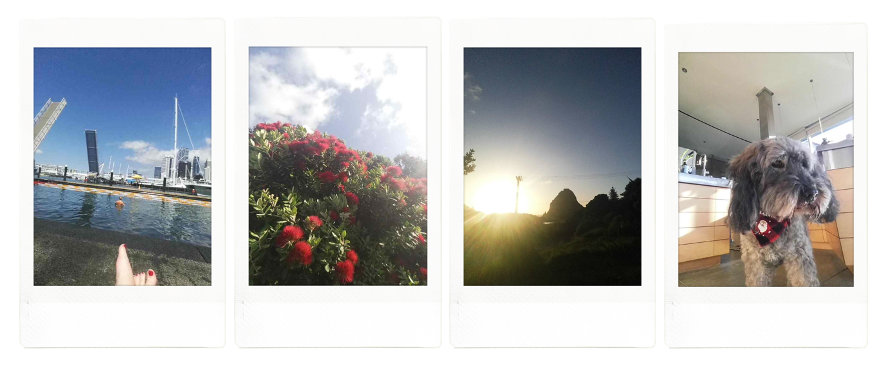
if you’re stuck for a last minute Christmas present, buy an Instax Pal. I’ve had mine a week and I’m obsessed. A keyring-sized point-and-shoot where you can’t overthink the photo because there is no viewfinder.
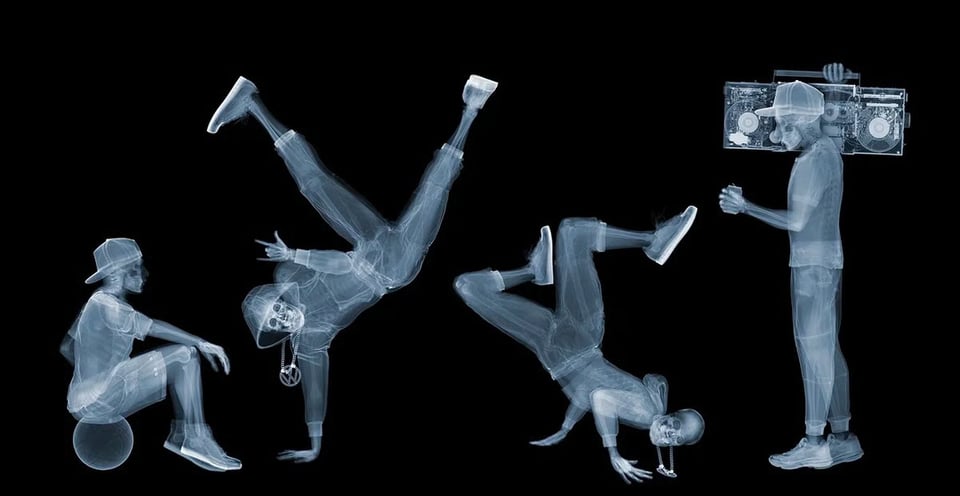
christmas in tāmaki at a time when AI “art” is everywhere, it’s cool to pay attention to people making stunning things even when the process is hard, like this artist Nick Veasey who makes x-ray photography.
i’ve long been obsessed with what it takes to pass The Knowledge (the exam to become a black cab driver in London) — so long that I was posting about it on Metafilter in 2007 (!) — and I thought it had just vanished in an era of Uber drivers and gps, so I loved this gorgeous essay about one driver’s recent attempts.(archive)
finally, in my lego city
Forward this email to someone you’re spending the break with.
You just read issue #53 of what you love matters. You can also browse the full archives of this newsletter.


Add a comment: