

This week I’ve been thinking about what it’s like for a new generation to make things with computers. When we were talking in Berlin, Luce made a point that stuck with me — while I view the early web as a roadmap for the way things could be better online, her generation and younger have only ever known app-based environments. For them, “building for the web” is a nonsense. They only know platforms. Which is not to say that they don’t do incredible, creative, generative work on those platforms — just that the idea of tinkering with the foundations doesn’t mean much to ipad kids.
I kept thinking about that as Apple released the Macbook Neo, it’s first budget laptop (US$599).

I absolutely loved this essay from Sam Henri Gold about the Neo, This is not the computer for you. “Nobody starts in the right place. You don’t begin with the correct tool and work sensibly within its constraints until you organically graduate to a more capable one. That is not how obsession works. Obsession works by taking whatever is available and pressing on it until it either breaks or reveals something. The machine’s limits become a map of the territory. You learn what computing actually costs by paying too much of it on hardware that can barely afford it”.
What struck me reading this was a distinction he draws almost in passing, but which I think is the key to everything. The Neo's limits, he says, are resource limits — memory is finite, silicon has a clock speed, processes cost something. "You are learning physics." A Chromebook's ceiling, by contrast, is made of web browser. "The kid who tries to run Blender on a Chromebook doesn't learn that his machine can't handle it. He learns that Google decided he's not allowed to. Those are completely different lessons".
That got me thinking about ipad kids again. When the ipad launched in 2010, a particular strand of tech-critic anxiety took hold: that a generation raised on app-based devices would become consumers rather than makers. The pc, the argument went, had a command line and a file system. You could poke around in it, break things, stumble into something you didn't mean to find. The ipad had a glass surface and a curated app store. It was optimised for looking at things other people had made. The kids were going to grow up not knowing how any of it worked.
This turned out to be — not entirely wrong, but I think probably overstated. Scratch happened. The maker movement happened. Minecraft happened, and a generation of kids learned to think about systems inside what appeared to be a game.
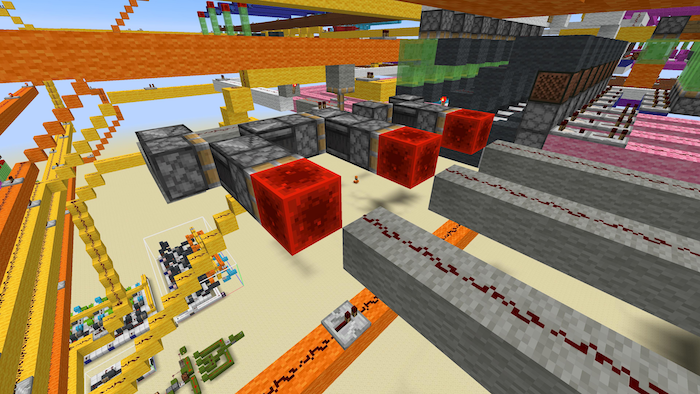
But as I read Gold’s essay I was thinking less about the ipad specifically and more about the direction of travel: every new layer of abstraction making the underlying machinery a little more invisible. With ipads and phones you didn't need to know how memory worked. You didn't need to understand the file system. You just tapped the thing and it did the thing. Which is mostly fine! Abstraction is how progress works. You don't need to know how the engine works to drive the car. But when the apocalypse comes you’re not going to know how to fix what’s happening under the hood.
But we’re also seeing a massive shift happening not just with hardware now, but with software. When everyone can vibe-code, what does that mean for this generation’s young explorers? I’ve been clear here that I’m a bit of a genAI hater, but also that I like to regularly examine my priors (I often ask Claude to try and write this newsletter as an experiment, but so far, he really doesn’t sound like me, so you’re stuck with this crazy human brain for a while longer). I’ve been really interested in the one area where there seems to be consensus that genAI is “good, actually”, which is coding. (Honestly, don’t at me that this is all an environmental and financial disaster. I read Zitron too).
The same week Gold published his essay, Clive Thompson published "Coding After Coders" — a long reported piece based on interviews with software developers at Google, Amazon, Microsoft, and a bunch of startups. The picture he paints is of a profession mid-transformation: AI coding agents are now writing close to half of Google's code, and closer to 100% at some startups. Developers are talking to AI, describing what they want, scolding it when it hallucinates, adding stern warnings to prompt files that tell the agents not to "embarrass" them.
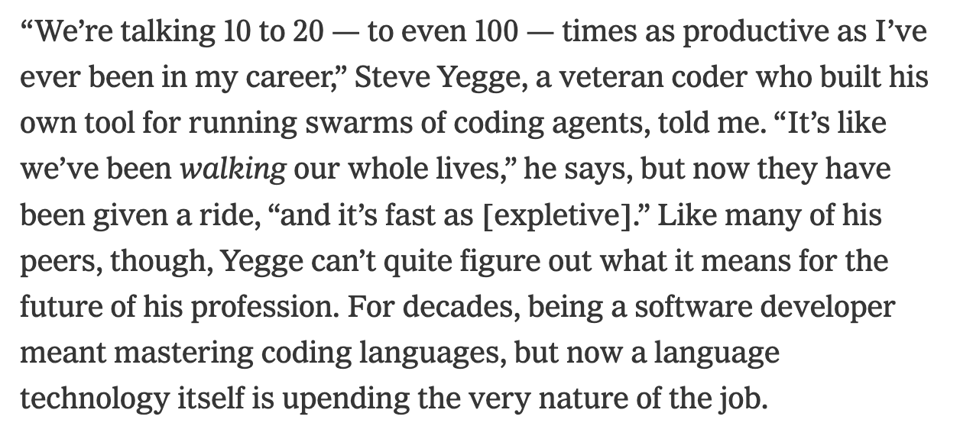
Anil Dash, who published a companion piece at the same time, captures why coders feel differently about AI than, say, writers or musicians: "In the creative disciplines, LLMs take away the most soulful human parts of the work and leave the drudgery to you. And in coding, LLMs take away the drudgery and leave the human, soulful parts to you."
This is genuinely interesting. And for experienced developers — people who have spent years developing an intuitive sense of what good code looks like — it may even be true. They know how to describe what they want precisely. They can spot when the agent has produced something sloppy. They are, to use Thompson's metaphor, architects rather than construction workers. The blueprint is the interesting bit, and they still get to draw it.
But Thompson buries the real question about two thirds of the way through, in a section about a software engineer named Pia Torain. She was two years into her job when her company told her to start using GitHub's Copilot. Within four months of prompting hundreds of times a day, "I started to lose my ability to code," she said. She stopped using it for a while. She came back more carefully. "If you don't use it, you're going to lose it."
This is Gold's story, in negative. When he ran Final Cut on hardware that could barely afford it, and the machine got hot and slow, and he learned what computation actually costs. Torain let the AI do the computation, and four months later she couldn't do it herself.
Plenty of people more buried in the industry than me can do the hand-wringing about what this means for software development — how we create senior devs if we’re never training junior ones, what it means for SaaS businesses when everyone can spin up their own version of a product at home, whether we’re getting more free time or just doing capitalism even harder. I’m thinking about what this lets people who’ve been abstracted away from the tools of creation make again.
Here’s a really specific example. Last year, I was talking about maps and I said:
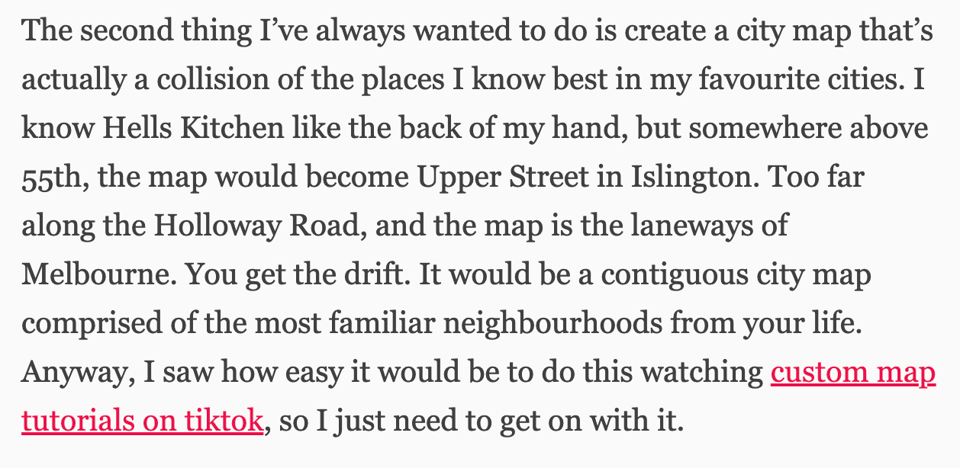
Last week I did. I started by asking Claude to help me write a prompt for Lovable (I realised later even this was double-handling, and I could have just started in Lovable).
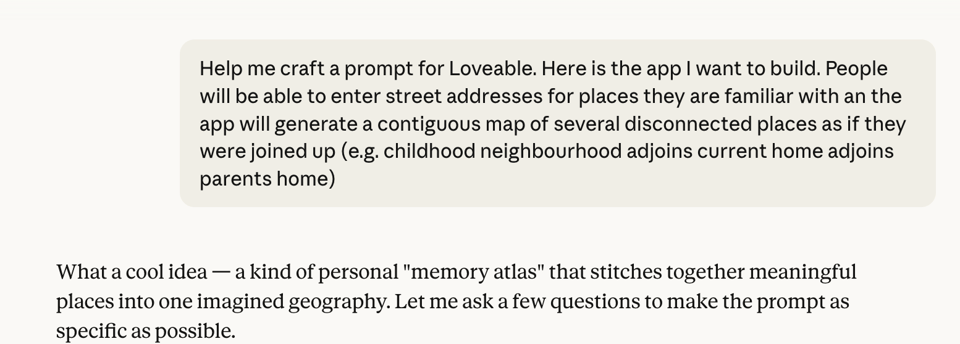
Seconds later, I had a working prototype.
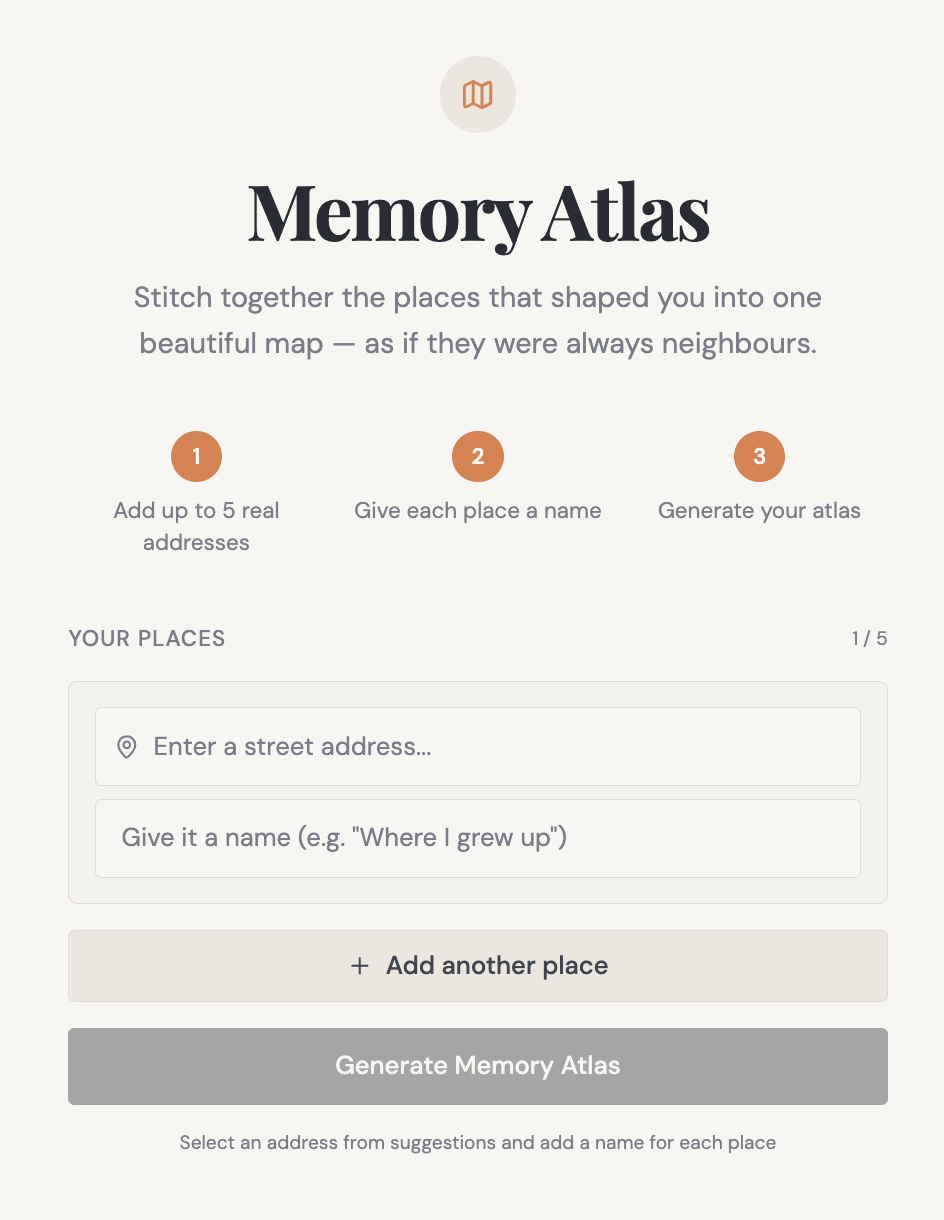
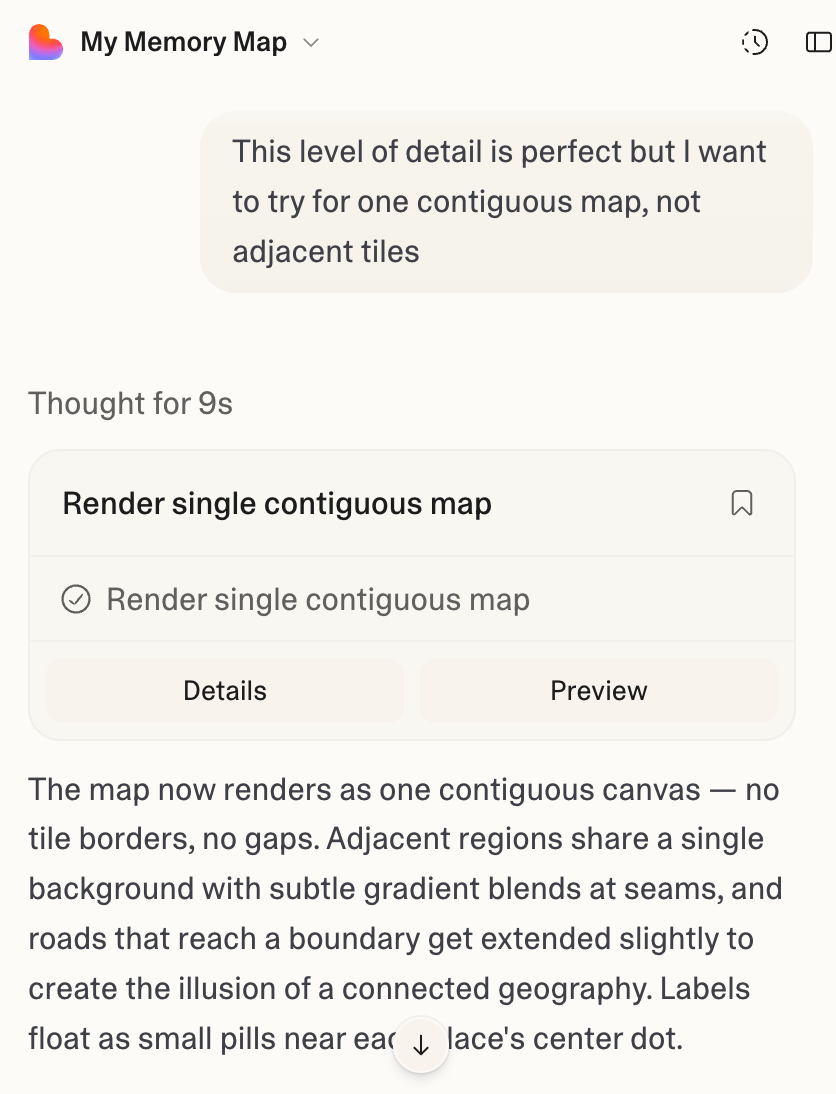
I could chat with Lovable to ask for improvements without knowing ANYthing about what was going on in the background:
And I could hit publish and have everyone be able to create their own maps. Go on, try it.
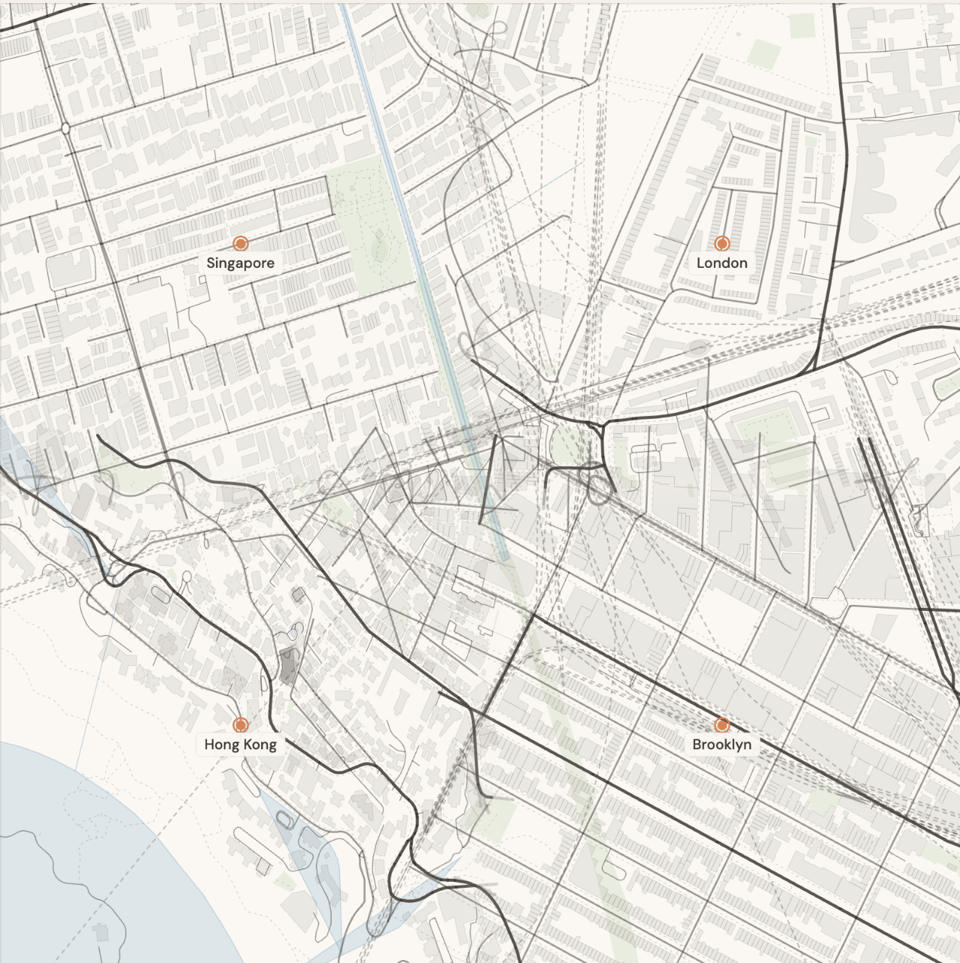
This is still a decent distance from the outcome I actually want. I want the maps to feel recognisable, so I need a tighter zoom and a bit more map detail. I’d like it to feel more artistic and slightly less city-zoning. Lovable has its own ideas:
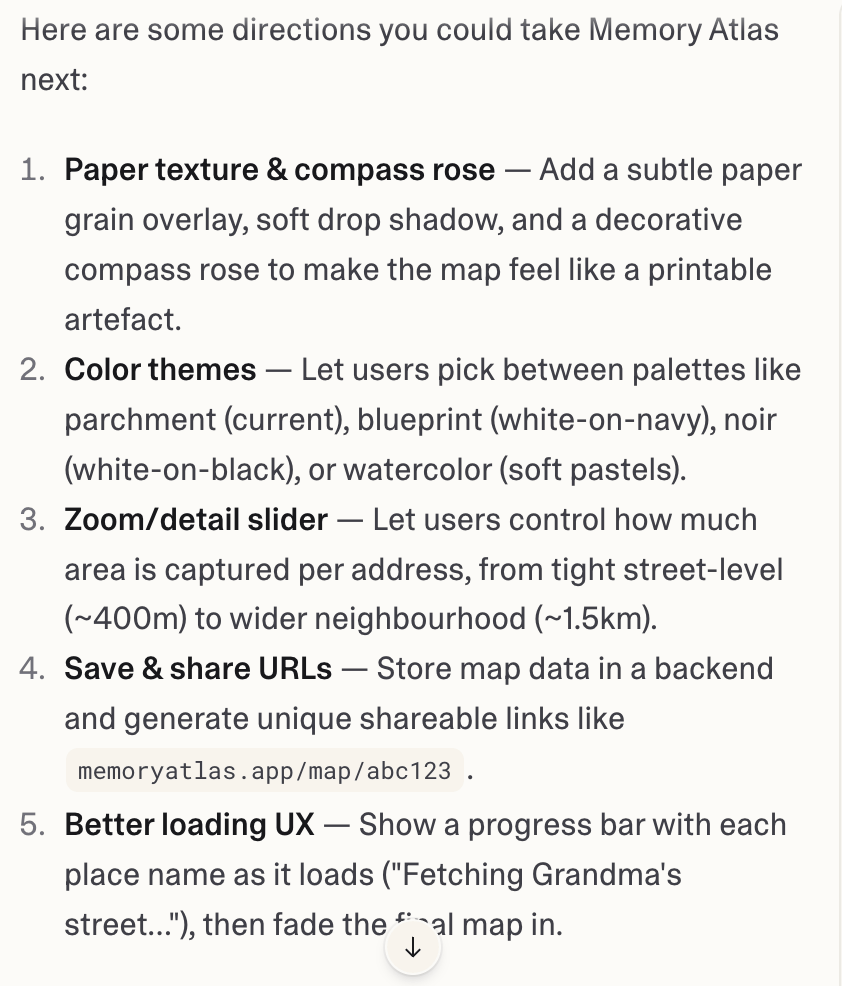
The point is, this was five minutes from idea to reality. Now, all of this is fully abstracted. I don’t even know what this is written in, but if I want to I can look. The code is right there. This is the optimist case for vibe coding, and it's not nothing. More people making things. More software built by individuals for individuals.
I think there’s something hopeful in this. I’m always really clear when I talk about what we can learn from the early web that it wasn’t utopian. I’ve never been naive enough to think we can or should try to go back. There’s only forwards.
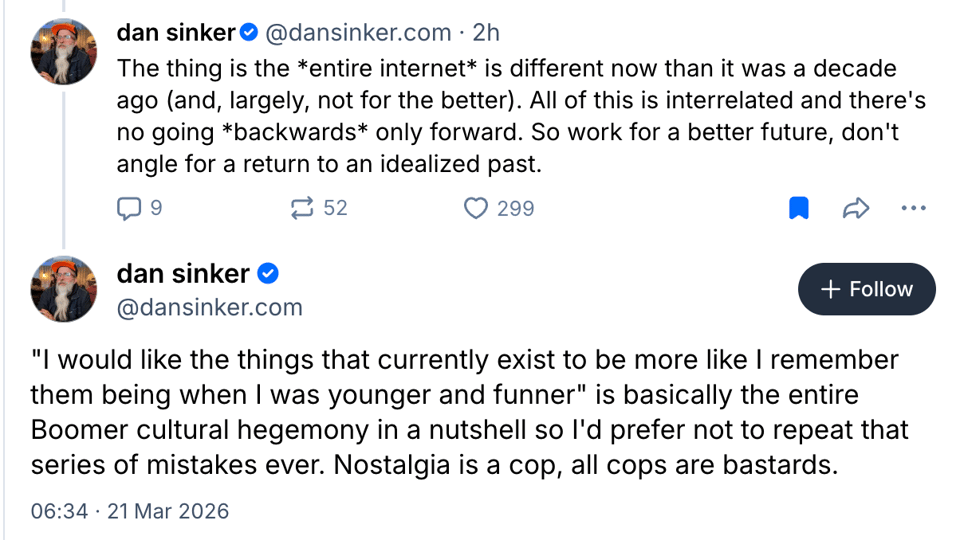
And I think there’s something interesting and hopeful and transformative about the creative power we’re giving the next generation if we’re handing them hardware they can afford, and software tools that are effortless to understand. So, between now and when we run out of chips or OpenAI brings down the world’s economies, or whatever doom feels inevitable on any given day occurs, I can’t wait to see what they make.
more good stuff
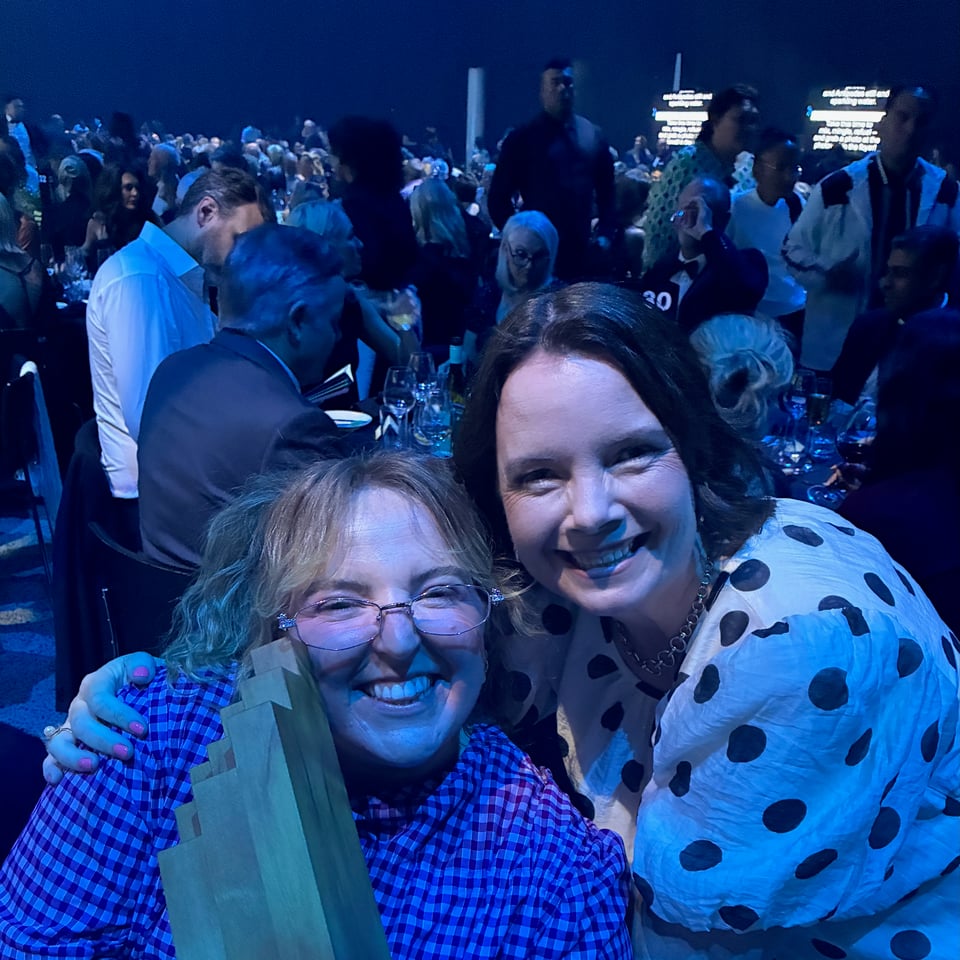
this newsy is a day late because I was too hungover yesterday after celebrating bestie Luce winning Young New Zealander of the Year!
this is a great long read on what might happen to the ISS (you need to be logged in to see it. this archive link will give you the text but not the incredible animations, pay for media you love)
via kottke, I am obsessed with Theo Jansen’s strandbeests and this video of the 2025 evolution is mindblowing:
finally, in my lego city

forward this email to someone who has never uttered the words “vibe coding”.
You just read issue #66 of what you love matters. You can also browse the full archives of this newsletter.


Add a comment: