

So, over the last two years we’ve talked a lot about AI. One of the things I like to do is constantly re-examine my priors. Eighteen months ago when I went on Josh Szeps pod we talked about AI and he was a real believer and I was a massive skeptic. My argument at the time was that there wasn’t a practical use case that people would pay for, that the models were plateauing in their usefulness (in part because they’d run out of internet to hoover up) and the frontier labs were spending money hand over fist that they’d never recover.
Since then, I’ve written here about a whole bunch of things. I’ve looked at the gap between LLM hype and reality, and at how AI agents are being sold as a way to free you up to do more work. After Blackbird’s Sunrise conference, I wrote about the idea that we’re all “builders” now thanks to AI coding tools. I followed that up by asking what creative renaissance might come out of our collective revulsion, and whether craft made by humans becomes a luxury good. I’ve wondered what vibe-coding means for a new generation of young explorers making things with computers. I’ve dug into how AI crawlers are hammering the volunteer web, from The Numbers to Wikipedia. And I’ve written about generative AI and fiction, including the line I draw between AI for code and AI for creative work.
That last bit is probably the thing I didn’t see coming when I was talking to Josh — just what an unbelievable accelerant AI is specifically for software development — and I think that’s at the heart of the gulf between Silicon Valley culture on this topic and everyone else. But other than charging devs for tokens, the “business model” that’s evolved since that convo that AI hype merchants are now pushing is agents and so I want to talk about that today.

If your eyes glaze over when you hear people talk about agentic AI, fair enough. All they mean really is the idea that eventually (or soon?) you will just ask your bot of choice to do things for you. Send email, book a restaurant, arrange travel etc etc. Tech bros are really bad at selling this vision. Sam Altman in particular is horrifying at it:
OpenAI CEO Sam Altman seemed excited to share what he called a “cool use case” on Friday, posting that parents could “connect your family calendars and explain your kids’ interests” to the company’s new product ChatGPT Work, then “every morning for the drive to school, have it make a podcast that talks about one kid’s soccer game that afternoon, one kid’s upcoming birthday, some news, etc.”
Altman’s post prompted lots of virtual eye-rolling, including a simple response from Alex Hirsch, creator of the animated series “Gravity Falls”: “What if you just talked to your children”?
But look, lets be real, there’s a bunch of annoying shit we try to get done in any given week where we probably all have a moment of thinking “couldn’t I get a robot to do this".
For me, it’s often flights. Simple flights, fine. I live in Aotearoa, there aren’t a lot of ways to get to or from here. If I’m flying to Sydney, I’m booking myself, direct. But when I go further afield, a multi-stop international trip is a living nightmare. Would it be cheaper if I went a day later or a day earlier? Is there some sale on an airline I’ve never heard of that would be a bargain. Is it better to book single legs or a return, blah blah blah first world problems. So for years I’ve relied on a truly amazing, absolutely human travel agent — Michele. She’s a weapon at finding good deals, understands the arcane nature of points systems and upgrades, and sends emails like “if you land at Newark instead of LGA I can get you on a newer plane”.
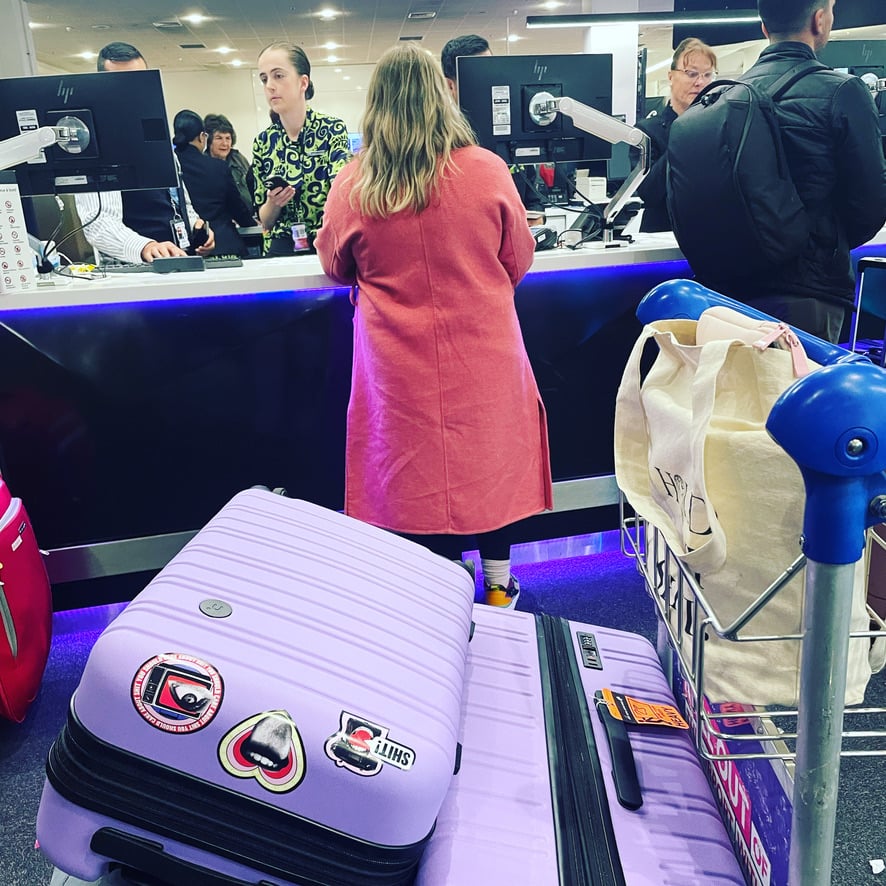
So I have no plans to replace Michele, but like this is the most obvious use case where advocates are saying “you should get an agent to do that”. So this week I thought, okay let’s try. If agentic AI is what we’re all going to start paying these companies for, I’m keen to see how it works.
I started with basic Claude:
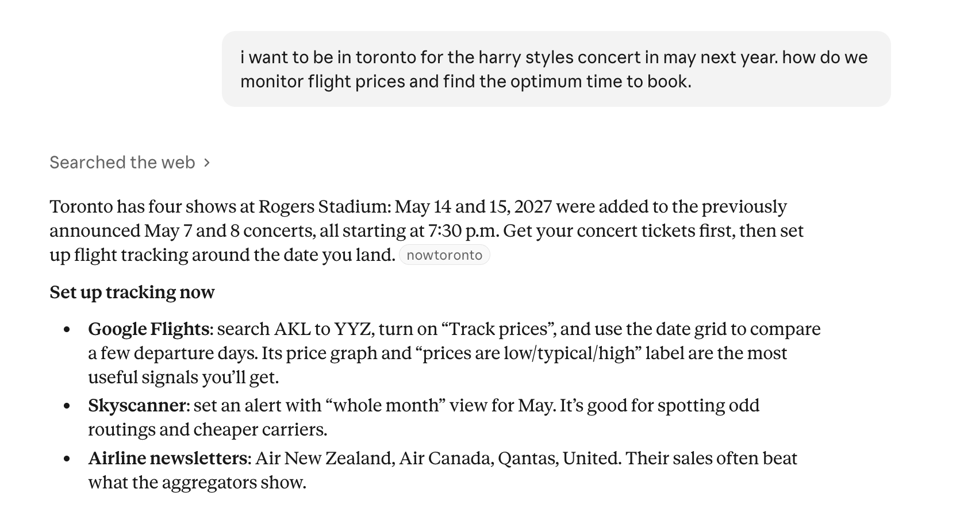
So this is more or less useless. Basic chat can’t do anything more than the existing search sites like Google Flights, or Skyscanner. And I can already set up alerts using those sites to flag up price drops on particular dates.
But but but I hear the zealots cry, this isn’t an agent. And no, it’s not. So, Claude, would an AI agent be better?
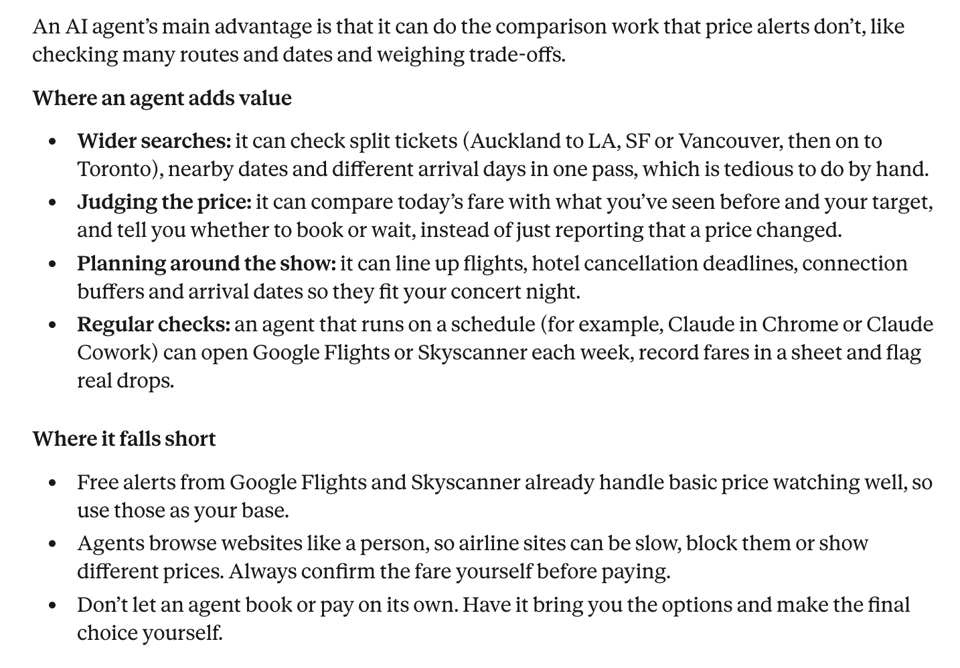
The key thing here is actually hidden in that second to last bullet point. Agents “browse websites like a person” — I mean, sort of, but not really — and can be defeated by the sites themselves. Last week United Airlines said it was moving to block bots on booking, ticketing and check-in. Amazon has blocked rival Meta’s agent Muse from shopping on the site. So, the reality is that your agent will increasingly be working with a limited pool of resources. Unless it decides to ignore the rules. In the past when you built a website and you didn’t want bots crawling all over it you basically said so in a robots.txt file — AI agents don’t give a f@*k. That’s how they stole all our books and fanfic. So NOW sites are having to fight back. Cloudflare, for example, has designed an AI labyrinth for bots.
To do this, we decided to use a new offensive tool in the bot creator’s toolset that we haven’t really seen used defensively: AI-generated content. When we detect unauthorized crawling, rather than blocking the request, we will link to a series of AI-generated pages that are convincing enough to entice a crawler to traverse them. But while real looking, this content is not actually the content of the site we are protecting, so the crawler wastes time and resources.
As an added benefit, AI Labyrinth also acts as a next-generation honeypot. No real human would go four links deep into a maze of AI-generated nonsense. Any visitor that does is very likely to be a bot, so this gives us a brand-new tool to identify and fingerprint bad bots, which we add to our list of known bad actors.

This all feels incredibly depressing. But here we are. So. Back to my Harry flights. If I set an agent going, I need one that’s going to ignore the rules — but also it’s going to be fighting against other tactics designed to stop it from finding me the flights I want. God, obviously I should just call Michele. But I’m here for the experiment so here we go.
Instinct is the personal AI agent everyone in Silicon Valley has been passing invite codes around for this year. It has no app or website. It interacts with users through direct messages, voice calls and WhatsApp, and runs a virtual computer and browser in the cloud so it can act for you while you get on with your day. To do that, it connects to a device’s applications, such as calendar, email and messaging apps, and can access a device’s screen, audio system and location data as well. Users have it finding doctors, negotiating bills, booking travel and doing online shopping.
YOLO lets go.
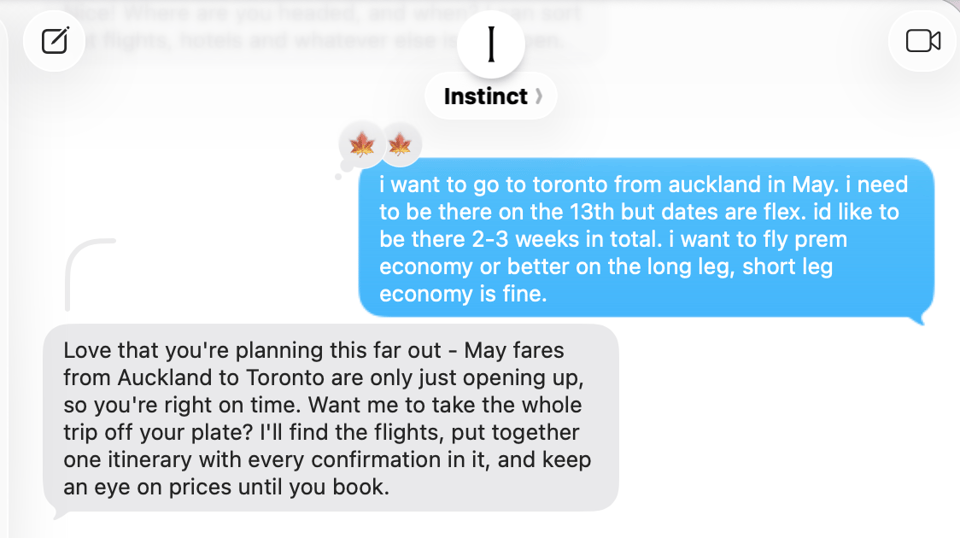
I’ll be honest the initial response was pretty slick:
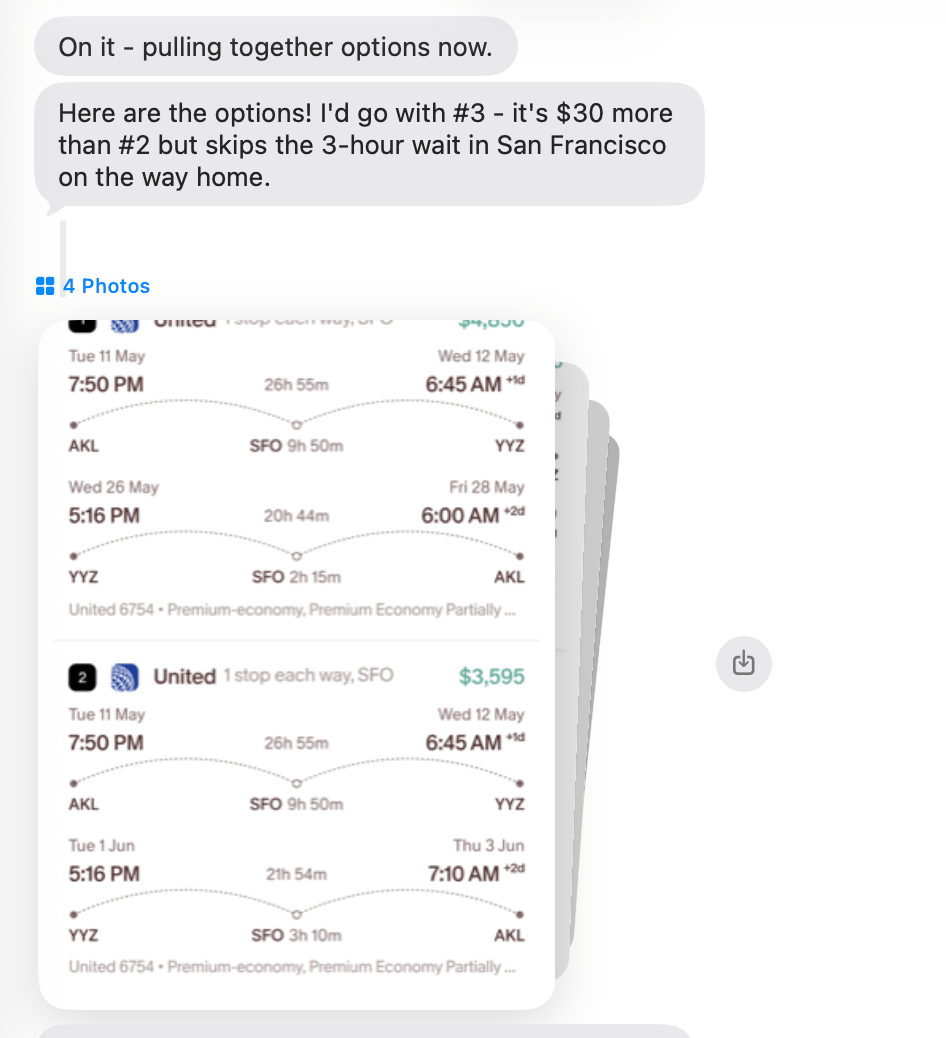
But things quickly went downhill from there. As we chatted, Instinct was happy to suggest I fly to Toronto via Hong Kong (for those not looking at a map, that’s an extra ten hours in the air). It couldn’t seem to remember that my dates were flexible, so kept insisting that there was only certain flights available on the day I wanted. It quoted me in USD instead of NZD and so on.
It said that it would monitor sales for me, but over the ensuing days Air New Zealand announced a sale that I had to tell Instinct about. And it had a truly unhinged view of my budget.
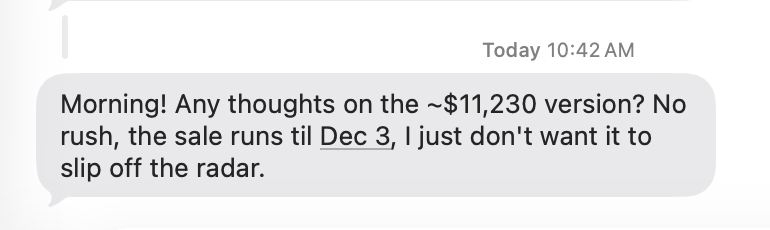
The details don’t really matter. You get this gist. Hannah Fry did a great overview of this recently, when she built an agent, gave it a bank card, and let it loose.
It’s a fun experiment, that goes hopelessly wrong. "Cass didn't make us any money at all. And, in a lot of ways, she was a disaster. She spent hundreds of dollars on paper clips and leaked our passwords to a total stranger. But don't let her incompetence fool you, because these things are getting better fast."
Maybe? IDK. This week 404media has this incredible story of a guy who got locked out his Facebook page and his AI agent “Baby Mia” decided to handle it (and if you click on one link today make it that one — the video of the journalist interviewing Joe and getting interrupted by Baby Mia will make you want to walk into a forest and never come out).
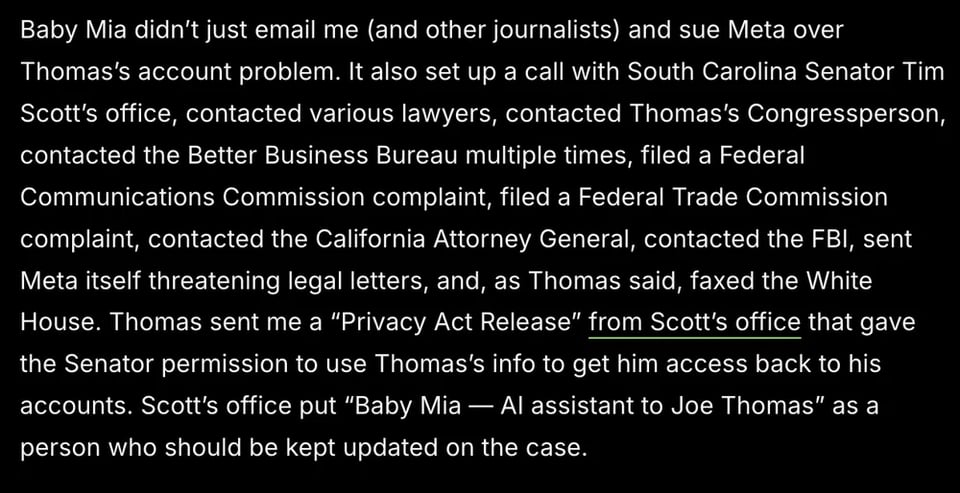
So, they’re getting “better” I guess. But in like a horrifying way.
Anyway. I realised this week that there’s no way on God’s green earth I’d let Instinct book a flight for me. And it seems like I’m not alone. Uber and Airbnb have both announced recently that the promised slew of agentic commerce has not (yet) arrived.
AI agents were supposedly going to be game-changers for both sides of consumer transactions—agents would handle tasks like bookings, support, and services 24/7, freeing humans for other work. Turns out businesses don’t like dealing with AI agents, and consumers don’t want them handling their business.
Over the last week as I’ve chatted with people about agents, a really common response is “oh but this is like at the start of the internet when noone wanted to put their credit card online. it will change.”
I have a really vivid memory of sharing an office in London when I first went to work there as a lawyer, with an Australian solicitor who thought I was absolutely batshit for using the internet to buy things (this was in 2001, so Amazon had been around for five years or so at that point). Seems quaint now, so maybe in another five Michele will be out of a job and Instinct will be securing me upgraded lie flat seats to wherever I want to follow Harry next. But it doesn’t feel like a fair comparison to me. Not wanting to put your credit card into a site in 2001 was about whether you trusted the vendor to send you the thing you ordered. Not wanting a clanker to book your flights in 2026 is about not wanting to outsource important decisions that are going to hit you in the wallet and the jet lag. I chose a brutal 20 hour layover in Guangzhou in January because it was the cheapest way to get to London for something I need to do. I don’t want to find myself in the air for ten extra hours just because an agent can’t weigh those decisions properly, or because it’s been led through a bs labyrinth to that flight, or because it can’t see a better deal that it’s been blocked from.
Instinct currently has a deranged $2.5b val while it’s still in private access. It feels like something that gets its lunch eaten by an Anthropic integration to messages any day now. AND it still feels like something noone has asked for and noone wants.
I’ll come back to this in a year’s time and see if I was wrong.
more good stuff
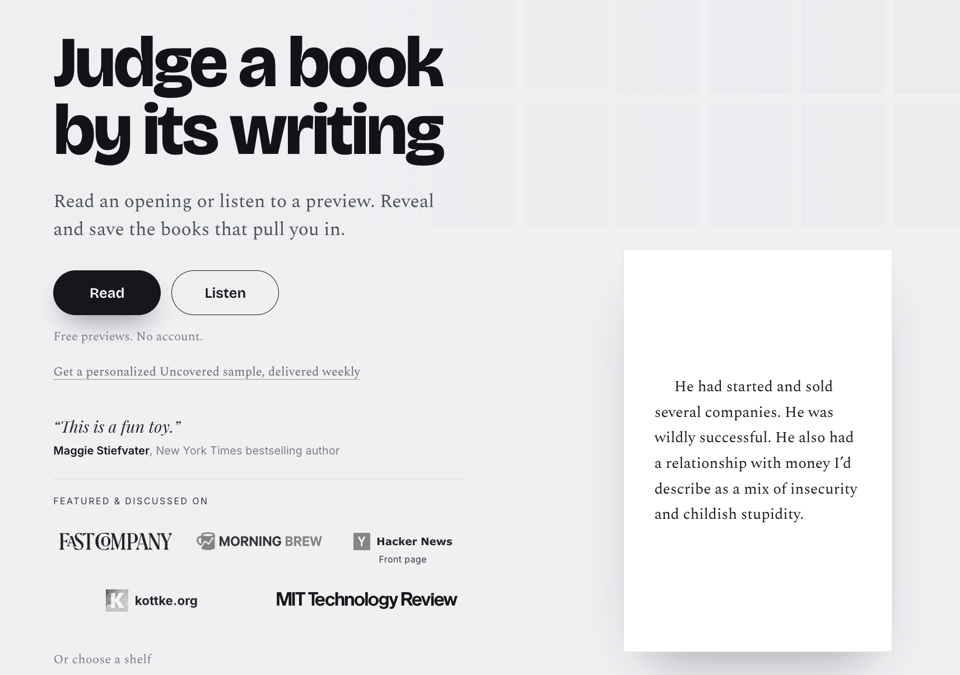
reader Nathaniel sent me a link to his cool new thing uncovered.ink, which you can read about here. It's an endless feed of first pages of books with the covers hidden, so you fall for the writing before you know what it is.
fascinating read about the mental health crisis facing NHL goalies. Goalies are always stereotyped as being unbelievably weird (shorthand on tumblr: “goalie is a gender”).
The solitary nature of the position, the all-or-nothing dynamic that comes with it, and the ubiquitous and increasingly toxic presence of social media critics have pushed the profession to an inflection point.
as people try to manufacture culture war bs about whether or not Hunter Schafer might be a Bond girl, this thread — about the first trans Bond girl — made my whole week.

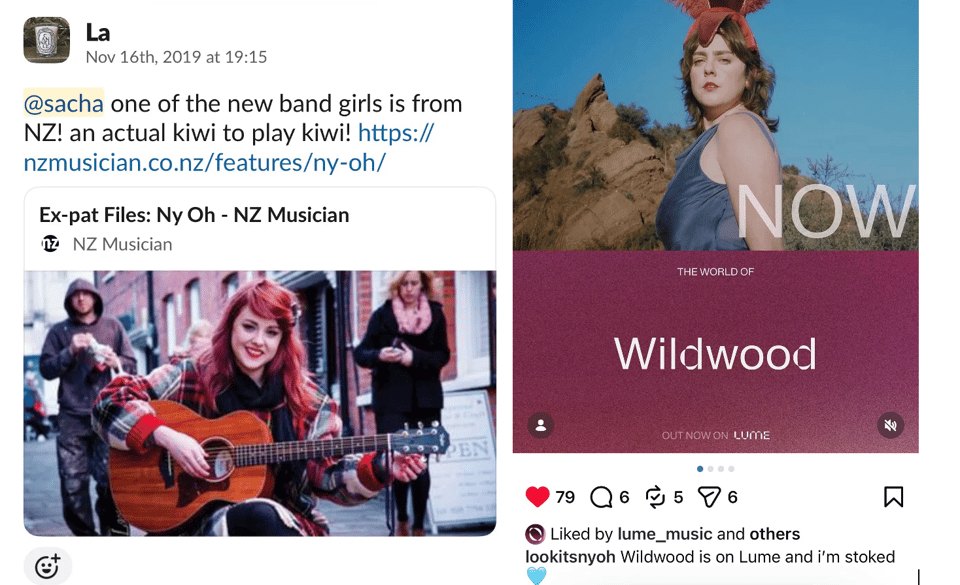
extremely cool full circle moment for me. seven years ago i learned that an awesome musician from Aotearoa was joining Harry Styles’ touring band. and now Ny Oh’s on Lume!
finally, in my lego city

Forward this email to someone you’re pretty sure is not a bot.
You just read issue #101 of what you love matters. You can also browse the full archives of this newsletter.


Add a comment: