

Last week we talked about the child safety initiatives coming out of the UK. And when the subsequent (inevitable) social media ban was announced, I reshared the post I wrote last year about age-gating the internet. I like to be all “fair and balanced” (lol) around these parts, so I was interested to read this post responding to the “ten most common objections” to a social media ban.
Smartphones have sufficient other positive uses such that we’re not realistically going to get rid of them - any more than we did cars, despite the deaths they cause. But the case for social media is much weaker: regulation is needed, and a social media ban for under 16s (and a properly enforced phone ban in school) is a good place to start.
What jumped out to me was not so much the responses (you can form your own view on these) but the author’s suggestions for improved regulation of social media:
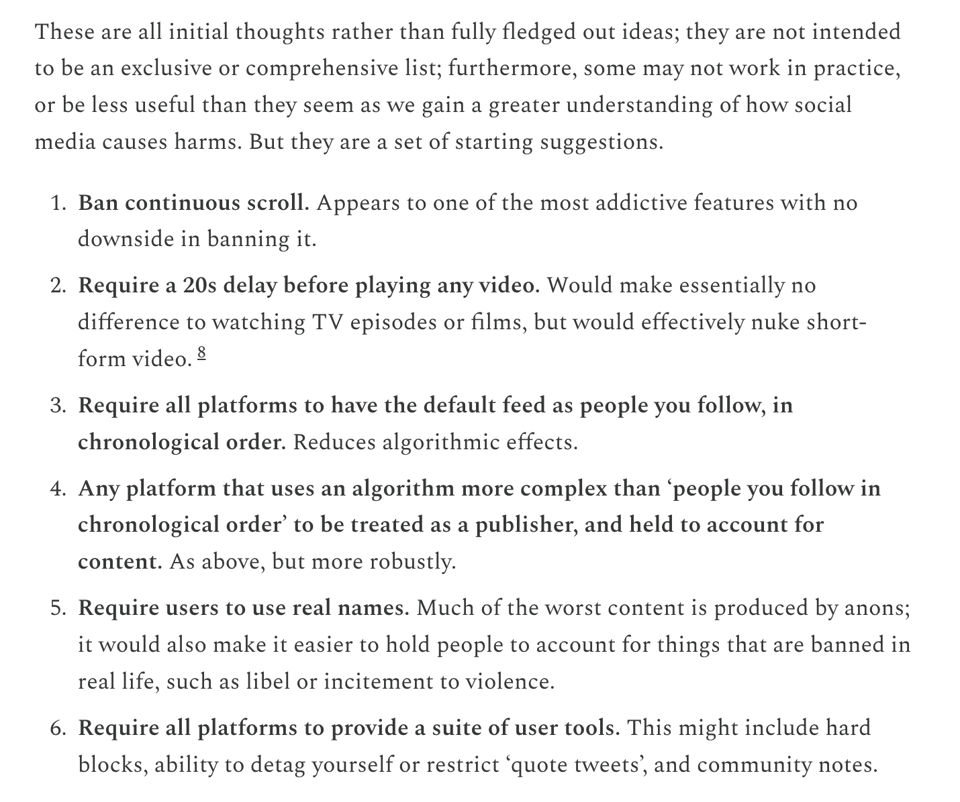
Particularly number five, requiring users to use real names. So this week, I want to talk about one of my favourite counterintuitive research results, and something that I think is at the heart of healthy fandom communities on the internet. A real-name internet is less healthy, and less safe.
First, there’s a massive difference between an anonymous and a pseudonymous internet (honestly try spelling that correctly the first seven times, because I did not succeed). People have been focussing on the dangers of online anonymity for over a decade, and the thinking feels right for about thirty seconds: “People wouldn’t be so nasty online if they couldn’t create a throwaway account to do it”. Then you remember that most of the worst stuff you can find on Facebook is posted by someone with their government name attached, and they do not care. The Jan 6ers planned to overthrow their government with their actual wallet names. And the things you’ll find some men saying with their chests on Linkedin with both their name AND their place of employment makes you boggle.
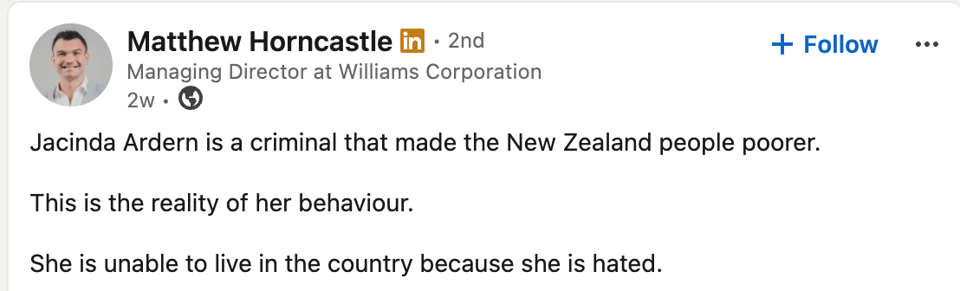
So, if we accept that real names aren’t actually a deterrent for bad behaviour, Matthew, what should we be aiming for.
My favourite large-scale study into this was built off a data set of 45 million comments on the Huffington Post, through three distinct phases of the site. In the first phase, commenters were able to easily set up a throwaway username and say whatever they wanted. The site quickly became a “troll’s paradise”. If mods blocked a username, the poster could instantly create a different one and carry on.
In the second phase, the site moved to what are called “stable pseudonyms”. Users had to authenticate their accounts, but once they’d done so, they could pick whatever username they liked. If they were blocked, instead of being able to immediately create a new account, they had to go through the friction of finding a way to authenticate a new account. So the personas weren’t disposable.
In the third phase, the site moved to using Facebook authentication for comments — a true real-name system.
Now, you’d expect that the quality of comments would improve in phase two, and again in phase three. But what actually happens is that both civility and the deliberative quality improve in phase two, and fall off in phase three.
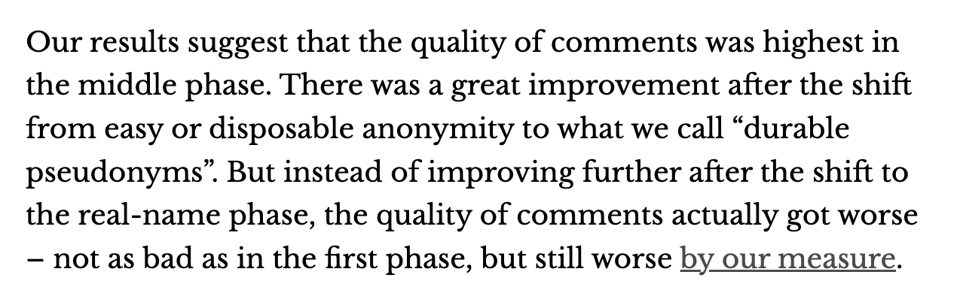
The researchers conclude that “what matters, it seems, is not so much whether you are commenting anonymously, but whether you are invested in your persona and accountable for its behaviour in that particular forum”. (You can click through from that article to other studies that support this result).
I think the reason this leapt out to me when I first read it was because I was thinking about when I use pseudonyms, which is of course in fandom spaces. We’ve talked before about how young fans now are doing everything on main, but in my day (cue my knees creaking as I sit down) you used a pseudonym. Not because you wanted to be vile, but because you didn’t want everyone in your real life knowing what you were doing online. But (generalising again, because of course there were trolls) fans cared deeply about their personas in those communities. The whole concept of “big name fans” only exists because fans had reputations — as popular authors, or creators of great rec lists, or artists, or answerers of anon questions, or update accounts with the inside deets. The worst thing that could happen would be losing access to your tumblr, or hitting posting limits. Who you were, under that pseudonym, mattered.
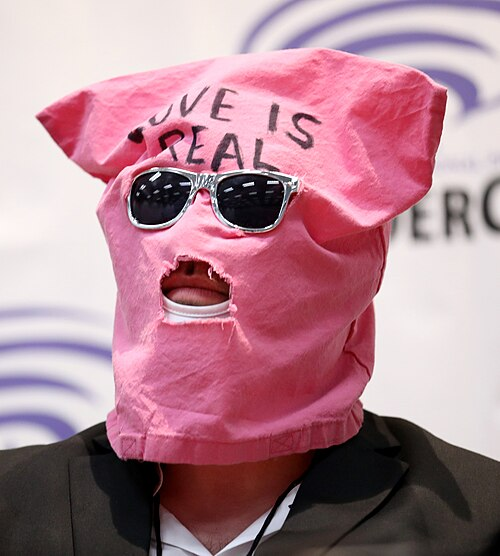
And it’s not just in fandom spaces. Noone was really stoked to learn who @dril really was — the magic was in the persona, not the person. I never need to see Chuck Tingle’s face — or for that matter learn if the whole thing is real or an elaborate bit. Let the guy keep a bag over his head.
One of the things I talked about in relation to age-gating is how it cuts young people off from safe access to a queer forum, or a domestic-violence support site, or even a sexual-health resource. These are all spaces where a durable pseudonym is useful.
Zuck famously said (in The Facebook Effect): "You have one identity. The days of you having a different image for your work friends or co-workers and for the other people you know are probably coming to an end pretty quickly. Having two identities for yourself is an example of a lack of integrity."
A lack of integrity is just a wild thing for him to say in general, but particularly about this. Of course we have different sides to ourselves. But increasingly we have fewer ways to explore that. We exist on the same handful of walled platforms. Online our hobbies sit alongside our political views and our sports teams and our existential dread. And then we have to tie all that to the name on our passports, knowing that a tech company will give it to ICE, and the US government will review it before deciding if we can travel.
A real-name internet doesn't produce better behaviour. It just makes certain people easier to find — and not always by the people they want finding them. The thing that produces better behaviour, as it turns out, is the same thing that makes fandom spaces work: having somewhere worth belonging to and a sense of self worth protecting.
more good stuff
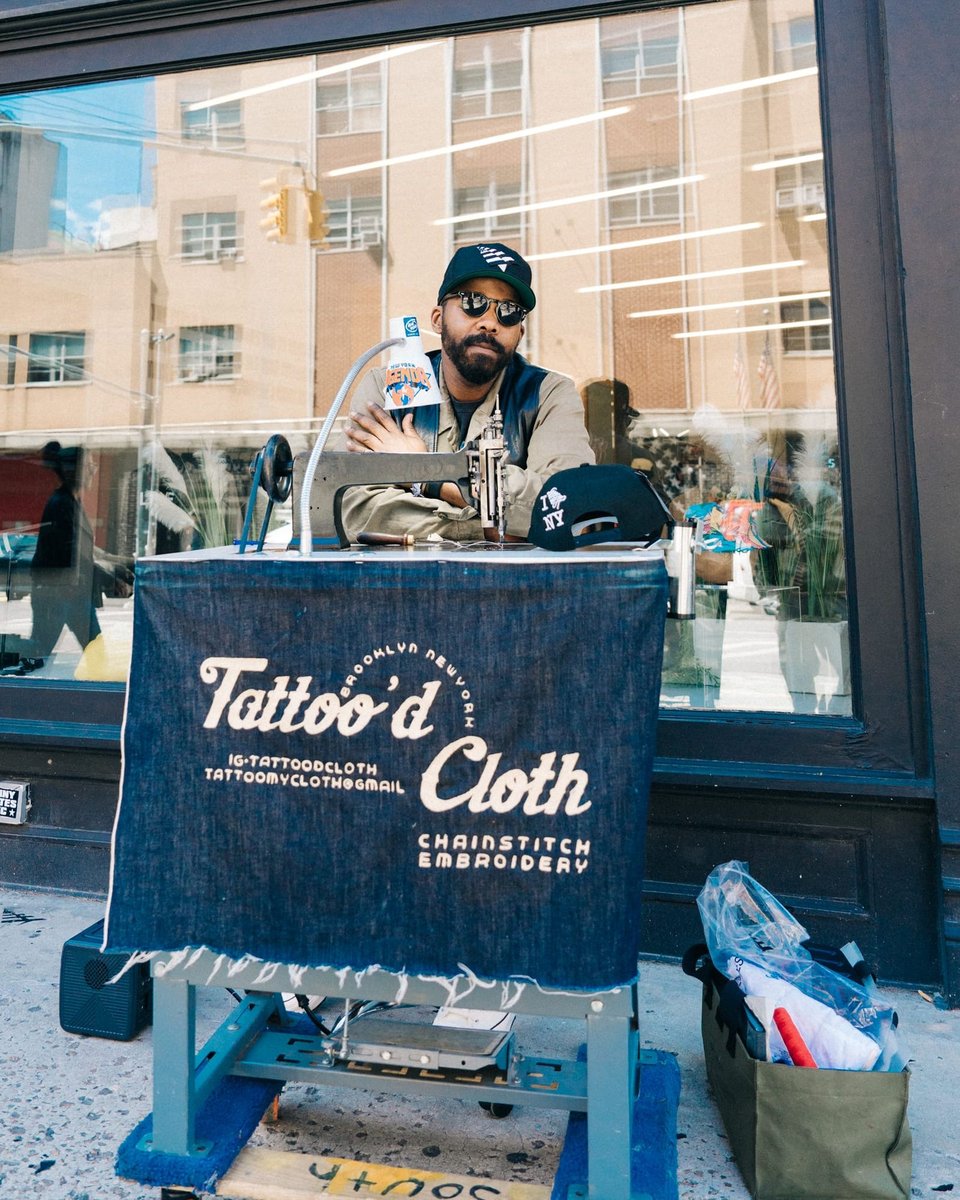
i probably have a whole post in me about the joy of the Knicks fandom over the last week, but I really loved learning about Cheeks, the guy with the sewing machine.
one for the bigots in your life, a new study shows trans women have no advantage over cis women in sports.
one for the AI boosters in your life, when used for literature review LLMs consistently fail to mention female authors in female-led literatures, insist that men are more influential or more heavily cited when this is contradicted by objective citation counts, and attribute women’s work to hallucinated male scholars.
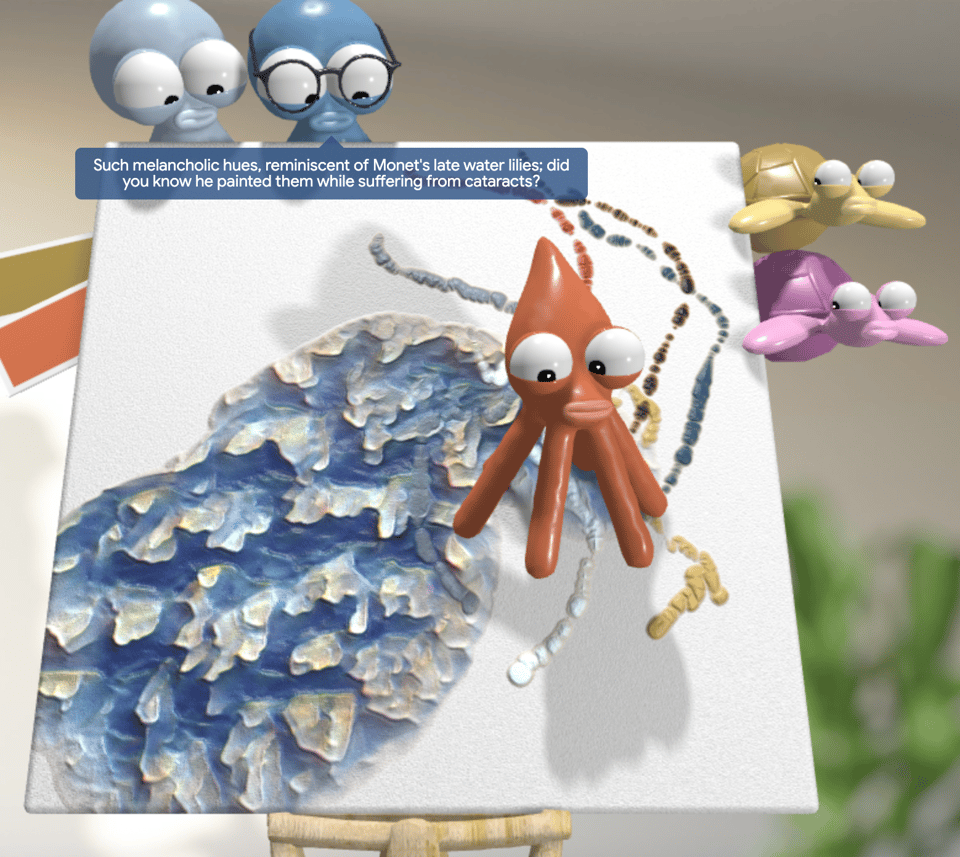
via webcurios, this gorgeous experiment from Google (apparently they still occasionally makes cool things, who knew?) in which you use sea creatures to paint, and they comment restfully on your art. Honestly, just go try it.
finally, in my lego city

Forward this email to someone who would love Chuck Tingle.
You just read issue #79 of what you love matters. You can also browse the full archives of this newsletter.


Add a comment: