

This week two things crossed my path that made me want to think and talk further about generative AI and fiction.
For a while now I’ve been clear in the divide I maintain in my head between using AI for software development (objective, testable, an obvious accelerant) and AI for creative endeavours (soulless, bland, generic).
Authors (and I include myself in this category) feel really strongly about the latter, for all the obvious reasons (economic and environmental collapse) and in part because we know that the genAI models were trained on our stolen work. And because it feels like people are cheating? This year, a non-fiction book about truth in the AI age was revealed to have false quotes all through it generated by AI (lol, the irony). The NYT published one of its famous Modern Love columns, and the author then conceded she’d used AI. Mia Ballard’s new novel was pulled by Hachette after accusations of AI use went viral online. I don’t know, as an unpublished author I’m probably just a bit bitter, but the idea that people who have these opportunities are churning out slop computerprose is so galling.
But at the same time, I feel like we’re now in an era where people are jumping to pile-on at the first em dash to cry “this is fake”. Sometimes writing might feel like it’s AI generated because AI models are trained on real human writing. And AI “detectors” are notoriously unreliable, producing both false positives and false negatives. Plus, if you jam someone else’s fiction into an AI “detector”, guess what? You’re giving the AI models their writing, without their consent, don’t do that.
Except that also, people know these tools are unreliable. So, what happens when an author just stands their ground and says “nope, I wrote it”? Granta has just decided to stop publishing the winners of their Commonwealth Short Story Prize, after accusations of AI were levelled at the winner, who denied them.
Unless those results are fatally flawed, which is not impossible in this early phase of AI detection, they point to another possible explanation for the prizewinning authors’ categorical denials. Knowing that detection platforms are fallible—proving AI use isn’t as simple as proving, say, plagiarism from another author’s work—writers could be discovering an enforcement loophole. As Farook explained, revoking a prize without proof is, morally and legally, no simple matter.
I was thinking about all this because this week, in its ongoing effort to speedrun every fandom milestone, the Heated Rivalry fandom had its first fake suicide, or as we called it in the Fandom Wank days, a pseuicide. In this case, the author of a popular fanfiction had been the victim of a pile-on of AI accusations, in the comments on their story but also across other platforms including tiktok. Most fanfic authors feel pretty strongly opposed to AI use, and “fuck AI” is now a relatively common tag and author’s note on ao3.
I’d read this particular story when it was published. And I did not think it was AI generated. It did go off the rails, as many stories do, and I gave up reading it before the end. But the first few chapters at least, I would have said were real human writing. So when I saw the pile-on, I was like “hmm, seems unlikely, but whatever”. Mostly, the evidence seemed to be, again, “I ran it through an AI checker” (don’t do that). Or that the author had reused the name Marcus for side characters. That didn’t seem very compelling to me. I once wrote a 37-hour day because I just forgot what the hell time it was and kept having my characters go places and do things. It’s why you have a beta (and why that beta shouldn’t be Claude). This story (I mean it’s a novel) is 250k words long. So, maybe an extra Marcus slips in.
But then I saw a different accusation that stopped me in my tracks. One of the side characters in the story, a new MLH commissioner, was called Elias Thorne.

Why have you heard that name before? Because it’s a character that AI has made it’s own.
Ever heard of a shadowy figure called Elias Thorne? If you haven’t, try asking an AI chatbot to tell you a story.
In recent months, tech types and researchers have noticed a weird phenomenon: when prompted to tell a story, numerous popular LLMs, including ChatGPT and Claude, will spit out a tale featuring this mysterious Elias figure.
Sometimes he’s a lighthouse keeper, sometimes he makes clocks, sometimes he’s a detective. But whatever form he takes, he features in a curious number of AI-generated stories.
Researchers found old mate Elias turned up in over 26% of AI-generated stories.
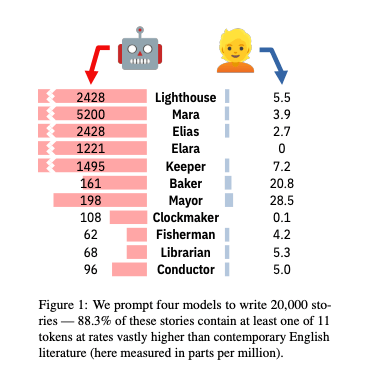
Once I read that, I was pretty convinced that there was no way the author just happened to name their new MLH commissioner Elias Thorne.
The author’s “cousin” then broke the news that she was no longer with us.
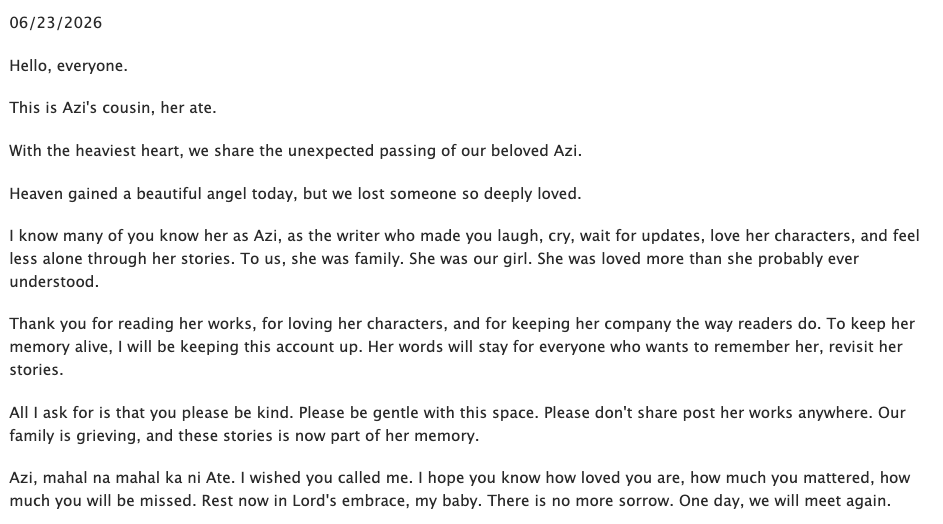
(lest you think I’m being callous, the first thing I’m doing when a beloved cousin dies is not updating her ao3 profile, but you know, you do you)
Mostly all I could think was WHY would you use genAI for fanfiction — the most personal kind of creativity, where there’s no expectation that your writing be perfect and no barriers to entry and no topics off limits? Like, is it just for clout? So that you can turn out chapters with frequency, and get the dopamine hit of readers sending you nice comments with regularity? How do those comments even feel when you didn’t write the story?!
While I was thinking about this mess, Melanie Walsh shared her team’s new academic paper AI Fiction in the Wild. They used the WildChat dataset, which is fascinating in itself — 1m ChatGPT interaction logs collected and anonymised with consent. They found that LLM users are not only generating fiction; they’re generating a lot of fiction. More than a third of the conversations contained some form of fiction generation, including original stories, scripts, roleplay, worldbuilding, fanfiction, and erotica.
We also define some common AI-generated fiction consumption profiles, including what we call story cyclers and infinite story demanders. For example, infinite story demanders prompt the model to generate variations of the same or very similar stories over and over again, sometimes for months on end. Some of this behavior may be attributed to users’ dissatisfaction—the story is not quite right, at least not yet. But we argue that in many cases it is fueled by the satisfaction of reading endless permutations of the same story, none of which end the same way twice.
I had to pause and read that a couple of times, because it was an of course moment for me. What is a fanfiction reader if not an “infinite story demander”. We’re there because we want more than the source text gave us. And we’re prepared to read hundreds, thousands, of stories featuring the same characters over and over. My ao3 history shows I’ve read over 1200 Heated Rivalry stories and the show only came out six months ago.
And yet, AND YET, I would never want to read something Claude wrote about Shane and Ilya. Awful. Fake. No soul. It’s not the point of transformative fandom, which is human and creative and awesome.
And it’s particularly awful to think that some readers are just driven by impatience?
For example, in April 2025, a fanfiction writer complained on Reddit that one devoted reader of her longform fiction, which the author had been releasing every two weeks for years, had been inputting each chapter into ChatGPT so they could read a version of the next installment while waiting for the real one. “it hurt my chest,” the author said when she found out. “the AI feels so insulting and violating”
omg DON’T DO THIS.
I think what I find so disheartening about all this is every time some AI hustlebro is boasting about the future being one where people can generate their own blockbusters or whatever, my response has been, “write fanfic you dummy”.
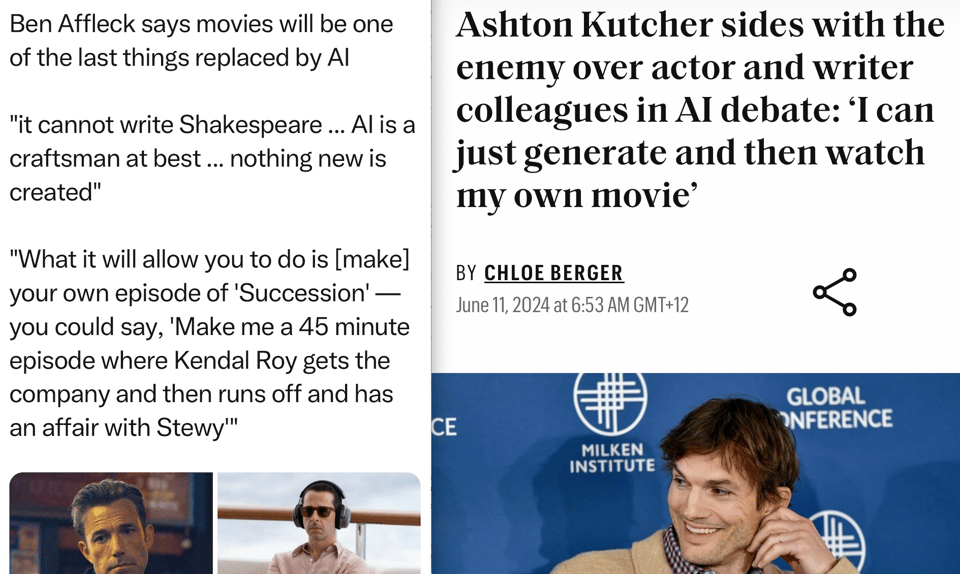
Like we’re all free to write our own versions of anything, all the time. Nothing’s holding you back. Outsourcing it to Claude is just going to get you a bedtime story about the lighthouse keeper Elias Thorne. You’ve got more imagination than that.
more good stuff
okay after that we need a good human story, so watch this awesome video of a filmmaker and her retired dad driving 600 miles to save a baby cow.
liked this piece from Teen Vogue about “focus gaming” — apps to gently encourage focus and productivity.
It’s not surprising that the cozy aesthetic of these apps feels like a bit of rebellion against workspace apps like Gather and those owned by Meta—which sold themselves on opportunities for productivity-boosting coworking spaces and imploded. “It wasn’t lovely or cute,” Ilgin S observes. Or compassionate, I might add. It’s not a digital detox. Apps that encourage you to take breaks, drink water, enjoy nature, and feel the presence of someone else are obviously not the full Luddite experience—they’re still apps. But they might be a step in a more productive, for lack of a better word, direction.
A great older longread about the rise and fall of Livejournal, and how it pioneered and then lost blogging.
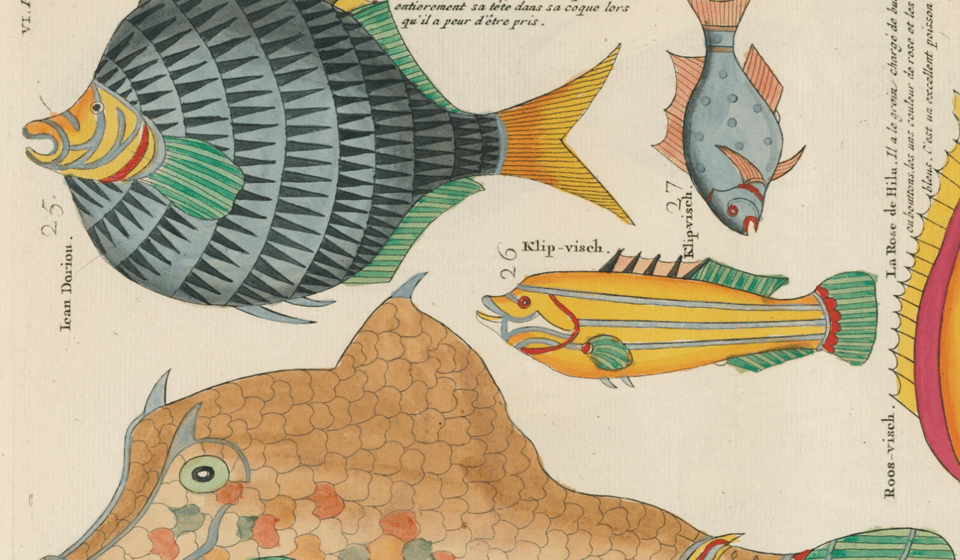
gorgeous - the online archive of the Biodiversity Heritage Library.
finally, in my lego city

Forward this email to someone who doesn’t read 200 fanfics a month.
You just read issue #80 of what you love matters. You can also browse the full archives of this newsletter.


Add a comment: