

My godkids have gotten super into watching US network procedural The Rookie. It’s one of those shows you’ll have probably skimmed past when you’re looking for something to watch, and then someone tells you it’s been running for eight seasons and you’re like, what? Who is watching this? My godkids, apparently. So I decided to chuck it on as background tv over Easter.
(People often ask how I’m able to consume literally so much television, but it’s often because I’ve got it on in the background while I’m doing seven other things)
Anyway The Rookie is your classic network procedural. It’s low-stakes copaganda where the good guys always win. It’s the kind of tv I grew up with before the era of “prestige television”.
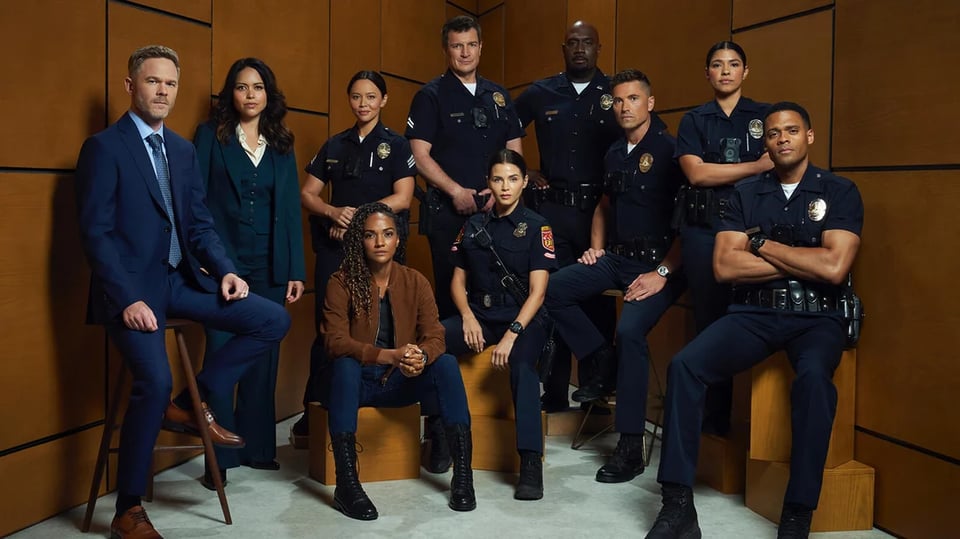
And by grew up with, I mean literally. Network television's commercial peak was the 1990s. The four major American broadcast networks (ABC, NBC, CBS, Fox) routinely drew 20–30 million viewers per episode for hit dramas and sitcoms. ER averaged 32 million viewers in its first season in 1994. Friends regularly pulled 25 million. The 22-episode season, with “sweeps” periods driving storyline peaks (crossover events or giant dramatic disasters), was the way we experienced scripted tv.
And look, so many things have changed since then it’s like six newsletters in a trenchcoat. Television piracy, the rise of streaming, the decline of cable, the silo-ification of everything, the death of the monoculture. If you’re interested, Amanda Lotz has written a ton on this period of rapid evolution.
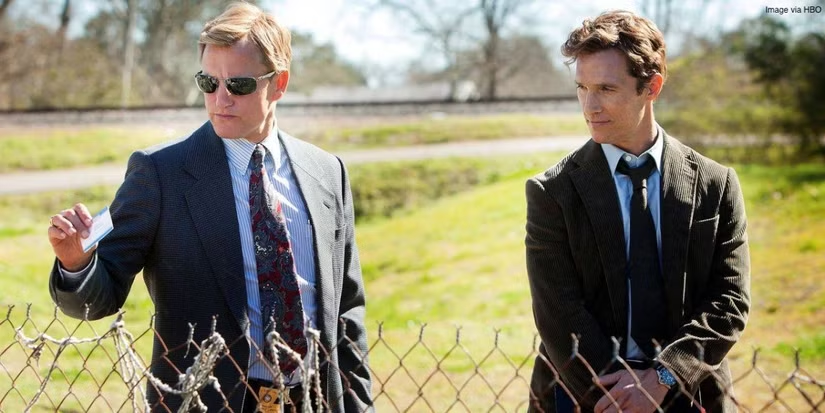
Anyway, when we talk about “prestige tv” it’s a shorthand for a model that came out of HBO in the late nineties with The Sopranos and The Wire and Deadwood. And then on into the other networks with shows like Mad Men and House of Cards. These new shows tended to have shorter seasons. They didn’t have commercial breaks so they didn’t need to structure the story around them in traditional acts. They had a lot more adult content — language and violence and sex. And they were expensive and cinematic, which meant over time they attracted film actors — A Listers who would never have historically lowered themselves to do tv.
In response, the networks have tried a few things. They’ve doubled down on formats that work (which is why you see seventeen versions of CSI, or Law and Order, or that incredible burgeoning Yellowstone empire that seems to spawn a new show every three months). And some shows have imported prestige elements (Shonda Rhimes is good at this with shows like Scandal and How to Get Away With Murder).
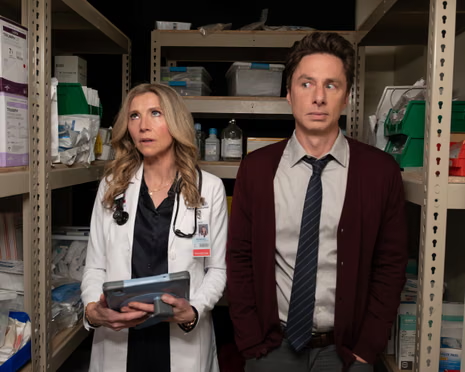
But what’s stuck out to me recently is the play to nostalgia. Reboots aren’t a new thing, but in tv they seem to be everywhere right now. There’s a new season of Malcolm in the Middle, which seems like an impossible thing to pull off now that Bryan Cranston is a prestige tv icon, but is apparently genuinely good. Scrubs is back too, and again, well-received.
Meanwhile, my tiktok is a constant stream of clips from Friends, a show that ended over twenty years ago.
I’ve been thinking about that as I scroll aimlessly around looking for something to watch of an evening, and find myself trying a few things before giving up and putting The Rookie back on. So much of what we consider prestige now equates with dark and violent. Brutalised women, sickening crimes. Or it’s telling the very real stories of the broken world around us so it’s depicting institutional corruption, entitled rich assholes, poverty and homelessness.
These aren’t stories that you want to chuck on and enjoy at the end of a long day. And whatever people say about writing in shows becoming dumber for second screening, the prestige structure doesn’t permit chilled-out viewing. A 22-episode procedural drama has to be largely self-contained per episode because viewers used to miss weeks; a 10-episode prestige series assumes and rewards close viewing. You’re going to binge it and pay attention to the details. And I don’t always want that kind of viewing experience.
So it’s no surprise that Grey’s Anatomy is still going strong after 20 seasons. It’s my generation’s daytime soap. Or that people love the hot firefighter show. Or that Gen Z is obsessively rewatching Friends.
And the data supports this. Neilsen’s 2025 streaming numbers show that while Stranger Things came out on top of most streamed shows (behind Bluey, which I don’t really count because that’s just tired parents trying to survive), the rest of the top ten was acquired shows like Grey’s Anatomy, NCIS, Law and Order, The Big Bang Theory and Family Guy.
Some of these shows are OLD, and yet young audiences are eating them up. And while I hate articles that point at Gen Z like zoo animals, I think this gets at part of why that’s true:
Unlike the heralds of Peak TV, these shows aren’t edgy or morally complex. They leave boundaries right where they stand, the envelope resolutely un-pushed. They’re brightly lit and boldly colored, not obsessed with making scenes so dark you can barely see them, then scolding you for not properly calibrating your TV set. They’re just about extremely attractive people doing their jobs exceptionally well, then blowing off steam by having extremely attractive sex. In other words, they’re what, for the vast majority of the medium’s life span, was known simply as “TV.”
Brands and marketers want to do all this work proving that young people like nostalgia, and that it’s a trend you can sell into, but the reality is just that the world is a bit shit, and a predictable half-hour comedy is comforting. So is a cosy mystery where a little old lady solves crimes. So is a romance where two star hockey players fall in love.
There’s a certain snobbery involved with network tv — like you have to apologise for liking it. Like you have to justify why it’s comforting, or that you don’t really watch it’s just on in the background, or you know it’s copaganda and you’re still firmly ACAB, or you know the humour is problematic but it was the nineties, or whatever.
I’m sort of tired of it. It’s in the same wheelhouse for me as apologising for liking pop music. We shouldn’t be embarrassed that three minutes of a song makes us feel good. And we shouldn’t apologise for reading a thriller on a plane, because the comfort is the point. And something happened in the prestige era where we decided that if a piece of television didn't cost us something, it wasn't serious enough to admit to. I love great tv, and I’m going to continue to watch award-winning dramas when that’s what I’m in the mood for. But my godkids are just watching The Rookie because Nathan Fillion is charming and the bad guy gets caught in the last act, and most of the time that’s all I want too.
more good stuff
This is a great piece about the rights to Sherlock Holmes entering the public domain: Sherlock Holmes is finally free to be gay.
young sherlock is fine but young moriarty is the goat This is amazing. Disney had animators from recent hit releases reanimate songs in sign language. There’s a whole feature to watch in that link about how they did it.
Here in Aotearoa we’ve seen orchestral music and electronic music mash up regularly with Synthony, but I loved this piece about orchestral music and heavy metal being a natural pairing.
As well as virtuosity, classical and heavy metal also share an obsession with technique, the transgressing of boundaries that previous generations had thought impossible to achieve – Van Halen’s technique of tapping, using the right hand above the left on the guitar neck, Liszt’s double octaves and feats of memorisation – and the search for faster, louder, more intense, more immersive levels of spectacle. Where classical led, metal has followed.
finally, in my lego city

Forward this email to someone who is rewatching Suits.
You just read issue #71 of what you love matters. You can also browse the full archives of this newsletter.


Add a comment: