

This week I read this great essay from Maxine Kaplan about the early-00s show Felicity. I watched the show obsessively in the beginning, as part of that slate of WB dramas. Keri Russell’s Felicity bins med school and follows a guy she has a crush on to NYC and college heartbreak and love triangles and roommate shenanigans ensue. I once saw Scott Foley at an airport while the show was running and thought I’d peaked in celebrity encounters.
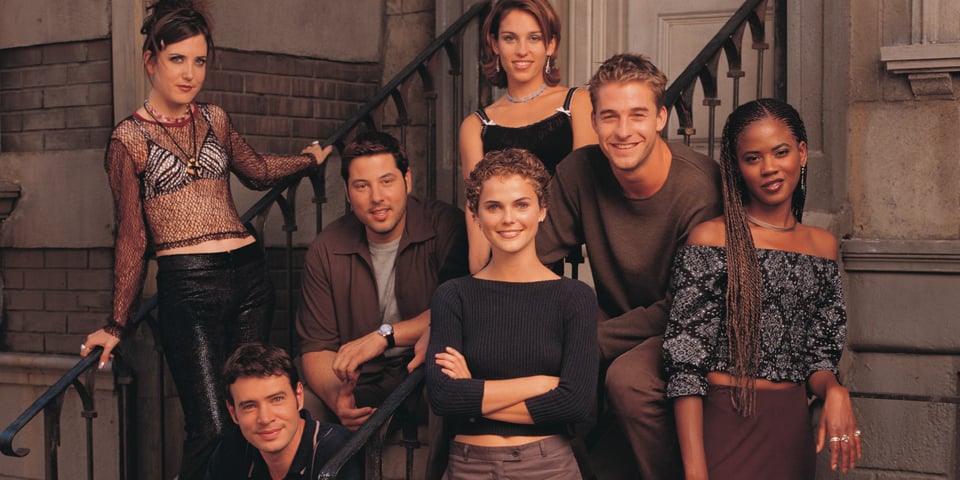
Anyway, what the essay is discusses (and what I’d completely forgotten) was JJ Abrams’ decision to go fully unhinged for the final episodes of the last series. Felicity’s wiccan roommate Meghan casts a spell so that Felicity can go back in time and make a different decision about her love life, and the rest of the season plays that out, completely seriously.
There’s no plausible deniability that this is a one-off formal experiment, or a dream. The season arc changes: Elena’s wedding is cancelled early! Megan and Sean never get married, and in fact, break up! Entire supporting character B plots, different from when we watched the first time, occur in these episodes without any involvement with or appearance from Felicity herself. She can’t have just been hallucinating new events, she’s not there to hallucinate them. Suddenly, magic—time magic, no less!—simply existed in the hyper-realistic world of Felicity.
The essay talks about the joys of speculative fiction, and how hard it is to surprise audiences now, or to enjoy anything in an unmediated way. But it also got me thinking about these “what ifs”.
I’m writing this from a lake in Canada, and yes Heated Rivalry fans (or I suppose now I should include Sterling Point fans), I’m at a cottage. This one is a rustic hundred-year-old log cabin though, not a glass-fronted mansion.

Alex and I have been reading a lot of fanfic, and my godtwins, who cannot understand why their mother is still obsessed with the gay hockey show have been asking questions about fic, and yesterday we were talking about how in fanfic something is always different. Shane is a swimmer instead of a hockey player. Ilya’s mother doesn’t die. A Station Eleven apocalypse occurs, but the Boston Raiders still play hockey. We talked a couple of weeks ago about fanfic readers as “infinite story demanders”. And it’s true that fanfic is an ongoing series of “what ifs” — just like Abrams did with Felicity.
After I stopped paying a lot of attention to the MCU (I lost my way after Avengers:End Game, I’ll be honest), Marvel started airing an animated anthology series called What If?. When I first heard about it, I scoffed because I was like, “you mean … fanfiction??” but that was smug and incorrect. What If is based on the comic book series of the same name, and that series has been exploring how the events in the Marvel universe might have unfolded differently if key events changed since 1977! And of course that makes sense. Comic books are always killing off a main character, bringing them back, retrofitting histories, and spinning off into alternate dimensions.
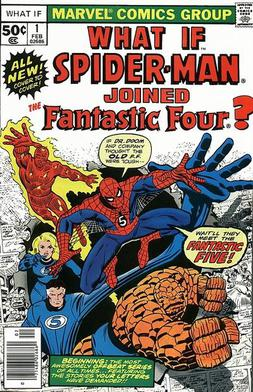
The MCU had established that we live in a multiverse at the end of the first season of Loki. So the What If? series then explores things like "What if Captain Carter was the First Avenger?", "What if the world lost its mightiest heroes?", and "What if... Thor were an only child?". These are classic fanfic tropes (although tbf it’s more like “what if Thor and Loki were banging” but you get the point).
Now, the multiverse is everywhere. It means that the MCU can put all the Spidermen together in one film.
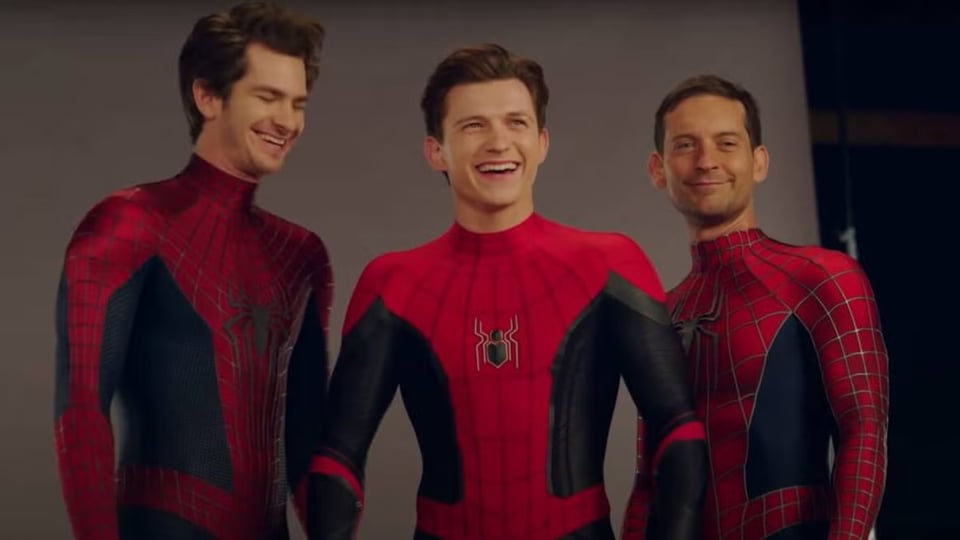
It means noone is ever really dead. And despite doing Steve Rogers so dirty in End Game, he’s showing up again in Avengers:Doomsday. In a multiverse, you can just reset the timeline anytime you like. You don’t even need a wiccan roommate.
And you’d think that would feel liberating, but idk it feels kind of like it takes the stakes away, to me. I enjoy the infinite resets that fanfic offers me in part because the canon is the canon. There’s a true version, and then there’s every other wildly creative take. If there’s no true version? I feel like I’m back in first year university (just like Felicity) when every single class somehow became about post-modernism. There is no truth. Yawn.
Kaplan writes about the Felicity heelturn:
This experience will never, ever happen again. It simply can’t. Algorithmically, we’re never going to be put in a position where we consume art that surprises us like that; one genre isn’t suddenly going to shift into a diametrically opposed genre, without that having been the point all along. Studios would never allow it. We’re never going to be blindsided into unreality, just gratified. And if something truly shocking does happen, it will inevitably publicly dissected, analyzed, and argued over to death. Intimacy with art becomes discourse.
This is a loss. I think I’m not the only person chasing this feeling. I think it’s why art about that feeling, like the transcendent I Saw the TV Glow, or arguably Backrooms, which was predicated on Kane Parson’s long-running personal conversation with a public concept, has hit so hard. It’s something I miss. It’s something the artists of tomorrow are going to miss without knowing it. That wild, unprovoked snort of incredulous laughter as something becomes a new version of itself.
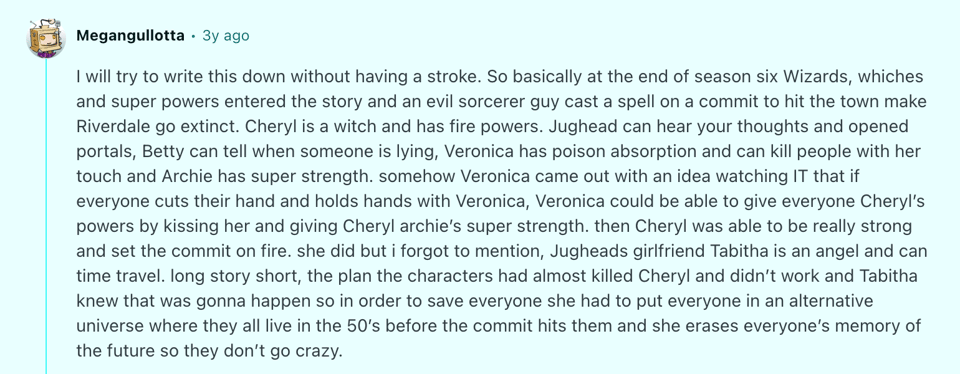
I agree with the feeling, but I think it’s still possible. At one end, you get a show like Riverdale, which started as the kind of teen soap that was meant to emulate something like Felicity but over the course of seven seasons veered around the map like a drunk driver, encompassing serial killers, cults, time travel, and the four main characters ending the series in a romantic quad relationship (a quaduple? idek). Genuinely surprising lol.
At the other, Oscar-winning end, you get Everything Everywhere All at Once. It was absurd, and it was also a completely fresh take on a multiverse. It was delightful. I could not predict anything about it. I gasped with glee the way Kaplan writes about experiencing those final Felicity episodes for the first time.

Apple+ did it to me with Sugar. A noir-ish PI drama starring Colin Farrell that I will not spoil, but which in the first season has a twist so wild I kept texting Alex to say “have you got to that episode yet???”.
So I think we can still take stories in unpredictable and strange and interesting directions. And in the meantime I’ll read ten more versions of Shane and Ilya as coaches, or sports agents, or retired hall-of-famers, or frat boys. Whatever the infinite story demanders come up with next.
more good stuff
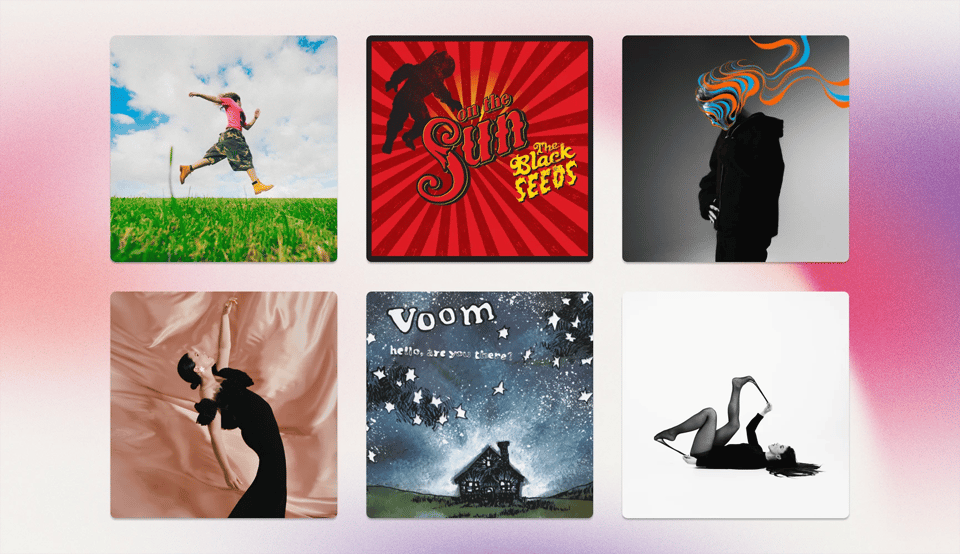
forgive me a plug but Lume has just dropped our second slate of albums AND we’re now available on Android. Get amongst.
loved this list of the 50 most underappreciated tv shows of the 21st century. Justice for Bunheads.
Brandy Zadrozny does some of the best serious journalism about conspiracy theories, and she’s pulled this awesome episode together on Candace Owens and the whole “who killed Charlie Kirk” spectacle.
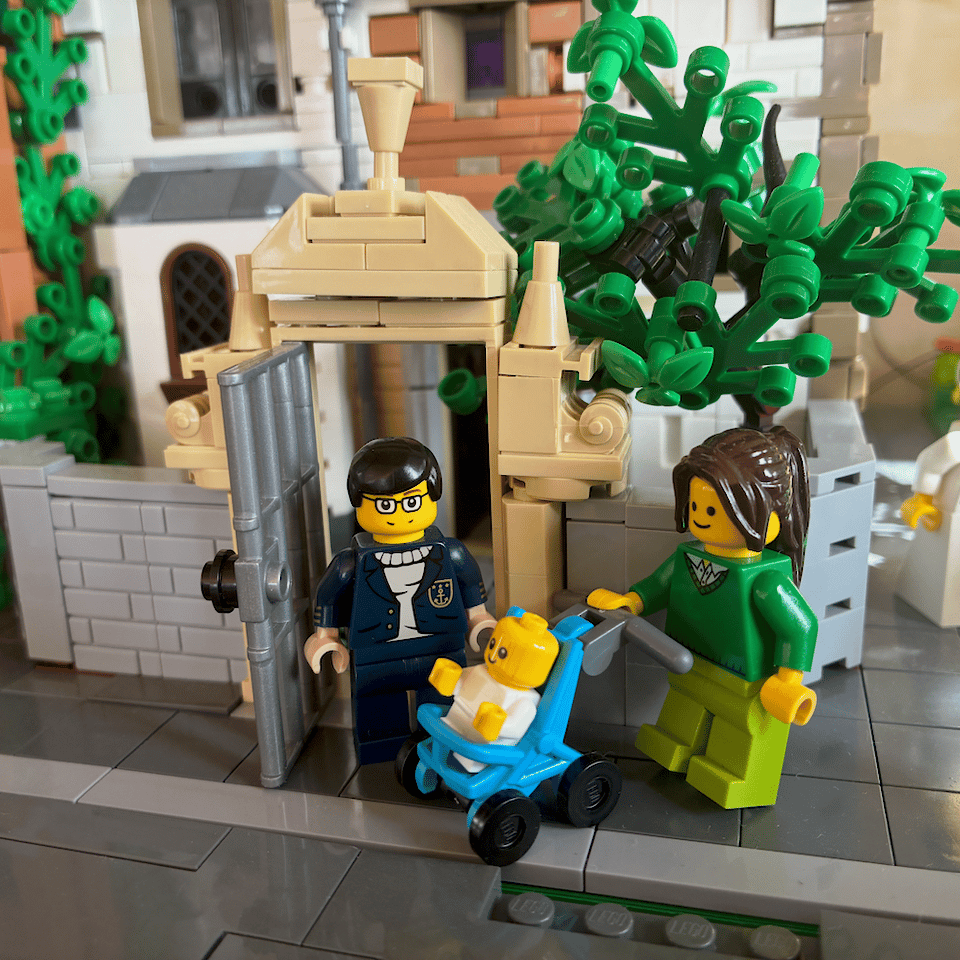
finally, in my lego city
Forward this email to yourself in another timeline.
You just read issue #87 of what you love matters. You can also browse the full archives of this newsletter.


Add a comment: