

I've talked here before about how much I love rabbitholes, and one that I have been periodically diving into for years now is climbing Everest. Or more specifically, people dying on Everest, and why anyone would attempt a goal that has a fatality rate. Like if you came to a thrill-seeking tourist attraction, bungee jumping maybe, and the sign said "over three hundred people have died doing this" you'd probably think twice. And worse, over two hundred of their bodies are still on the mountain. So, idk idk. It's always fascinated me. Probably because we grew up with Hillary being a national hero in Aotearoa. And now we get to watch Tom Hiddleston be a hot Hillary.
And I think the other thing that’s always blown my mind about it is that Everest isn’t a technically difficult climb. What makes it hard isn’t that you need to be an exceptional climber, it’s that it happens at such an altitude your body is actively trying to kill you. The “death zone” (above 8000m) has insufficient oxygen to sustain human life. And starved of oxygen, you start to make really poor decisions. Your brain literally starts to malfunction. Which leads to climbers misreading routes, or weather, not turning back when they need to, thinking sitting down will help, falling, and dying.
I was thinking about that this week because I watched Jon Krakauer speak at 92Y earlier this year to mark the 30th anniversary of what, at the time was the deadliest day on the mountain’s history, and which formed the basis of his book Into Thin Air.
If you haven’t read the book, you should. It’s far more powerful than watching Keira Knightley murder a New Zealand accent in Everest.
Krakauer was on the mountain as a journalist for Outside magazine to write about what, at the time, was a new phenomenon: commercial guiding companies making it possible for people with little mountaineering experience to summit. Eight climbers died in the tragedy.
Watching Krakauer reflect on it three decades later is kind of incredible. He’s had to do ptsd therapy with combat vets. He still believes his very presence on the mountain that day directly contributed to what went wrong. You can see that the decision to write the book to exorcise what happened instead came to define everything about his life subsequently.
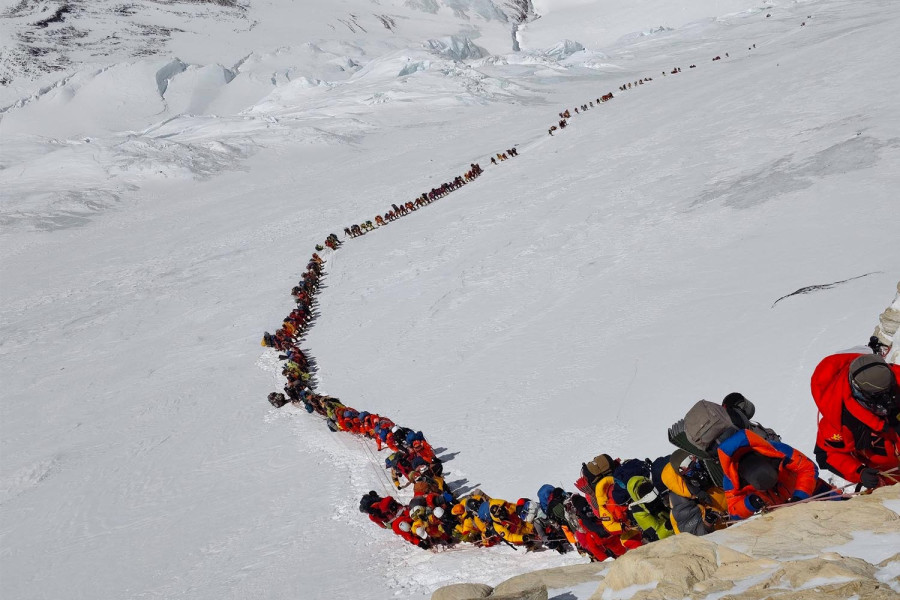
And it’s not like it put anybody off! The 2026 Everest season was the busiest yet. There are only a handful of days in May when the weather allows for a summit push, and this year a record breaking 274 people did it one day. We’ve all seen those photos of the “queues” and they’re only getting worse:
From a summary of the season:
Reports came in of taking twelve hours to climb from the Col to the top. There were reports of snow blindness, frostbite, and rescues, but, as usual, bad news tends to stay on the mountain rather than in public.
Overcrowding on the mountain leads to death. And all the incentives are so messed up. The only way this many people can climb is with the support of hundreds more Nepali guides, who risk their own lives every year to fix lines, set up camps, and carry supplies.
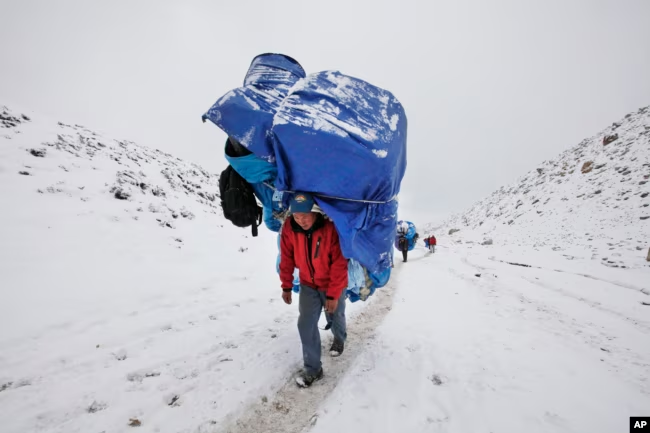
To really understand this you definitely should watch the documentary Sherpa. It set out to investigate a 2013 brawl between climbers and porters, and then wound up being on the mountain during the 204 avalanche that killed 16 porters.
It’s a great watch, and helps unpack so many of the conflicting things going on here. Guiding is a way to make a good living in Nepal. Most of the guiding companies now are owned and run by Sherpa (a note about language: Sherpa is the name for the ethnic group. It’s offensive to use it as a synonym for porter or guide). And the income from Everest is critical for a nation like Nepal. And yet, and yet, and yet. The trash left behind on the mountain is worse than ever (climbers prioritising descent over dying opt to leave everything behind like people ditching their pop-up tents at a music festival).
Nepal’s government is planning to increase permit fees again, but rich climbers don’t see that as a barrier. So the government is also considering a requirement that you must have climbed another 7000m peak in Nepal to get a permit.
Adventure Consultants advised anyone who wanted to climb Everest to follow a programme which started with a mountaineering course and to ensure they had a lot of climbing experience either in New Zealand, the European mountains or in the United States…But often the climbers do not want to put in the preparation, she said.
"And we often see them turning up on other climbing teams who are just happy to accept their money for a place on their expeditions."
A lot of people including influencers have been documenting their Everest trips on social media in the last few years with some willing to put in the work and some less so, she said.
Climbing Everest the new Dolomites.
Last month, legendary climber Nims Purja was killed in an avalanche in Pakistan along with nine others. He was best known for climbing the 14 peaks (the mountains with summits above 8000m) in just six months. The documentary about this is on Netflix and is also great:
If the mountain can take him, it can definitely take you.
I’m obsessed with people’s obsessions, which is why I spend so much time thinking about this one. And why the end of this season summary blog hit me when the author talks about how depressed people are after Everest, whether they summit or not. I don’t know, maybe spend the money on some Harry Styles concert tickets instead.
more good stuff
i like everything neal.fun makes, and this is cool too. Have a go at trying to spend Elon’s money. We’re in the midst of an election campaign here where the media’s fave “gotcha” question is whether or not billionaires are ethical or whatever. This visualisation makes it pretty clear.
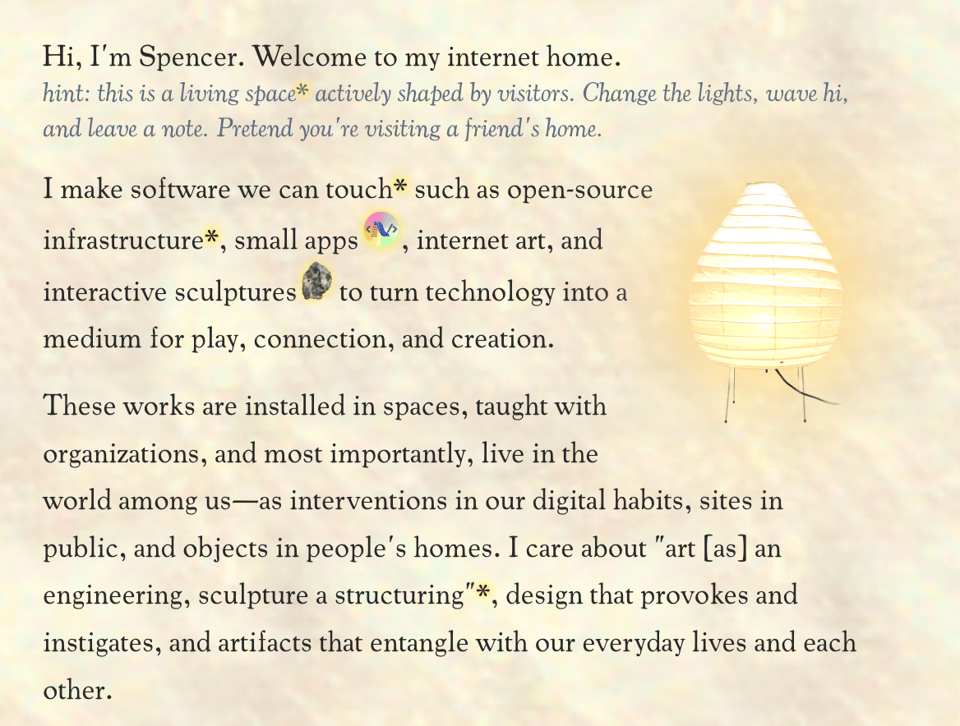
loved this interview with Spencer Chang about playhtml, a way to make websites feel alive. For instance on his own site, he has a Noguchi lamp that you can turn on or off for everyone.
loved this long read about how we’re “deskilling” our bodies:
We have fallen into habits that are steadily deskilling the human body, eroding capacities honed by evolution to support our wellbeing as we move through the world. Some of these capacities are weakening through disuse: we have come to rely on our phones, for example, and now, increasingly, on AI, to rapidly do work that would once have required something more physical – like looking around, or asking someone, or going to find and consult a book. Reliance on GPS may weaken both our spatial attention and the fluency of our wayfinding. In surrendering to a quick technological fix, we are, moment by moment, doing less sensing, navigating, remembering, walking, choosing, and attending.
finally, in my lego city

Forward this email to someone who wants to climb Everest.
You just read issue #96 of what you love matters. You can also browse the full archives of this newsletter.


Add a comment: