Last week we talked about the child safety initiatives coming out of the UK. And when the subsequent (inevitable) social media ban was announced, I reshared the post I wrote last year about age-gating the internet. I like to be all “fair and balanced” (lol) around these parts, so I was interested to read this post responding to the “ten most common objections” to a social media ban.
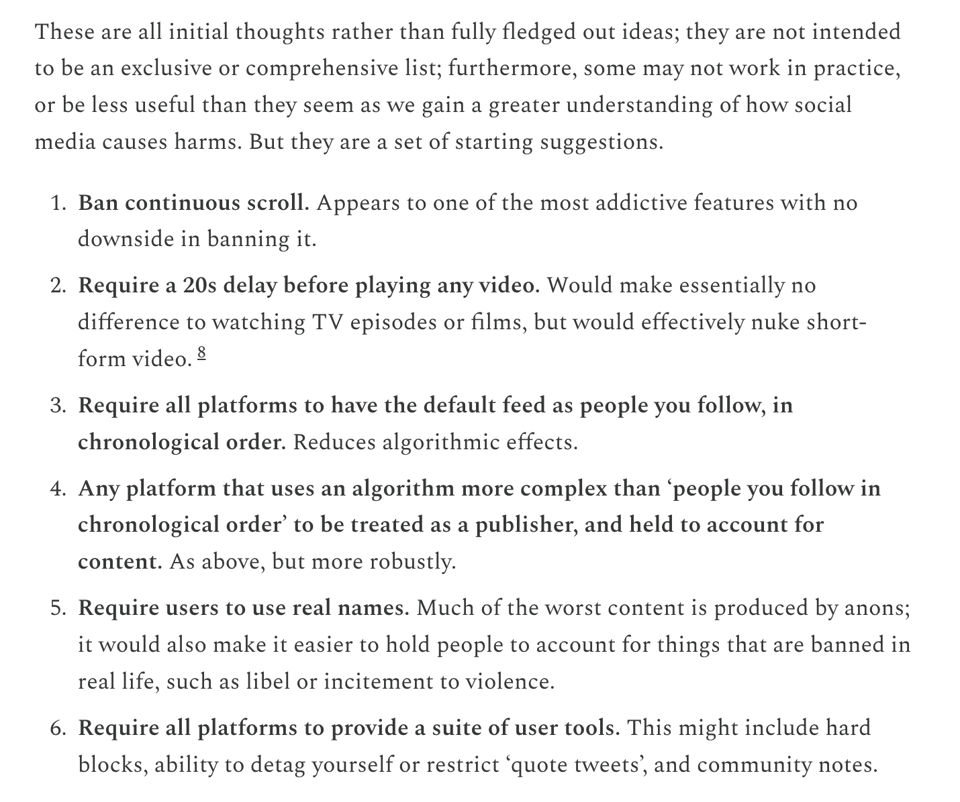
Smartphones have sufficient other positive uses such that we’re not realistically going to get rid of them - any more than we did cars, despite the deaths they cause. But the case for social media is much weaker: regulation is needed, and a social media ban for under 16s (and a properly enforced phone ban in school) is a good place to start.
What jumped out to me was not so much the responses (you can form your own view on these) but the author’s suggestions for improved regulation of social media:
This is one of those announcements that sounds really amazing as a political headline, and then you stop to think about what’s involved in making it work, and so I took some time this week to dig into the details. Regular readers will know I’m not really a fan of most of the attempts we’ve made so far to protect young people online. I wrote at length about the UK’s approach to online safety, and the age-gated internet in general, here.
When governments or platforms decide what counts as “adult,” they rarely mean straight, white, or heteronormative depictions of desire. Age-verification regimes risk hard-coding those same biases into the architecture of the web, making marginalised people once again the test cases for what’s considered acceptable to see.
And this new UK announcement landed in the middle of more of the same: it came packaged with new screen-time guidance for 5-16 year olds, while the government there sifts through 116,211 responses to its consultation on an Australian-style social media ban for under-16s — with a similar ban considered imminent.
This weekend, season three of AMC’s Interview with the Vampire premieres. In case you missed the first two seasons, this show is a lush, unhinged retelling of Anne Rice’s famous book series. The titular interview has been taking place in a penthouse in Dubai, and now the resulting book has been published. Meanwhile, for reasons, the Vampire Lestat has decided to become a rock god.
I’ll be honest, Lestat’s turn as a rock star is where the books sort of lost me, but I trust this show to make it magnificent, and the early reviews are universally amazing. Honestly, can’t wait.
But, this week I wanted to talk about the premiere event that AMC held in NYC at which Lestat and his band performed live.
A couple of weeks ago I wrote about attending Sunrise and how much Jae Lubberink’s talk had blown me away. I took a terrible photo of one of his slides:
Hopefully you can read that okay. Essentially, his point was that humanity has been revulsed by significant shifts before, and that each time that nausea has produced a creative renaissance. He was asking what creative renaissance will be produced by the mediocre, generic, flattening experience of generative AI.
Since we announced Lume, I’ve been spending more time on linkedin than I’d like (aside: at my old law firm one of my colleagues who was deeply offline pronounced this as lin-keh-din, and I’ve never been able to stop). I feel like that site is ground zero for AI slop now, maybe even more so than the boomers on facebook sharing shrimp jesus.
Today’s a really special day for me, because today we break cover and announce what we’ve been working on for the last eight months at Lume.
It’s actually been a lot longer than that. The very first conversations I had with my co-founders Dunc and Justin were like three years ago now, and at least for the last two years we’ve been meeting regularly to kick the project around. Then we brought on our fourth co-founder Tim, assembled a small team of mighty avengers, and decided to go for it in September last year. It’s been an absolute labour of love.
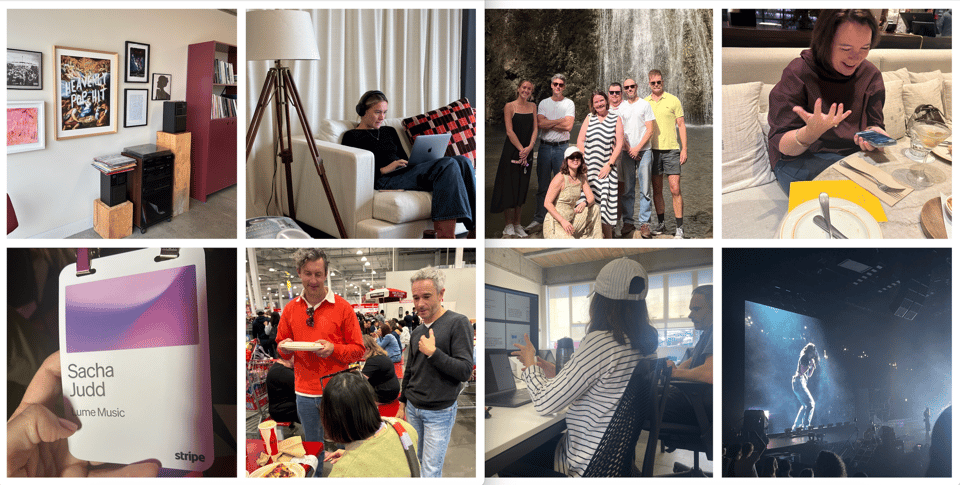
made with vinyl and costco hotdogs and live music and hard work
I’ve never considered myself a “serious” music person because I grew up in that warped and gendered way that said there was a heirarchy of cool and the pop and musical theatre I loved was right at the bottom. But I’ve loved music since my parents’ vinyl collection introduced me to Simon & Garfunkel and Creedence and The Beatles, through the family road trips where we graduated from thrashing The Muppets soundtrack to Linda Rondstadt and the Travelling Wilburys in the car. My first albums were cassettes from Tiffany and Madonna and the Dirty Dancing soundtrack. I skipped out early on an exam to see Michael Jackson’s HIStory tour at Mt Smart. My first ipod was full of limewire downloads of mashups by 2ManyDJs and Danger Mouse. There was The OC soundtrack era. And more recently (as I’ve cared less and less what other people think) there’s been Carly Rae, and Beyoncé, and Taylor, and Harry, and Lorde.
One of the things that blows my mind at the moment is the sheer speed with which things can now run the bases of the “discourse”. This week was a case in point, as I went from hearing for the very first time about something, to it becoming the centre of a very particular kind of culture war, in a matter of days.
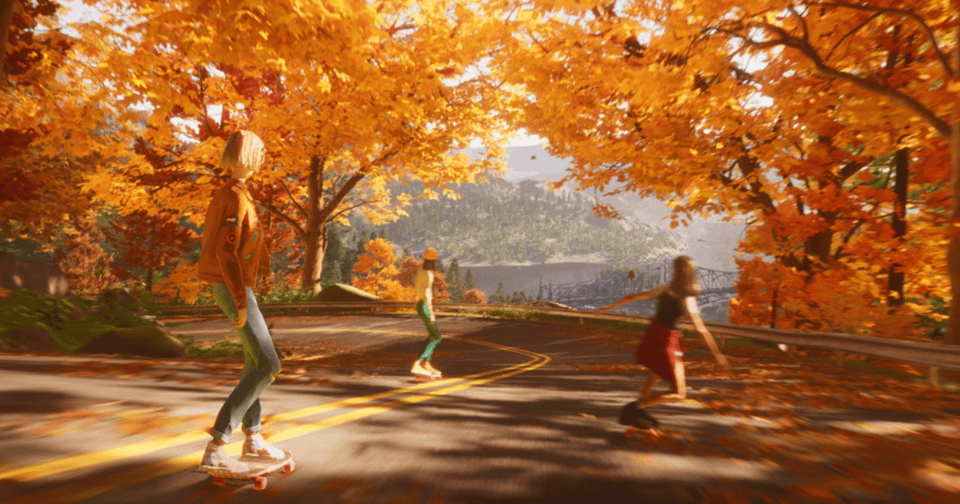
On Tuesday, my brother messaged me about a new videogame he thought I’d like called Mixtape: “absolutely joyous, music focused, 90s nostalgia game (more of an interactive experience than outright game - but I like it when things challenge what a game “should” be) by a small Australian developer.” On Wednesday, Luce sent me this review in the Guardian:
“Mixtape is set over a single day; tomorrow, Stacy will be leaving her best friends, Slater and Cassandra, and flying to New York as part of a reckless plan to shove a mixtape into the hands of a superstar music supervisor who will, she believes, be so convinced of Stacy’s genius that she’ll offer her a job. Tonight, though, the three friends want to drink, party and enjoy themselves, a plan complicated by messy feelings and the spectre of parental authority.The game’s soundtrack is Stacy’s mixtape, which she explains and dissects with direct-to-camera addresses throughout the game.
Highlight of this week was popping down to Wellywood to, among other fun and yet-to-be revealed things, recording an episode of bestie Luce’s Shit You Should Care About pod — coming soon. We were talking about the state of fandom, and as I talked a bit about my history in transformative fandom I was thinking again about how that’s not a mainstream term, and how sometimes it’s easy to think that it’s just about people writing horny stories or making cute gif sets (and believe me those soldiers are the foundation of everything). But what routinely blows me away about transformative fans is the sheer skill of the things they undertake.
Over the last 70 plus newsletters, we’ve talked about about all kinds of transformative fanwork. Fanvids, new and old versions. We’ve talked about fanbinding, and disneybounding, and bespoke mandalorians. This week let’s look at more ways fans dig in for the things they love, and what transformative really means.
One of the first multimedia fanfics I ever read was written all the way back in 2005, before social media even existed. It’s called a taste of strawberries. It’s a Lord of the Rings rpf story in which the actors from the movie franchise are instead members of a Belle and Sebastian-style beloved indie band reuniting for a final tour. It still exists on Livejournal, a miracle in and of itself, though much of the imagery has been lost now to dead photo hosting sites. It was one of the first times I’d seen an author go to the trouble of photoshopping media articles, creating fake inboxes where you could click on and read the actual articles. It felt miraculous.
I’ve spent this week in Sydney at Blackbird’s Sunrise conference again. This is the one I spoke at last year about the good internet. It’s always a glorious mix of attendees who have absolutely sold their soul to the boy-kings of silicon valley, and people who are doing genuinely cool shit, and this year was no exception.
taking ur fish for a walk
As you’d expect, all anyone could talk about this year was AI. While one of the opening themes of the conference was “ambition”, the relentless focus on talking about how much faster everyone can code now felt anything but ambitious. It did help me clarify a lot of my current thinking about AI.
Before the welcome to Country, a guy behind me was explaining his startup to the person next to him. Apparently his “business” is a bunch of AI agents who create and launch “businesses” automatically without human intervention, in order to earn passive income. I immediately sent a message to our team slack saying “I want to die”. I like to reexamine my priors all the time, and listening to him still made me want to smash the looms.
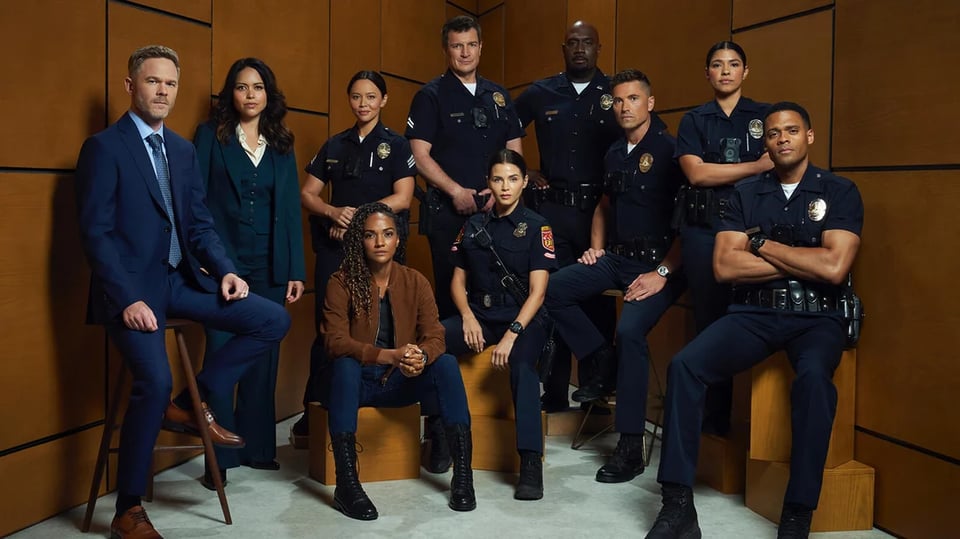
My godkids have gotten super into watching US network procedural The Rookie. It’s one of those shows you’ll have probably skimmed past when you’re looking for something to watch, and then someone tells you it’s been running for eight seasons and you’re like, what? Who is watching this? My godkids, apparently. So I decided to chuck it on as background tv over Easter.
(People often ask how I’m able to consume literally so much television, but it’s often because I’ve got it on in the background while I’m doing seven other things)
Anyway The Rookie is your classic network procedural. It’s low-stakes copaganda where the good guys always win. It’s the kind of tv I grew up with before the era of “prestige television”.
One of the coolest things I’ve seen on tiktok lately is the rise of the “cyberdeck”. The first person I saw posting about it is actually credited with kicking this trend off, a 22-year-old named Annika Tan (@ubeboobey) who built a computer and put it in a mermaid clutch.
The case is vintage pearlescent and the hardware fittings are gold. Inside is a Raspberry Pi, a small screen, a battery pack. Over a million people watched the first video. Her two-part tutorial series hit ten million views.
Cyberdecks aren’t new in any way. The name comes from William Gibson’s Neuromancer, where it described the portable computers hackers used to “jack into cyberspace”. The modern DIY version has been evolving for years in maker spaces and reddit communities and discord servers, mostly among the kind of people who enjoy soldering and reading documentation (I am neither). Then Tan posted her mermaid clutch and a whole new bunch of people started paying attention, who'd never thought about building their own computer, and now desperately wanted to.
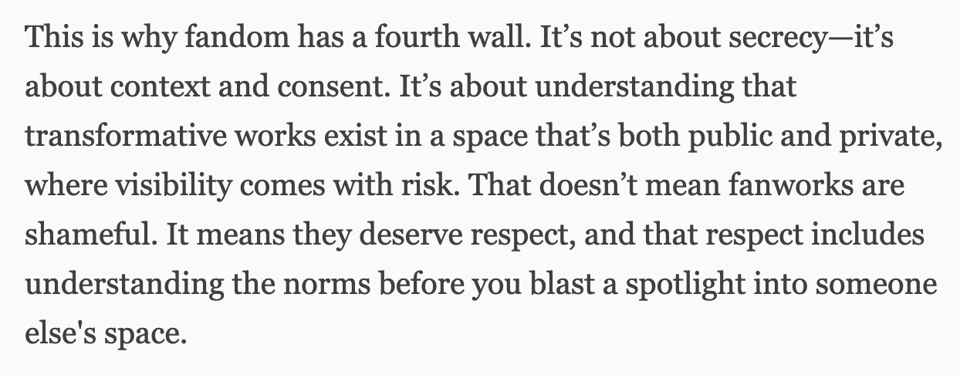
Last year, we talked about a kind of context collapse that was going on after The Cut published links to a whole bunch of fanfic about The Pitt. At the time I said:
wither the fourth wall
[Sidenote: the proliferation of hideous GenAI writing means I can no longer pen the phrase “It’s not about x, it’s about y” ever again.]
Last week I saw Project Hail Mary. It’s so good. A big sweeping adventure with strong E.T. vibes. Ryan Gosling is excellent. Go see it.
amaze amaze amaze
Then this week there was an internet kerfuffle about some comments the author of the book the film is based on, Andy Weir, made. He went on a podcast called The Critical Drinker, which I’ve never listened to, but whose schtick seems to be doing movie reviews where the blame for failed reboots or additions to franchises gets placed squarely on studios “going woke”.
Weir and the host started talking about Star Trek, the raft of new shows being added to the Trek universe, and the recent cancellation of Starfleet Academy. Weir pronounced the show “shit”. This might have all been the opinions of just one guy, but the context here mattered a lot. When you go on a pod that’s engaging in culture war clout-chasing, people are going to assume that’s what you mean.
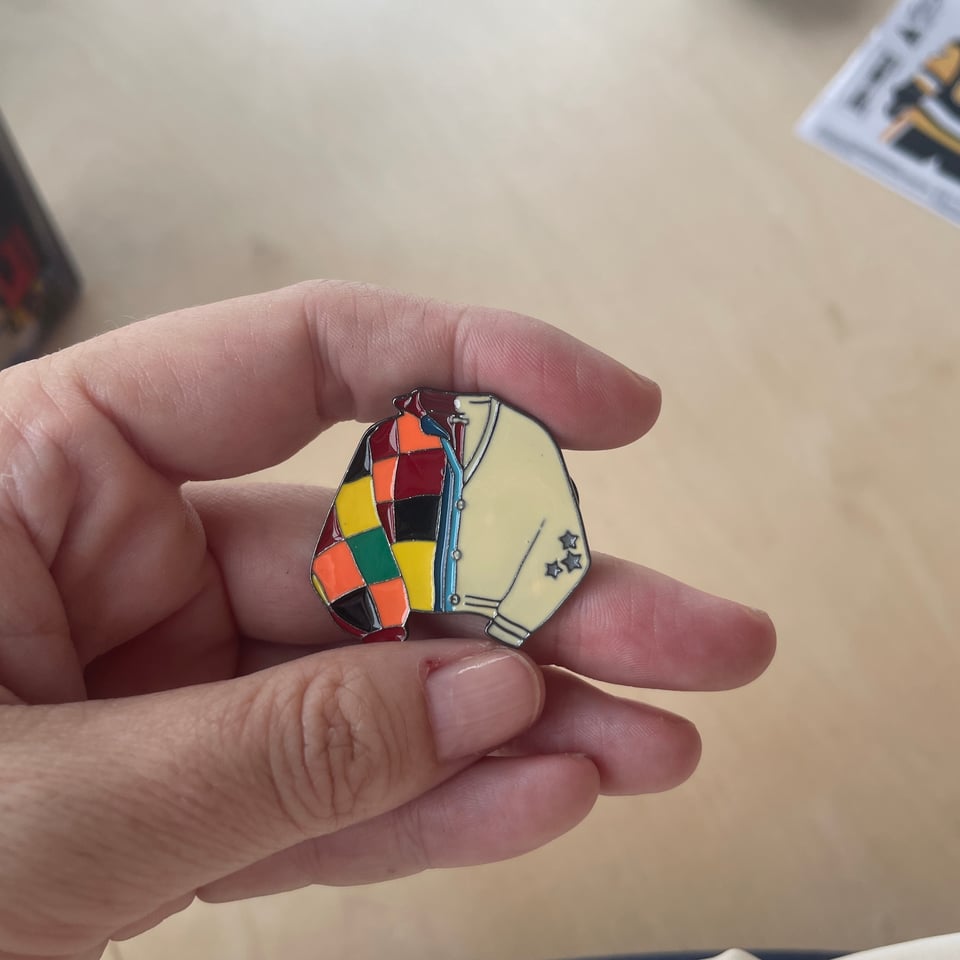
One of the cutest Christmas presents I got last year was this pin my sister gave me:
Everyone else in the family drew a blank looking at it. But if you know, you know. It’s an enamel pin of a cardigan that’s half Taylor Swift’s distinctive folklore cardigan, and half the JWA cardigan made famous by Harry Styles.
This week I’ve been thinking about what it’s like for a new generation to make things with computers. When we were talking in Berlin, Luce made a point that stuck with me — while I view the early web as a roadmap for the way things could be better online, her generation and younger have only ever known app-based environments. For them, “building for the web” is a nonsense. They only know platforms. Which is not to say that they don’t do incredible, creative, generative work on those platforms — just that the idea of tinkering with the foundations doesn’t mean much to ipad kids.
I kept thinking about that as Apple released the Macbook Neo, it’s first budget laptop (US$599).
I absolutely loved this essay from Sam Henri Gold about the Neo, This is not the computer for you. “Nobody starts in the right place. You don’t begin with the correct tool and work sensibly within its constraints until you organically graduate to a more capable one. That is not how obsession works. Obsession works by taking whatever is available and pressing on it until it either breaks or reveals something. The machine’s limits become a map of the territory. You learn what computing actually costs by paying too much of it on hardware that can barely afford it”.
This week I was listening to an episode of one of my fave conspiracy debunking pods, QAA. It’s been running for years now, but in the early days of QAnon it was a really invaluable resource for diving deep into what was going on on the fringes of the American right, something that’s unfortunately now in all of our faces.
This particular episode was about the famous account of a psych study called “When Prophecy Fails”, published in 1956. I’ve referred to this study several times when I’ve been thinking and writing about online conspiracy thinking in fandom and other spaces. In 1954, a Chicago woman named Dorothy Martin predicted an apocalyptic flood and promised her small circle of followers that flying saucers would arrive to carry them to safety before the waters rose. The aliens didn’t come and the flood didn’t happen. Three psychologists from the University of Minnesota had embedded themselves in the group to watch what happened next, and what they reported was that the believers doubled down. Faced with total disconfirmation, the group didn't dissolve in embarrassment. They started proselytising harder than ever, rationalising the failure as proof that their faith had saved the world.
This account helped launch a really influential concept in social science, which you’ve definitely heard of: cognitive dissonance. The idea that true believers, confronted with evidence that destroys their worldview, will not update — they will dig in deeper. The only problem is that it didn't happen.
Happy New Harry Album Day! Kiss All The Time, Disco Occasionally has dropped. No hot takes until I’ve spent three to five days listening to it on repeat.
Yesterday, I listened to Harry’s interview with Zane Lowe. This long-form interview is something Harry does as part of every album cycle. Lowe has been dubbed “pop’s unofficial therapist” since being hired by Apple Music, specialising in empathetic deep dives into not only an artist’s album, but also their creative process. But yesterday, I was struck again by the fact that after listening to the pair of them talk for an hour, I’d learned absolutely nothing.
It’s a bit of running joke in Harry’s fandom that he’s so media-trained you will never learn anything about him, even in the steady spotlight of promoting a new album. Even here, where Lowe asks about Liam Payne’s death for the first time, all we learn is that losing his friend has caused him to want to “live life to the fullest”. Okay, hallmark card.
Like many people, I just finished watching A Knight of the Seven Kingdoms. It was a good, self-contained little series, and even if you’re still burnt out on the Game of Thrones universe, you’ll enjoy it. I assume they’ll go on to make more and more until we hate it, but just watch season one and move on with your life. Interestingly, I think there’s something appealing about Ser Duncan as an example of “connected masculinity” but I need to chew on that more.
First, we need to talk a little about IMDb ratings. These are powered by users adding star ratings for TV episodes and movies they've watched, providing a number out of 10. These are collated into an overall score, prominently displayed on the IMDb page for the particular show or movie. Most people probably don't even look at it, but for some people, it's a point of pride.
This week I’ve been thinking about the demise of twitter, and what has risen up in its place over on X The Everything App. Normally, I just keep calling the platform “twitter”, both because X is a stupid name and because most people who aren’t chronically online don’t even really know its called X now. Also because why do anything Elon Musk tells you to do.
But for a time, twitter was one of my favourite places online. I joined in March 2007, just a year after the platform was founded. For whatever reason there was a vibrant group of people from Aotearoa using it in those early years. I remember giving a presentation to my fellow partners at my law firm about why we should set up a branded twitter account in 2009. I remember showing them the photo of the Miracle on the Hudson tweet and trying to explain why this was how information would move now.
For many years, twitter was an unrivalled source of access and information. It didn’t matter what topic I was interested in, I could find and follow experts and activists and academics and commentators and journalists. I could ask them questions. It was incredible.
Fan edits, the way tiktok and insta users are deploying the term, are like fanvids of old — compilations of clips to tell a story, about a show or a central character or pairing — set to music. Here’s one about The Summer I Turned Pretty:
We’re a day late this week because it was Waitangi Day in Aotearoa, our national day.
On Thursday, I went to Laneway. Amazing day, incredible weather, Chappell Roan rules. One of the recurring conversations all day before Role Model took the stage was, “who’s going to be Sally?”.